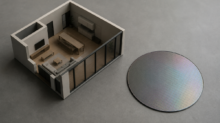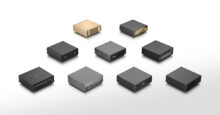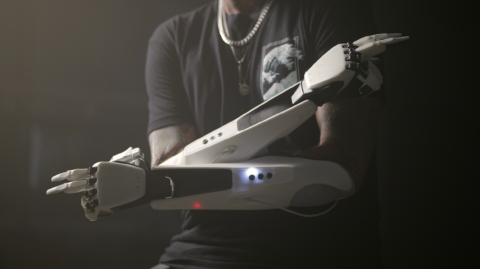

On September 1, Qualcomm announced two new IoT processors, the Dragonwing Q-2390 and the Dragonwing IQ-2390. Both pack CPU, GPU, AI acceleration, camera input, connectivity, and security onto a single chip, with the aim of bringing on-device AI to low-cost, compact hardware such as smart appliances, retail terminals, and factory controllers. Modules built around both processors will be on display at Qualcomm's booth at IFA 2026, held in Berlin from September 4 to 8.
Deciding on the device instead of in the cloud
The idea shared by both products is that a device should perceive data, analyze it, and act on it locally, without sending anything off to a server. Rather than uploading camera frames or sensor readings to the cloud and waiting for a verdict, the processing finishes inside the device. That keeps things running when the network is flaky and keeps latency low.
Jeff Arnold, who oversees this business at Qualcomm, explained that while AI is fundamentally reshaping how connected devices are designed and deployed, many product categories still run into walls around cost, complexity, and integration. Functions that used to require several separate chips are consolidated into one, shrinking the board, cutting bill-of-materials cost, and shortening development time. That is the pitch for both parts.
Q-2390 for consumer and commercial products
The Dragonwing Q-2390 joins the existing Dragonwing Q2 Series as the consumer and commercial model. It integrates application processing, on-device AI, camera and display I/O, LTE Cat 4 and GPS, a range of wired and wireless connectivity, security, and extensive general-purpose I/O on one platform.
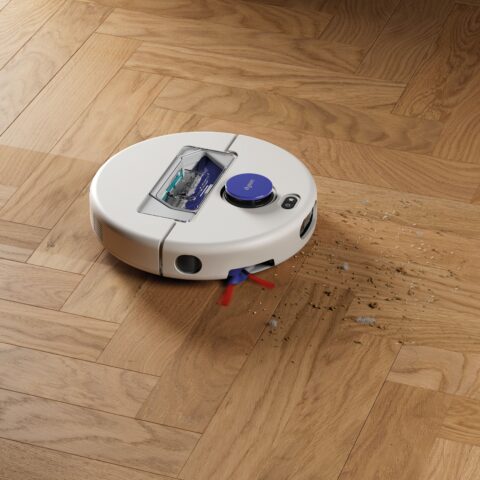
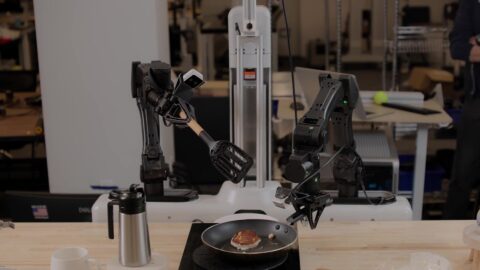
Target applications include retail point-of-sale systems and kiosks, access control devices, smart appliances, smart agriculture, home robots, fitness equipment, and enterprise terminals. The goal is to let manufacturers build more capable products within tight cost, power, and size constraints. A Q-2390M variant with integrated LTE Cat 4 is also offered, so devices placed outside a local network can connect on their own.
IQ-2390 is the first of a new industrial series
The Dragonwing IQ-2390, meanwhile, is the first product in the newly created Dragonwing IQ2 Series. Positioned to complement the existing IQ10, IQX, IQ9, IQ8, and IQ6 Series, it targets compact edge systems in industrial automation, oil and gas, utilities, and energy.
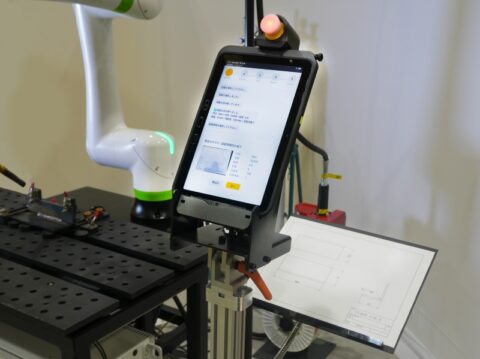
The industrial character shows up in connectivity and ruggedness. It provides two Gigabit Ethernet ports with Time-Sensitive Networking (TSN) for keeping machinery synchronized, and it supports an operating temperature range of -30°C to +115°C. It is also designed with vibration and shock in mind, making it suitable for production lines, energy infrastructure, and outdoor industrial equipment. Specific use cases cited include HMIs, PLCs, gateways, industrial vision systems, building automation, and energy management.
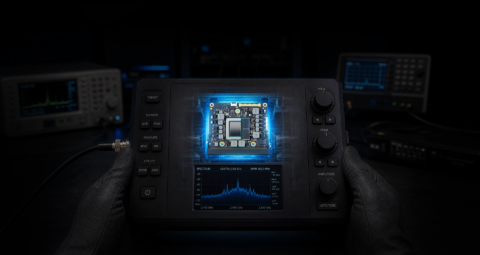
Both processors share the same core configuration: a quad-core Kryo CPU (one Arm Cortex-A78 and three Cortex-A55 cores, up to 1.9 GHz), an Adreno 704 GPU, a Hexagon NPU rated at up to 1.1 TOPS, and a RISC-V microcontroller for real-time tasks, all inside the SoC. Memory is LPDDR4x, up to 8 GB. The application cores run Android, Yocto Linux, and Ubuntu, while the RISC-V core runs Zephyr RTOS, so UI and machine-learning work can be split from control tasks with strict timing requirements within a single chip.
Fibocom has already said it is developing the SC236 smart module based on the Q-2390, and SECO and Engicam are preparing system-on-modules and boards built on the IQ-2390. According to Qualcomm, both products are already shipping to select customers through an early access program, and developer evaluation kits are expected in early 2027.
Summary
The Dragonwing Q-2390 and IQ-2390 are not flagship parts. They are built to bring AI, vision, and connectivity into price tiers and form factors where that has been hard to justify. With the Q-2390 for consumer and commercial devices and the IQ-2390 for industry, with its wide temperature range and TSN networking, the pair lets everything from a home robot to a factory control panel be built on the same design foundation. Modules will be shown at IFA 2026, and evaluation kits are slated for early 2027.