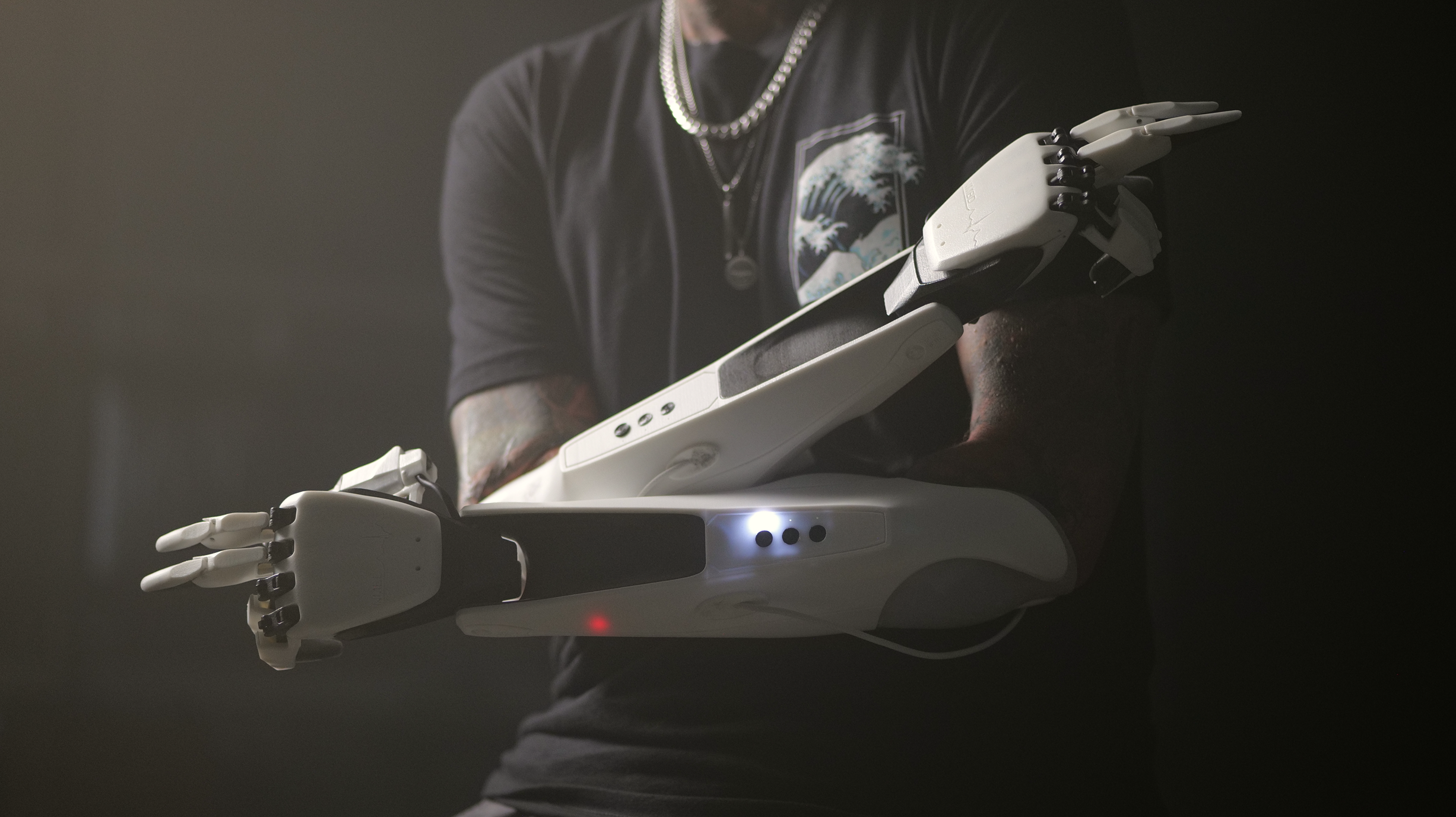
Toronto-based startup smartARM is developing a bionic arm that uses AI-driven object recognition to automatically choose the right grip. A camera built into the palm looks at whatever the wearer is reaching for and decides on the spot how to hold it, drawing on an open-source vision model that Meta has released as well as the company's smart glasses.
Removing the Need to Switch Grips by Hand
Most conventional prosthetic hands require the wearer to manually switch between grip patterns every time they move from one object to another, such as a cup and then a spoon. What looks like a simple action ends up taking several deliberate steps. smartARM set out to remove that burden entirely by building a camera into the palm that recognizes nearby objects and lets AI select the appropriate grip automatically. The company calls this control software Dexterity OS, and according to its official site it currently recognizes more than 365 everyday objects, with the library set to keep expanding through future updates.
Pairing Meta's Vision Model With Smart Glasses
At the core of the object recognition is DINOv2, an open-source vision model Meta has made publicly available. Its defining trait is that it can learn to recognize a new object from just a handful of reference photos, cutting down what used to take weeks of adaptation to a matter of registering a few images. The arm works on its own, but pairing it with Meta AI glasses and Meta's Wearables Device Access Toolkit adds a stream of first-person visual data from the wearer's point of view, further sharpening recognition accuracy. Users can register new objects through a smartphone app, and that shared data benefits the wider community as the arm effectively learns alongside each person's daily life. The process boils down to three steps: the camera sees, Dexterity OS thinks, and the fingers grasp, with the emphasis placed on intuitive use that requires no prior training.
A Former NFL Player's Endorsement, and a Canadian Beta Program
Shaquem Griffin, a former NFL player and long-time smartARM user, has said that scalability and accessibility matter most to him, and that this is what the future of consumer prosthetics looks like. smartARM founder and CEO Hamayal Choudhry has likewise said that building a capable hand is only part of the challenge, and that making it intuitive to use matters just as much, adding that automatic object recognition and grip selection are meant to let users focus on what they want to do rather than how to operate the device. The product is currently in a beta phase in Canada, with pricing to be announced closer to a full public launch. The company says it is also working with insurers and healthcare providers to build coverage pathways, and has opened a priority-access waitlist ahead of wider availability.
Summary
smartARM has built a bionic arm that pairs a palm-mounted camera with Meta's DINOv2 vision model to let AI automatically choose the right grip for whatever object it detects. Integration with Meta AI glasses boosts recognition accuracy, and users can personalize the system by registering their own objects. The device remains in beta in Canada for now, but as a prosthetic designed to be used intuitively without prior training, its path toward wider availability is worth watching.