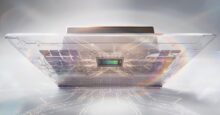
DFRobot has added a new module to its LattePanda single-board computer lineup, built around Intel's Lunar Lake generation of processors. The LattePanda Mu Ultra packs up to 115 TOPS of AI performance into a footprint smaller than a business card, at 69.6 x 60mm. Aimed squarely at robotics and edge-AI applications, the module is already available for purchase.
Notebook-class AI performance on a tiny board
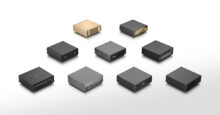
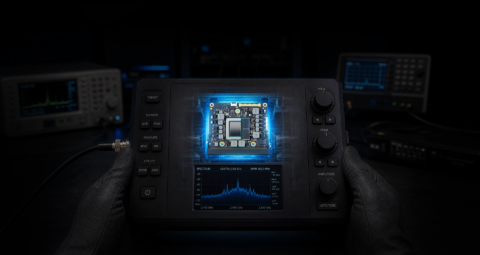
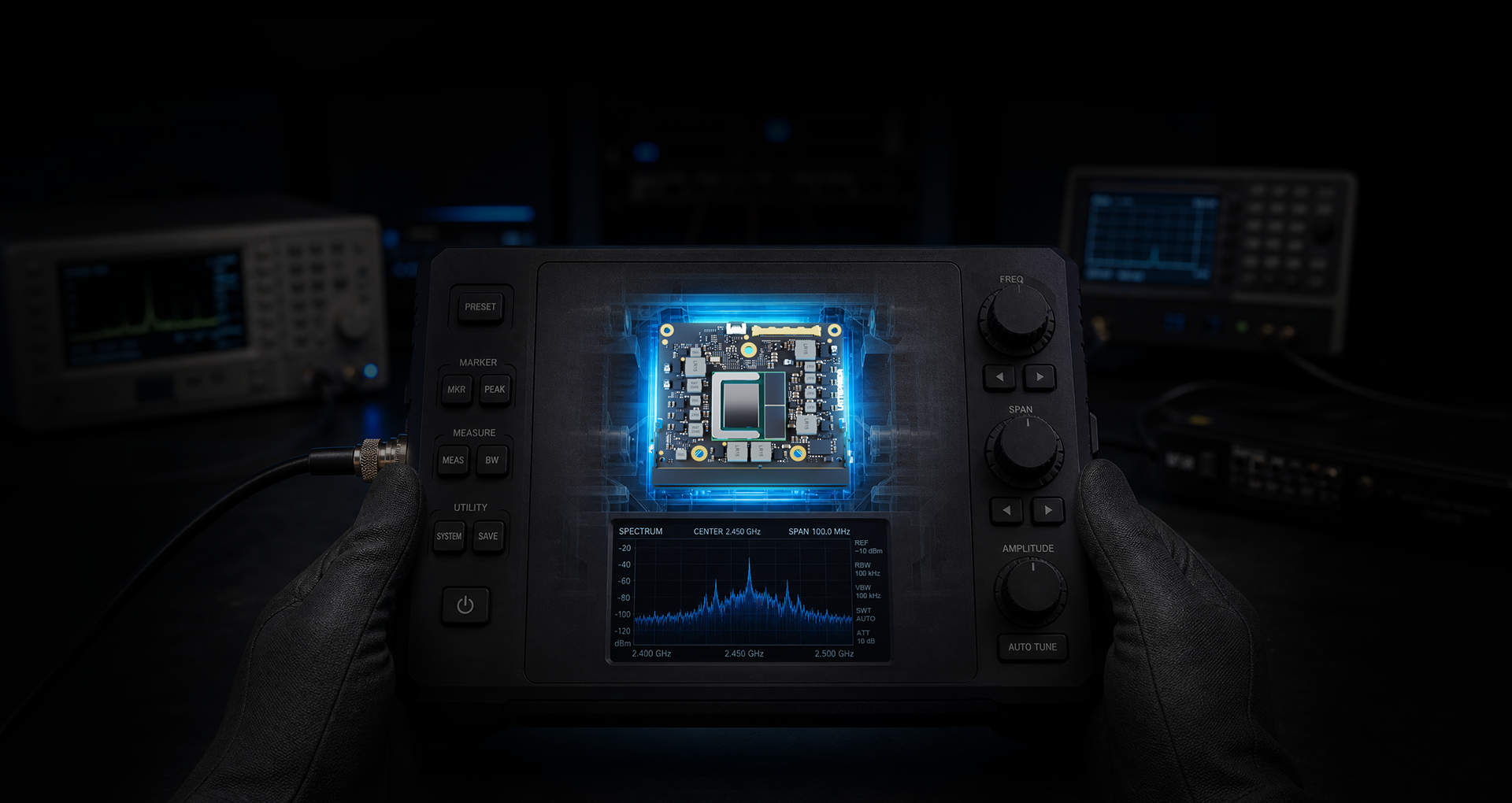
The LattePanda Mu Ultra is not a complete computer but a "compute module" — a bare board designed to plug into a separate carrier board, letting developers customize the port layout for their application. It keeps the same 69.6 x 60mm footprint as the earlier LattePanda Mu (which used Intel's N100 or Core i3-N305), while replacing the internals with Intel's latest mobile SoC platform, Lunar Lake.
Buyers can choose between two processors: the 8-core Core Ultra 5 226V, clocked up to 4.5GHz, and the 8-core Core Ultra 7 256V, clocked up to 4.8GHz. Both integrate Intel Arc graphics, with 7 Xe-cores on the 226V and 8 Xe-cores on the 256V. On the AI side, the neural processing unit alone delivers 40 TOPS on the 226V and 47 TOPS on the 256V, while combined CPU, GPU and NPU throughput reaches up to 97 TOPS and 115 TOPS respectively. Both variants pair with 16GB of LPDDR5X memory running at 8533 MT/s, for up to 136.5GB/s of bandwidth.
No onboard storage, but up to three displays
The module itself carries no storage for an operating system — only a 256Mbit SPI flash chip for UEFI/BIOS firmware. NVMe storage has to be added through the carrier board over PCIe. For video, the module exposes a 40-pin eDP 1.4 connector, and a carrier board can turn that into up to three independent HDMI 2.0 or DisplayPort 1.4 outputs. Connectivity includes two USB 3.2 Gen 2 (10Gbps) ports and six USB 2.0 ports, along with flexible PCIe lane configurations. Windows 11 and Ubuntu 24.04/26.04 are both supported.
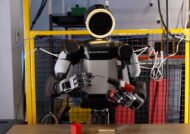
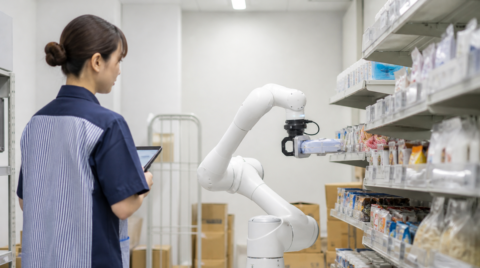
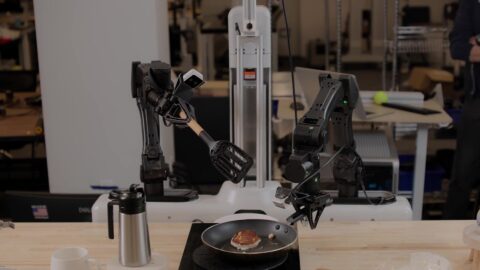
DFRobot points to robotics and industrial automation, portable measurement instruments, autonomous and service robots, and vision-AI systems as target use cases — essentially anywhere on-device AI processing needs to run without relying on the cloud.
A new carrier board ships alongside it
Earlier LattePanda Mu boards shipped with "Lite" and "Full" evaluation carrier boards, but the Mu Ultra's different electrical specification means it isn't compatible with the Full board, and compatibility with the Lite board isn't guaranteed either. To address that, DFRobot designed a new "Mini Carrier Board" (model DFR1293) that works across all four LattePanda Mu variants, old and new. It includes an M.2 2230/2280 slot for an NVMe SSD, HDMI 2.0 output, two DisplayPort outputs via USB-C, a 3.5mm combo audio jack with a Realtek ALC269 codec and separate speaker outputs, and 2.5Gbps Ethernet.
Pricing and availability
The bare compute module starts at 599 USD (about 91,000 yen) for the Core Ultra 5 226V version and 699 USD (about 106,000 yen) for the Core Ultra 7 256V version. AI developer kits that bundle a carrier board start at 643 USD (about 98,000 yen) and 733 USD (about 111,000 yen) respectively. Both are already available through the official LattePanda and DFRobot online stores, with documentation published on the official site.
*Exchange rate used: 1 USD = 152 JPY
Summary
The LattePanda Mu Ultra squeezes notebook-class CPU and GPU performance, plus up to 115 TOPS of AI inference, onto a board smaller than a business card. Buyers do need to source a carrier board and storage separately, but support for both Windows 11 and Ubuntu, combined with broad connectivity options, makes it a versatile pick for embedded projects ranging from robotics to vision AI. With sales already underway, it looks like a strong option for developers who want serious on-device AI performance in a compact footprint.