
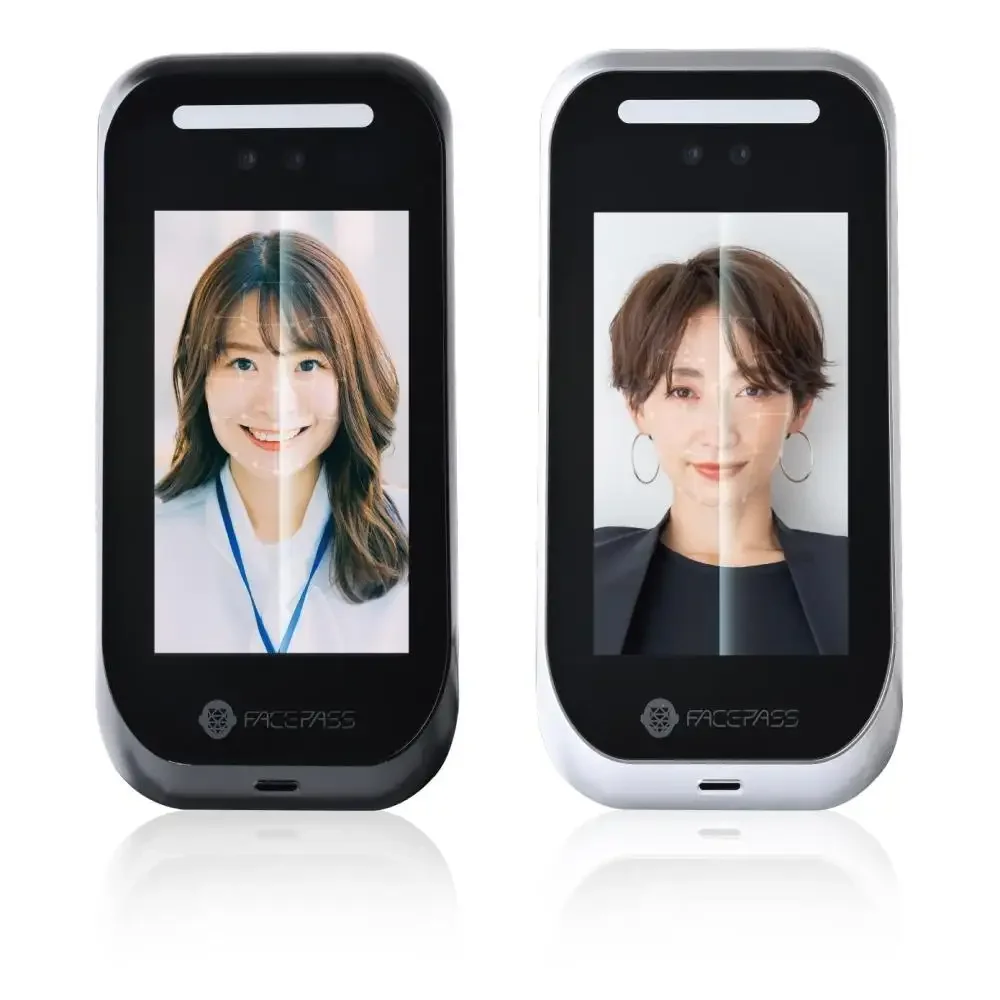
KJ TECH japan, a security company headquartered in Nakano, Tokyo, announced in a press release on November 14, 2026, that it will begin offering GATE PASS Cloud ACaaS, a cloud-based access control service for businesses, in December 2026. Companies can start using it simply by mounting a face recognition terminal next to an office door and connecting it to the internet, with no in-house server or dedicated app required. Employee IDs are issued as digital cards in Apple Wallet or Google Wallet, and the QR code they display changes at regular intervals.
Face Recognition Plus a QR Code That Keeps Changing
The primary way in is to have the terminal beside the door match a person's face and unlock it. When face recognition is difficult, such as when someone is wearing a mask, the user instead holds up the QR code on the digital employee ID stored in their smartphone's Wallet. Because the code switches to a new one at set intervals, the company says screenshots or copied images of it cannot be used to unlock the door.
Enrollment is also done on a smartphone. Users scan a registration QR code and upload a single face photo through a web browser, a process the company says takes about 15 seconds. Registration QR codes can also be distributed by email or social media, and there is no longer any need to issue or collect plastic cards.
All It Needs Is Electric Lock Work and an Internet Line
The company lists three requirements for installation: work to fit the door with an electric lock and an unlock button, wiring for the terminal (four-core cable, subject to specifications), and an internet connection. No fixed IP address or router port forwarding is needed, and terminals register with the cloud automatically. When an office moves or its layout changes, the equipment can simply be relocated and reconnected, according to the company.
Supported terminals are the GATE PASS 01/02, FE500, FE500L, FE800 and FE800SE. Intended locations include offices at companies and business sites, server rooms and executive offices.
Browser-Based Management With Remote Unlocking and Time-Limited Access
Administrators can check who is entering in real time from a browser-based dashboard. According to the company, notifications reach the dashboard about 0.05 seconds after authentication, and photos from the door are displayed within 0.2 to 0.3 seconds. Doors can also be unlocked remotely from a smartphone or tablet while away from the office.
Access can be assigned per door, with settings for days of the week, time slots and expiration dates. The company gives examples such as one day for visitors and three months for contractors, and registration data is automatically deleted from the terminal once it expires. Other features include CSV downloads for attendance tallies, audit logs of unlocks and permission changes, and display of the customer's own branding. Pricing was not included in the announcement.
Aimed at Workplaces Without Dedicated IT Staff
The company's representative director said the service is built on cloud technology with a proven global track record, with a focus on simplicity and ease of use tailored to Japanese office environments. He named small and midsize businesses without dedicated IT staff, as well as companies running multiple sites or shared offices, as key targets, with the aim of reducing the workload on general affairs and IT staff.
Our Take
In access control, issuing and collecting cards and maintaining on-premises servers have tended to be a burden for the people in charge. Putting employee IDs in smartphone Wallets and consolidating settings in a browser moves in the direction of reducing that burden. Not needing detailed network configuration should matter most in workplaces without dedicated IT staff. The rotating QR code is also an easy-to-understand safeguard against people sharing screen images to let others in.
On the other hand, because the service handles face photos, which are biometric data, in the cloud, companies considering it should confirm details such as where data is stored, how long it is retained and how former employees' information is deleted before signing a contract. With pricing yet to be disclosed, whether it is worth switching from existing card-based systems will likely have to wait until prices are announced.
Summary
KJ TECH japan will launch GATE PASS Cloud ACaaS, a cloud access control service that unlocks doors using face recognition and automatically rotating QR codes, in December 2026. It requires no in-house server or dedicated app, employee IDs live in Apple Wallet or Google Wallet, and management is handled through a browser. Pricing has not been disclosed in this announcement.