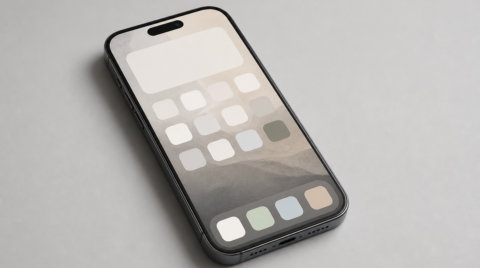

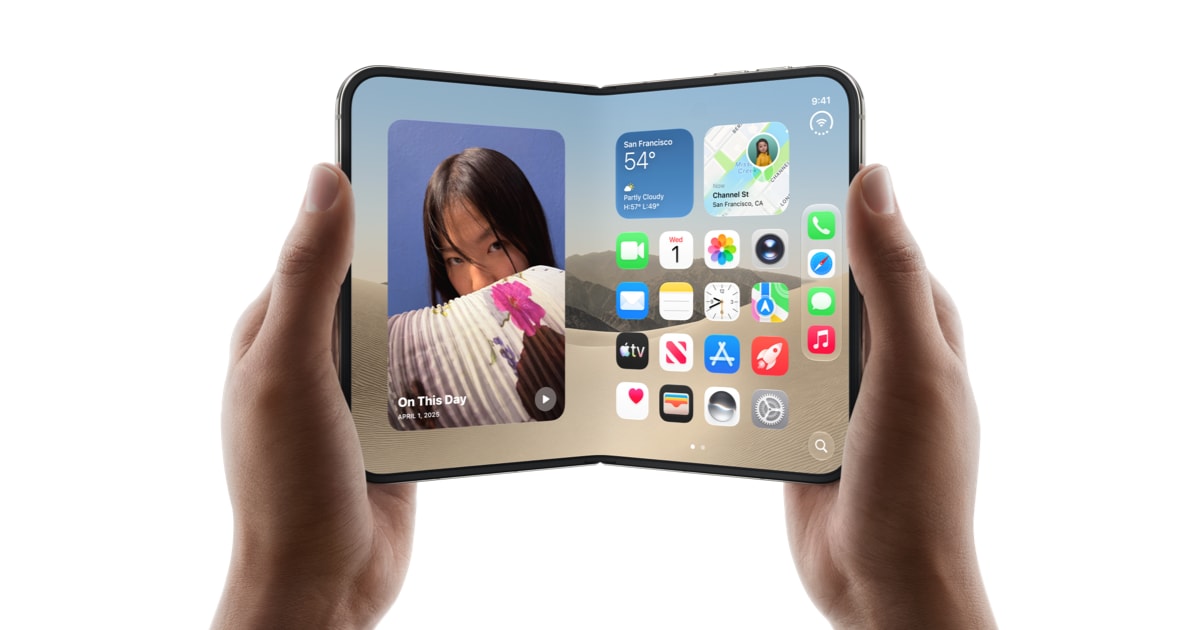
Apple announced the iPhone Duo on September 9, its first foldable iPhone. It pairs a 7.6-inch display inside with a 5.4-inch display outside, and Apple says it is the thinnest iPhone ever when opened. Pricing starts at 364,800 yen including tax, with pre-orders opening October 16 and sales beginning October 23[1].
7.6 Inches Open, 5.4 Inches Closed
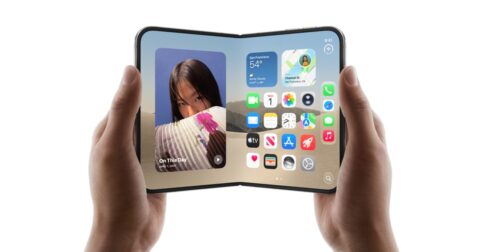
At the core of the iPhone Duo are two Super Retina XDR displays. The inner display measures 7.6 inches and offers 50 percent more screen area than the iPhone 18 Pro Max. The outer display used when the device is closed measures 5.4 inches and covers 90 percent of the screen area of the iPhone 18 Pro[1].
More consequential than the numbers is that both panels share the same aspect ratio. Content keeps its proportions when the device opens or closes, so the layout does not break when the display switches. It reads as a direct answer to the jarring reflow that often plagues foldable phones.
The inner display uses a Nano-texture finish that cuts reflections while making the crease less visible. Both displays support ProMotion and always-on, with outdoor peak brightness of up to 3,000 nits. A new FaceTime camera sits under the inner display and disappears when it is not in use. Apple Pencil (USB-C) support is planned before the end of the year[1].
Biometric authentication is handled by Touch ID built into the side button. It works the same way whether the device is open or closed, and an Apple Watch can also be used to unlock it[1].
A Hinge of More Than 100 Parts, Engineered for Durability
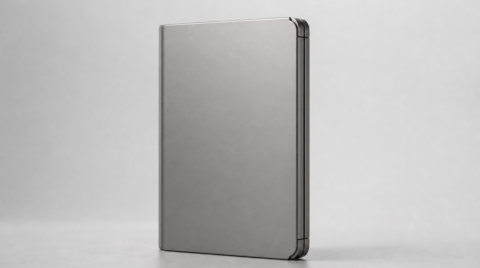
Foldable phones ultimately get judged on durability. The iPhone Duo body is grade 5 titanium, and the hinge cover is 3D printed. Ceramic Shield protects the back, while Ceramic Shield 2 on the front offers 3 times the scratch resistance of previous models. The device also meets IP68 (up to 6 meters for up to 30 minutes)[1].
The hinge itself is made of more than 100 parts, with internal support ribs that resist deformation. The inner display surface is protected by a proprietary polymer cover layer that is up to 40 percent more rigid than other materials used in the industry. A custom adhesive lets layers of glass slide against one another like the pages of a book, easing friction as the device folds[1].
Camera Features That Only a Foldable Can Offer
The camera system combines a 48MP Fusion main camera with a 48MP Fusion ultra wide camera, the latter shared with the iPhone 18 Pro models. Photos default to 24MP, and an integrated 2x telephoto with optical quality is available[1].
The more interesting part is the set of features built around the folding form. Duo Preview shows a live preview on the outer display so the person being photographed can check how they look. Kid Cue plays PEANUTS animations on the outer display to draw children's eyes toward the lens, and Duo FaceTime lets someone nearby join a video call from the outer display. Smart Capture uses on-device AI models running on the A20 Pro to analyze the scene in real time and fire the shutter automatically when the subject strikes a pose[1].
For video, the 48MP Fusion main camera supports 4K 120fps Dolby Vision recording[1].
The A20 Pro and Two Batteries
The chip is the A20 Pro, the same silicon used in the iPhone 18 Pro models. Built on a 2-nanometer process, its 6-core CPU is up to 20 percent faster than the A19 Pro and its 7-core GPU up to 40 percent faster. A new dual 16-core Neural Engine doubles the compute available for running AI models on the device[1].
Heat is the obvious problem in a thin chassis. The iPhone Duo uses a packaging design that connects the A20 Pro directly to a custom vapor chamber, delivering up to 35 percent better sustained performance than the iPhone 17 Pro[1].
Batteries are split, one on each side of the chassis. Video playback runs up to 31 hours on the inner display, up to 44 hours on the outer display, and up to 24 hours when both are used evenly. The device charges to 50 percent in about 20 minutes. To free up internal space, the iPhone Duo is eSIM only worldwide[1].
iOS 27 and Siri AI, with Japanese Coming in October
On the software side, iOS 27 has been rebuilt for the iPhone Duo. Opening the device reveals two Home Screens, and Dynamic Island has been redesigned to sit vertically. Split View arrives as well, letting an iPhone place two apps side by side for the first time, including two Safari windows[1].
Apple Intelligence becomes available in iOS 27 on September 14, and the new Siri AI begins its beta the same day. It launches in English only, with Japanese support scheduled for October. The iPhone Duo itself will ship on iOS 27.1[1]. Buyers should note that Siri AI will not be usable in Japanese right out of the box.
Pricing and Availability
Storage options are 256GB, 512GB, 1TB and 2TB, starting at 364,800 yen including tax, or 10,133 yen per month including tax over 36 installments. Colors are Star White and Night Sky. Pre-orders open October 16 at 9 p.m. Japan time, with sales starting October 23 in more than 70 countries and regions including Japan. Another 28 countries and regions follow on October 30[1].
In the United States, pricing starts at 1,999 USD (about 310,000 yen)[2]. The gap against the Japanese tax-inclusive price reflects exchange rates and consumption tax, which makes the domestic price look steep.
※1 USD = 154 JPY (as of September 9, 2026)
Accessories include the iPhone Duo Folio with an integrated kickstand at 24,800 yen including tax, and the two-piece iPhone Duo Case at 14,800 yen including tax. Both open for orders on October 16[1].
Summary
The iPhone Duo looks like a product that encodes the reasons Apple stayed out of the foldable market for years. The hinge part count, the proprietary polymer cover layer and the split batteries all read as answers to the weaknesses that have dogged existing foldables. At the same time, 364,800 yen puts it in a class of its own among iPhones, and Japanese support for Siri AI arrives after launch. How the crease looks and how the hinge holds up over time cannot be judged without extended use, so jumping on a first-generation device deserves some thought.
Source: [1] https://www.apple.com/jp/newsroom/2026/09/apple-unveils-iphone-duo/
Source: [2] https://www.apple.com/newsroom/2026/09/apple-unveils-iphone-duo/

















![Newsed Phone Opens Store for Used iPhones With 100% Battery Capacity [PR]](https://claypier.com/wp-content/uploads/2026/07/newsedphone-battery-100-iphone-480x236.png)