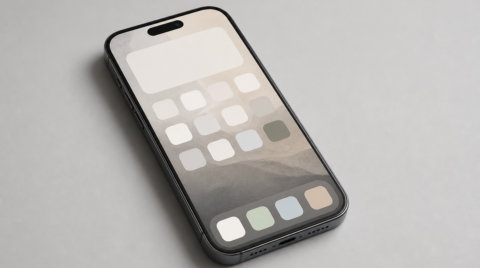
Apple is expected to show its first foldable iPhone at the special event that begins at 2:00 a.m. Japan time on September 10. Just ahead of the announcement, Taiwanese research firm TrendForce published a report laying out the device's estimated price range and key specifications. The projected starting price in the United States is 2,099 USD (about 320,000 yen), which would make it the most expensive iPhone ever sold.
From 2,099 USD, With Top Configurations Above 3,000 USD
TrendForce places the U.S. starting price somewhere between 2,099 USD and 2,299 USD (about 350,000 yen). Configurations with the largest storage option could climb past 3,000 USD (about 460,000 yen).
The current flagship, the iPhone 17 Pro Max, starts at 1,199 USD (about 180,000 yen), so the foldable would land at roughly 1.8 to 2 times that figure. That is not an outlier by foldable phone standards, but it is a clear step up for anyone used to buying iPhones.
※1 USD = 153 JPY (as of September 8, 2026)
The official name has not been confirmed. Several reports point to iPhone Ultra, though Apple itself has said nothing before the event.
A 5.5-Inch Cover Screen and a 7.8-Inch Inner Display
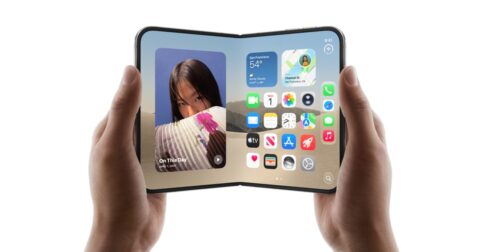
The specifications outlined by TrendForce describe a 5.5-inch OLED on the outside and a 7.8-inch OLED on the inside. The inner display supports ProMotion with a refresh rate of up to 120Hz.
It uses a book-style design that opens sideways, so the unfolded device is wider than it is tall. Think of an iPad mini folded in half. Closed, it works as a conventional one-handed iPhone.
Thickness is reported at roughly 4.5mm when open. If that holds, it would be the thinnest iPhone Apple has built, and about 9mm when folded, close to the 8.75mm iPhone 17 Pro Max. Apple would have fit a folding mechanism into essentially the same thickness as its current largest phone.
The crease is another focus. Apple aimed for a crease-free panel but current technology does not allow it, so the company appears to have settled on a minimal crease paired with a liquid metal hinge for durability. Hinges are the weakest point on foldables, so reinforcing that part is a sensible priority.
Face ID Gives Way to Touch ID
Prioritizing thinness comes at a cost to biometrics. There is no room for the full TrueDepth camera array, so the device is expected to use Touch ID rather than Face ID. It would be built into the side button, the same approach used on the iPad Air and iPad mini.
Face ID is out, but front cameras remain on both the inner and outer displays. The front camera is listed at 24 megapixels, so selfies and video calls work whether the device is open or closed.
Losing Face ID, long a standard on Pro iPhones, may matter more than it sounds for anyone considering a switch, since it changes how the phone behaves with masks or gloves.
Two Rear Cameras, No Telephoto
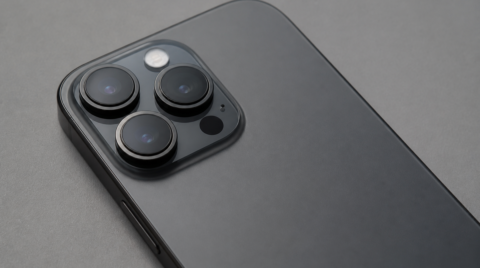
The rear setup is reported as a 48-megapixel Wide and a 48-megapixel Ultra Wide, with no telephoto lens. There was not enough thickness for a three-lens array, and the cameras sit where they can shoot whether the device is folded or unfolded.
Inside is an A20 Pro chip built on TSMC's 2nm process, paired with 12GB of RAM. The A20 Pro is said to be around 18 percent faster on the CPU than the A19 Pro and up to 30 percent more power efficient. Storage comes in 256GB, 512GB, 1TB and 2TB options.
The battery is split between the two halves, with a combined capacity estimated at 5,400mAh to 5,800mAh. That exceeds the 5,088mAh in the iPhone 17 Pro Max, which helps absorb the draw from a larger display.
On charging, MagSafe support now looks likely. Dummy models that circulated in the spring showed no magnet ring, which raised doubts, but Bloomberg's Mark Gurman has said the indications point to MagSafe being included.
Two colors are expected: a silver-white finish and a very deep indigo that reads close to black. Apple appears to be playing it safe on a first-generation product.
The Event Starts at 2:00 a.m. Japan Time on September 10
The event is called Surprise and shine. It begins at 10:00 a.m. Pacific Time on September 9, which is 2:00 a.m. on September 10 in Japan. The stream will be available on Apple's website, in the Apple TV app, and on YouTube.
The iPhone 18 Pro lineup is expected alongside the foldable, sharing the same A20 Pro chip and adding a variable aperture camera as its headline change. If Apple follows its usual pattern, retail availability lands on September 18, with preorders a few days earlier.
The standard iPhone 18 is not part of this fall's lineup and is said to be moving to spring 2027. A fall iPhone launch consisting only of Pro models and a foldable would be a first.
Summary
Apple's first foldable iPhone is expected to arrive at 2,099 to 2,299 USD, the highest price ever set for an iPhone. It pairs a 5.5-inch and a 7.8-inch OLED and gets down to roughly 4.5mm when open, but gives up Face ID and the telephoto lens to do it. Inside are a 2nm A20 Pro, 12GB of RAM and a split battery of at least 5,400mAh. Whether the experience justifies the price becomes clear at the event beginning at 2:00 a.m. Japan time on September 10.
※This article includes estimates and reports published before the official announcement. Please confirm final specifications and pricing with Apple's announcement.



















![Newsed Phone Opens Store for Used iPhones With 100% Battery Capacity [PR]](https://claypier.com/wp-content/uploads/2026/07/newsedphone-battery-100-iphone-480x236.png)