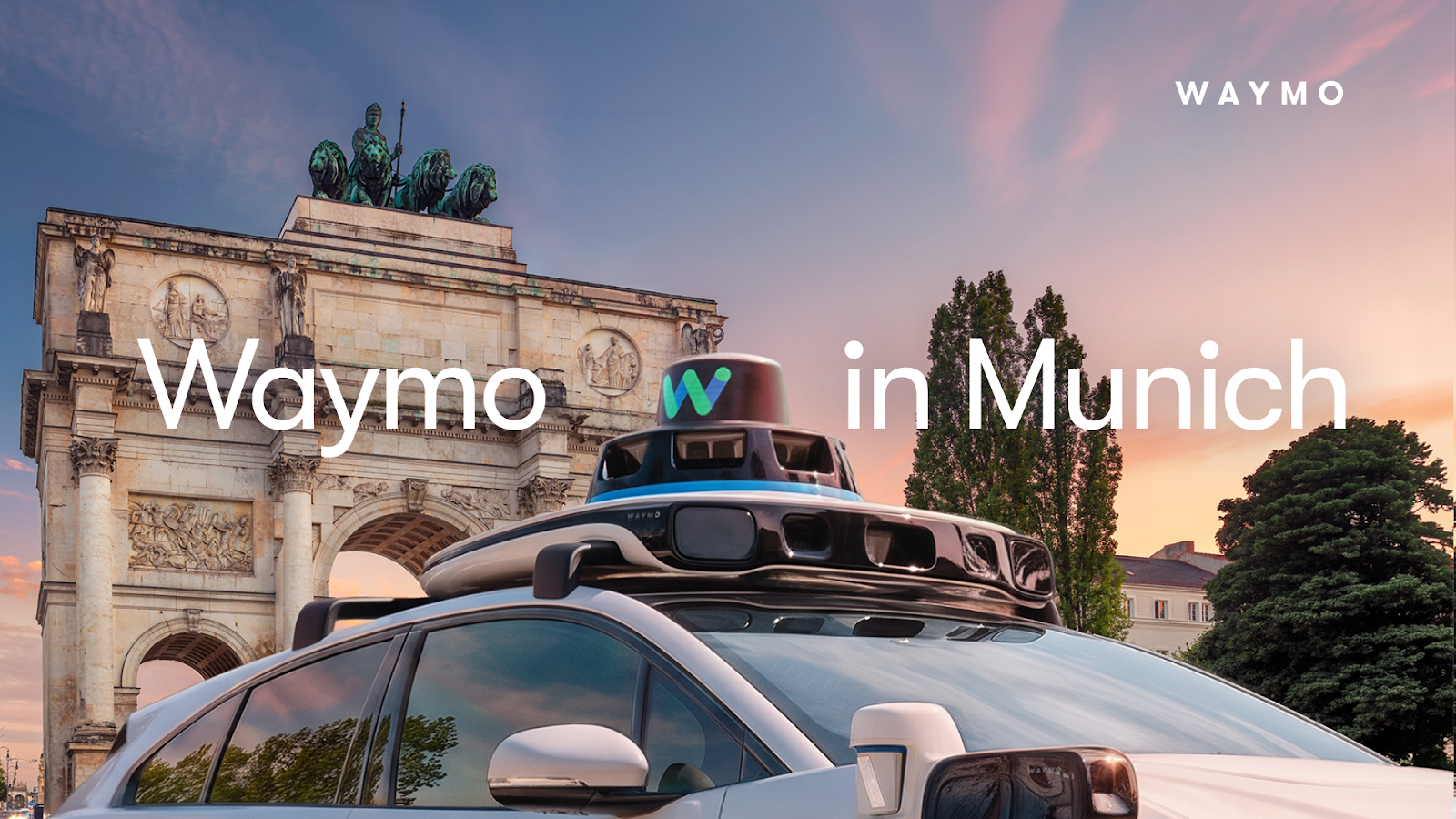
Alphabet's Waymo has begun laying the groundwork for a fully autonomous ride-hailing service in Munich, Germany. Its vehicles will appear on city streets within weeks, but for now a human will be behind the wheel. Commercial service for the general public is targeted for the end of 2027, which would make Munich the first city in the European Union with a standing robotaxi operation.
A deliberately slow start
The most striking part of the announcement is the runway Waymo has given itself: more than a year before anyone can hail a ride. The first task is building a high-definition map of the city's street network. After that comes repeated test driving with trained autonomous specialists in the driver's seat, verifying that the Waymo Driver can adapt to Munich's particular traffic conditions.
That reference to particular traffic conditions carries real weight. Behaviour tuned on American streets does not automatically transfer to a European old town where tram lines and cycle lanes are densely interwoven. Sign systems differ, so do right-of-way conventions, and so does the unspoken timing that local drivers share among themselves. Spending this much time on mapping and supervised testing makes sense as the work of closing that gap.
Waymo has now completed more than 20 million trips and currently handles hundreds of thousands of commercial rides every week. That is among the largest track records in the industry, and yet the company is still starting a new country with patient validation.
Why the heart of the auto industry
The choice of Munich reads as deliberate. Bavaria is the centre of German carmaking, with vehicle manufacturers, suppliers, research institutes and AI startups clustered in one region. Co-CEO Tekedra Mawakana described Munich as a world-class hub for mobility and engineering, and called joining the city an important milestone in the company's global expansion.
The local reception has been welcoming. Christian Hirte, Parliamentary State Secretary at the Federal Ministry of Transport, called autonomous driving the key to future mobility and framed Waymo's arrival as recognition that Germany has already put the necessary legal framework in place. Florian Herrmann, head of the Bavarian State Chancellery, pushed for a quick move from testing to real deployment and promised to cut red tape and remove regulatory barriers. When the host government treats its own rulemaking as the selling point, the European debate over autonomous driving has clearly moved on to a new stage.
Germany becomes Waymo's third international market after London and Tokyo. The company says it will build local fleet operations and create high-skilled jobs, which suggests it intends to put down roots as a business rather than run a one-off pilot.
Safety figures, and the homework that remains
Waymo has built its case around safety data. Measured over more than 350 million fully autonomous kilometres, the company reports 16 times fewer crashes involving serious injury than human drivers, 14 times fewer injury crashes involving pedestrians, and 6 times fewer injury crashes involving cyclists.
Those comparisons should be read with the limits of the operating environment in mind. Even so, the accessibility angle matters on a different axis from raw performance: the announcement highlights guide dog users who have long faced refusals from conventional taxi and ride-hailing services.
The permits required for commercial operation are not yet in hand. Waymo is still in discussions with the federal motor transport authority and with state and city officials, so the end-of-2027 target assumes those approvals arrive. Germany moved early on legislation covering autonomous vehicles, but the decision to allow driverless commercial service on real streets is still ahead.
Summary
Waymo has started preparing a fully autonomous ride-hailing service in Munich. Manual driving for high-definition mapping and supervised testing come first, with public access targeted for the end of 2027. It would be the EU's first standing robotaxi service, though the necessary approvals are still under negotiation, and how well the plan is received in the heartland of the auto industry will shape what happens next.