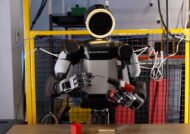
Chinese robotics maker Unitree has unveiled a humanoid robot called Superman. The company says the machine can jump 2 meters from a standing position and reach a top speed of 12.66 meters per second. Both figures exceed human records, but neither has been independently verified, and Unitree has given no indication that the robot will be productized. Development reportedly took a little over 3 months.
A 2-Meter Jump and 45.6 km/h Running
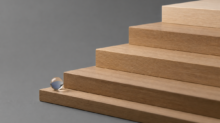
Unitree published 2 headline numbers. The first is a standing vertical jump reaching 2 meters. The second is a top running speed of 12.66 meters per second, which works out to roughly 45.6 kilometers per hour. The robot's leg length is given as 0.85 meters, meaning it produces that speed with legs shorter than a human's.
Jumping and sprinting both place heavy demands on leg output and on posture control at landing, and they have long been weak points for humanoid robots. A bipedal machine carries its center of mass high, and the longer it spends with only one foot on the ground, the easier it is to topple. Superman is a demonstration that deliberately pushes into that difficult territory.
How It Compares With Human Records
The reference points cited are a 1.8-meter standing jump and a running speed of 12.4 meters per second on the human side. Superman's figures edge past both. A speed of 12.4 meters per second corresponds to the peak velocity reached momentarily by the very fastest sprinters.
That said, the comparison is not a like-for-like one. Human records are measured under official competition conditions, while Superman's numbers come from a company demonstration video. Treating the two as directly comparable stretches the point; the figures are better read as a rough indication of the level reached.
Numbers That Have Not Been Verified
The important caveat is that these remain company claims. Test conditions such as payload, surface characteristics, and repeatability have not been disclosed. There is no way to tell whether the same numbers can be reproduced elsewhere, or how many attempts were needed to record them.
Robot locomotion performance shifts easily with floor friction, temperature, and battery charge. One-off records such as jump height and top speed are especially sensitive to those conditions, and without third-party measurement or a shared benchmark, they are hard to treat as comparable performance figures.
A Platform for Locomotion, Not a Product
Superman was not announced as a commercial product. It is a machine built to push the limits of locomotion, and it reportedly carries no working hands or grippers. Tasks like picking up objects, carrying them, or handling tools are not part of the picture, at least for now.
Unitree itself says the hardware still has considerable room for improvement. Given that development took only a little over 3 months, it makes more sense to read Superman as a prototype for probing achievable locomotion performance than as a finished design.
Shipment Numbers and the Timing of the Reveal
Unitree is based in Hangzhou and is known for humanoid robots that run, dance, and perform martial arts routines. According to the company, it had shipped roughly 18,000 humanoid robots across its various models as of the end of July. That count includes machines aimed at research institutions and developers, but for humanoid robots it puts the company at the doorstep of volume production.
The reveal came a few days before Unitree listed on the STAR Market of the Shanghai Stock Exchange. The listing raised 6.1 billion yuan (about 145 billion yen). It also coincided with the opening of a major robotics exhibition in Beijing, so the timing was clearly chosen for maximum visibility.
※1 CNY = 23.7 JPY (as of August 18, 2026)
Summary
Superman is a humanoid robot that Unitree claims can jump 2 meters and run at 12.66 meters per second. On paper those numbers beat human records, but test conditions have not been published and no third party has verified them. It carries no working hands and has no announced path to production, so at this stage it is best viewed as a demonstration of how far humanoid locomotion can be pushed. Even so, reaching this level in a little over 3 months says something about the pace of development in this field.