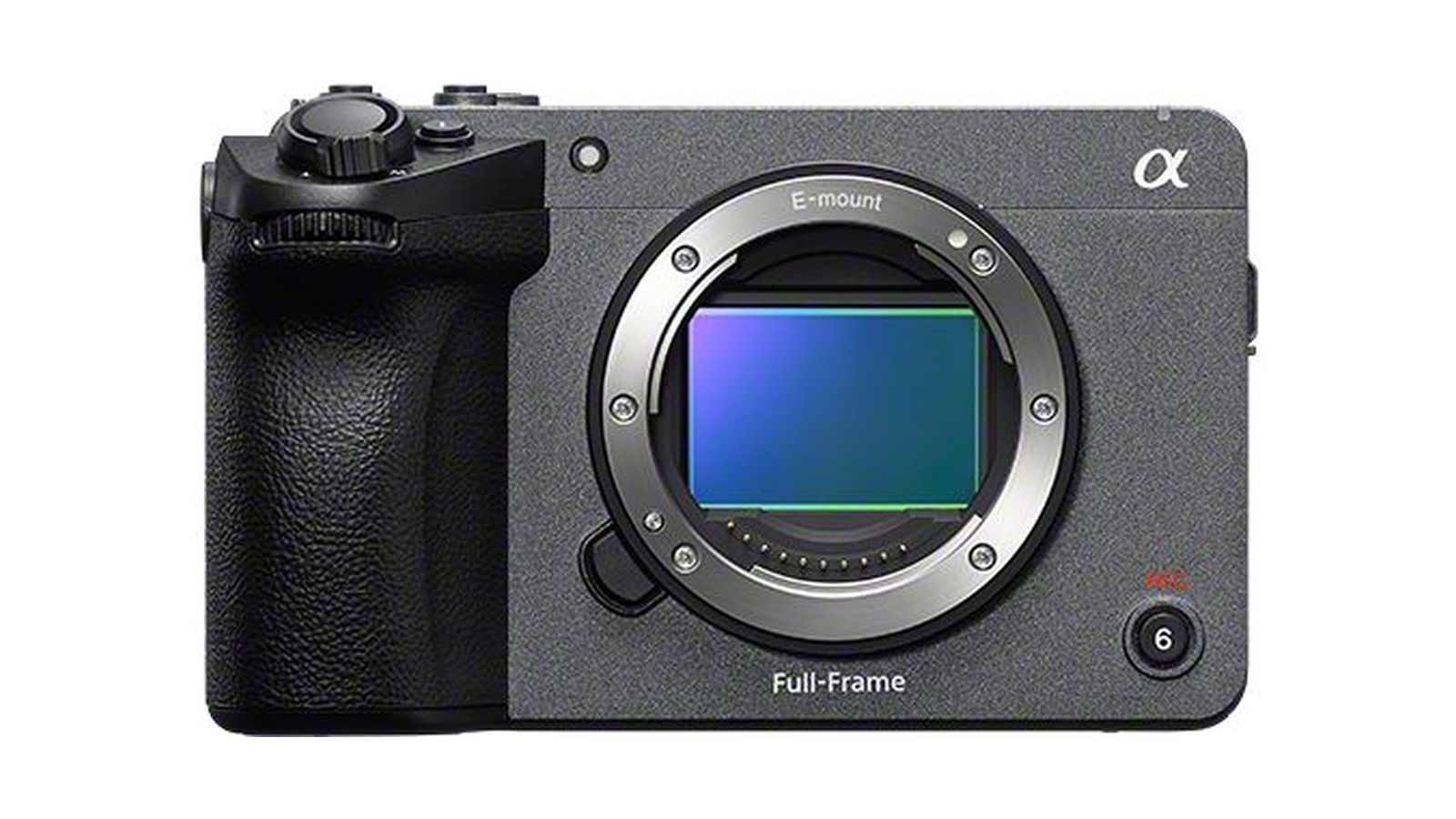
Sony has announced the FX5, a new Cinema Line camera. It carries a newly developed 5K full-frame stacked CMOS image sensor and can record 16-bit compressed RAW internally, with no external recorder required. The camera ships on August 21, 2026. The ILME-FX5B body is priced at 812,900 yen, while the ILME-FX5, which bundles the XLR handle unit, is 900,900 yen. Both figures include tax.
A New 5K Sensor and Open Gate Capture
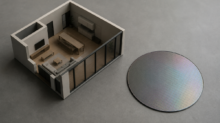
At the core of the FX5 sits a newly developed 5K full-frame stacked Exmor RS CMOS image sensor with a maximum effective resolution of approximately 16.6 megapixels. It is paired with BIONZ XR2, an image processing engine that integrates circuitry dedicated to AI processing.
The notable step forward is open gate capture, a full 3:2 readout of the sensor, which is a first for the FX series. Using the full vertical area of the sensor makes it practical to pull a vertical crop out of footage shot horizontally. On projects that have to deliver in several formats at once, that flexibility translates directly into saved time.
There are conditions attached. Open gate capture is available only when recording X-OCN. Open gate in XAVC S-I is planned for software update Ver. 2.00, scheduled for August 2027 or later.
On the tonal side, S-Log3 capture delivers 15+ stops of latitude. Base ISO can be set to ISO 800, ISO 4000 or ISO 12800.
16-Bit RAW Recorded Internally, No External Recorder
Recording is where the FX5 makes its biggest leap. X-OCN, Sony's own 16-bit scene-linear RAW format, can now be recorded directly inside the camera body. Shooting RAW on a compact camera previously meant building out an external recorder, and that entire stage disappears. For handheld and gimbal work, a lighter rig matters.
Alongside the existing X-OCN LT, two new codecs arrive: X-OCN C1 and X-OCN C2. Both are designed to hold data size down, keeping transfer speeds and storage consumption at a workable level and easing the load on post-production. X-OCN recording is available in Cine EI only. At launch the camera supports up to 5K 60p, 4K 120p and Full HD 240p.
AI-Driven Subject Recognition and White Balance
The AI processing circuitry built into BIONZ XR2 recognises the eyes of people, animals and birds. AI-based pose estimation goes further, tracking not just eye position but body and head position as well, so autofocus holds up in dark scenes. Real-time tracking, which follows a subject automatically, is also supported.
AI reaches into auto tracing white balance (ATW) too. Data from visible-light and IR sensors is combined with deep-learning light source estimation to sharpen scene detection. Sony says this yields more stable results than the FX3 in situations where colour tends to shift, such as shade or indoor lighting.
A Compact Body Built for the Set
The exterior is a compact, lightweight body with a flat top design. Buttons and dials are laid out for intuitive handling on set, covering handheld work, gimbals and shooting in tight spaces.
Optical 5-axis in-body image stabilisation has been reworked, widening the roll-axis correction range to roughly twice that of the FX3. Rotational shake is especially visible in handheld footage, so the improvement should be felt in practice.
For audio, pairing the camera with the newly developed XLR handle unit enables 4-channel recording at up to 96 kHz, 32-bit float. For monitoring, the optional DVF-EL1 0.58-type tilting OLED viewfinder is supported, and the on-body screen has grown relative to the FX3 to a 3.5-type 16:9 touch panel with approximately 2.76 million dots. It uses a 4-axis multi-angle mechanism, and shooting information is arranged around the edges of the display so it does not sit on top of the image. Operation centres on the BIG6 home screen inherited from CineAlta cameras, which gathers frame rate, exposure, LUT and other key settings into a single view.
Reliability has been engineered in as well. The cooling fan sits in an independent air chamber, and together with a dust- and moisture-resistant design it is built for long recording sessions outdoors and in demanding conditions. Accessory screw holes are placed around the body so a rig can be assembled without a cage. The HDMI output can display information that differs from the on-body monitor, or mirror it.
Summary
The FX5 is a video-dedicated Cinema Line camera that packs a newly developed 5K full-frame stacked sensor, BIONZ XR2, internal 16-bit RAW recording and open gate capture into a compact body. The new X-OCN C1 and C2 codecs, roll correction doubled against the FX3 and a larger 3.5-type monitor line up as updates that matter on set. It arrives on August 21, 2026, priced at 812,900 yen for the ILME-FX5B body and 900,900 yen for the ILME-FX5 with the XLR handle unit.