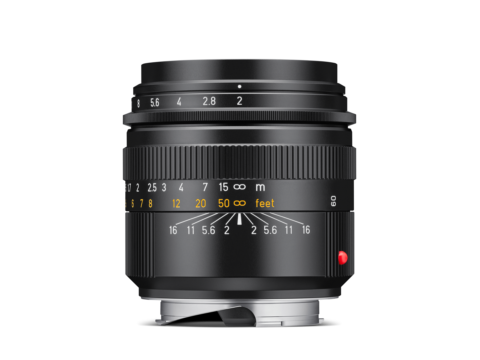

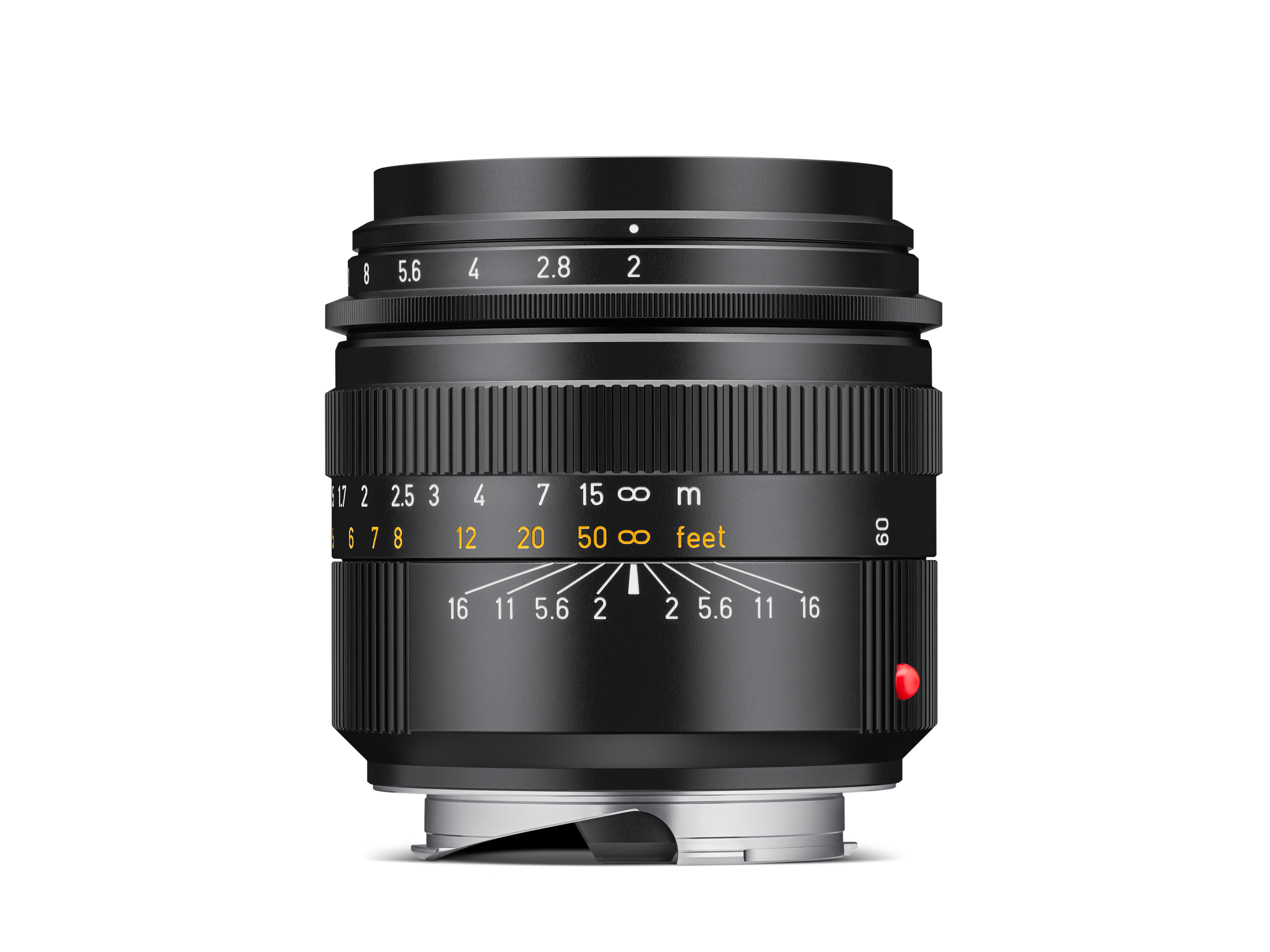
Leica Camera has released the Summicron-M 66 f/2, an M-mount prime limited to 660 units worldwide. It is a modern rebuild of the Elcan 66mm f/2, a reconnaissance lens developed in the late 1960s on a US Navy commission. Sales began worldwide on September 3, with Japan following on September 4. The price at the Leica Online Store in Japan is 1,870,000 yen.
Why a Focal Length as Odd as 66mm Exists
The original Elcan 66mm f/2 was designed by Dr. Walter Mandler at Ernst Leitz Canada. Based in Midland, Ontario, he headed development there in the late 1960s and was already regarded as a leading authority in optical design.
The lens was a bespoke order from the US Navy, built specifically for covert reconnaissance photography. Mandler said at the time that Naval Intelligence wanted a lens that looked like any other but delivered an unparalleled level of resolution. Only about 200 units were produced, making it one of the hardest lenses in the M system to find.
The awkward-looking 66mm focal length was not arbitrary either. It was the number that fell out of balancing three demands at once: maximum resolution, fine contrast rendition, and a compact body.
Given the nature of the work, records are thin, but the lens is said to have been used beyond its original US Navy commission by Western allies during the Cold War. The camera most often named alongside it is the Leica KE-7A, the military variant of the Leica M4. Camera and lens packed down small, which made the pair useful for discreet shooting in situations where fine detail mattered. Period sets shipped with a manual explaining how to destroy the camera and lens if they were about to be captured.
Six Elements in Five Groups, 456g
The new Summicron-M 66 f/2 joins what Leica calls its Classic Line. This is the first time the focal length has left military service and been offered to photographers generally. The optical design is based on the original but has been optimized to meet current standards, and the barrel was rebuilt on the same principle.
The construction is six elements in five groups. The aperture runs from f/2 wide open to f/16, with nine blades and click stops at half-increment settings. Minimum focus distance is 1m, where the maximum reproduction ratio is 1:13.4 and the smallest object field measures 321 x 481mm. Angle of view on full frame is 36.3 degrees diagonally, 30.5 degrees horizontally and 20.6 degrees vertically.
The lens is approximately 60.1mm long and 60mm in diameter, and weighs approximately 456g. The filter thread is E49 and the hood screws on. In the box are the hood, metal front and rear caps, and a leather case. Production is in Germany.
As for rendering, Leica describes soft bokeh sitting alongside high contrast near maximum aperture, with the lens's original purpose surfacing as it is stopped down and resolution takes over. Sitting between a classic 50mm and a short telephoto, the focal length keeps perspective natural while adding a slight compression effect.
The Aperture Ring Turns the Wrong Way, and the Engravings Follow the Original
What clearly separates this lens from current M-Lenses is how it handles. The aperture ring rotates in the opposite direction to a standard M-Lens, and the distance scale is laid out to military specification. These are the original's conventions carried over intact, and longtime Leica users may find them disorienting at first.
The engravings also echo the original. The front ring carries the individual serial number alongside the optical calculation number B1047 and a 12-digit internal material number. The period Elcan carried its production number, the calculation number C283 and a 13-digit US Navy order number in the same position. Where the original read Elcan, the new lens reads Leitz Wetzlar.
An unusual touch sits on the side of the barrel: a small engraved 60. Leica explains this as a nod to the precision-lens convention of the era, in which the measured focal length was marked without a decimal point, and says it stands for 66.0mm. The typeface is noticeably finer than on current Leica lenses, so the new 66mm focal length is distinguishable at a glance.
660 Units, and Where Serial 001 Is Going
The worldwide limit of 660 units echoes the 66mm focal length. Each lens is numbered, but the number is engraved on the front ring rather than printed on the box, so buyers will not know which of the 660 they received until they open it and look.
The price in Japan is 1,870,000 yen including tax, and the recommended retail price in Europe is 9,850 euros including VAT (about 1.78 million yen). The lens is sold through Leica Stores, the Leica Online Store and authorized dealers, with worldwide sales starting September 3.
One of the 660 will not reach a shop counter. Serial number 001 is set to be auctioned at the Leitz Photographica Auction in Wetzlar in November 2026. As the first-numbered example of the edition, what it finally sells for stays an open question until then.
*1 EUR = 181 JPY (as of September 7, 2026)
Summary
The Leica Summicron-M 66 f/2 is a 660-unit limited edition that rebuilds the Elcan 66mm f/2, of which only around 200 were made for the US Navy, as a six-element, five-group M-mount lens weighing about 456g. The reversed aperture ring, the military-specification distance scale and the B1047 calculation number engraved on the front ring all carry the original's conventions forward. It sells for 1,870,000 yen in Japan, where sales began on September 4. This is less a working tool than a chance to own one of the stranger entries in the history of the M system.