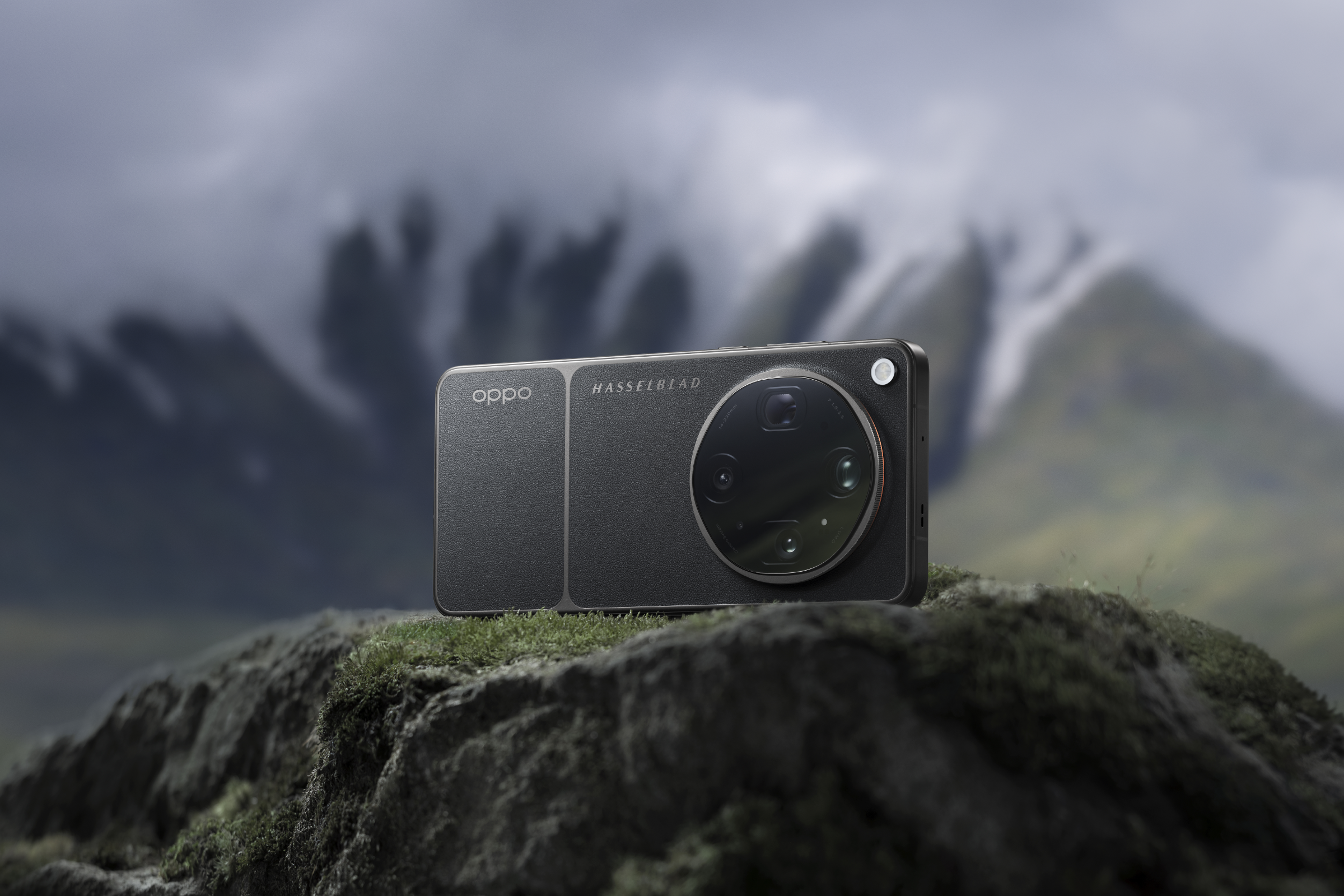
OPPO's camera-focused flagship, the Find X9 Ultra, went on sale in Japan on July 8. Built around a five-camera system co-developed with Hasselblad, it features the world's first 10x optical, 50-megapixel super telephoto camera and Japan's first dual 200-megapixel camera setup. It also packs a 7,050mAh battery and the Snapdragon 8 Elite Gen 5, priced at 274,800 yen (tax included). Here is a closer look at the Japanese model.
World-First 10x Optical, 50MP Super Telephoto Built on a Periscope Design
The headline feature is the super telephoto camera covering a focal length equivalent to 230mm with 10x optical zoom. Pairing 10x optics with a 50-megapixel sensor is a world first for smartphones (as of June 2026, according to OPPO). A proprietary periscope structure reflects light 5 times inside the lens barrel, securing a long optical path within a slim body. A dedicated telephoto sensor-shift stabilization system suppresses blur even at high magnifications, making it suited for concerts, sports events, and other scenes where you need to capture a fleeting moment from afar.
An optional accessory, the OPPO Find X9 Ultra Hasselblad Earth Explorer Kit, extends the reach further with a 300mm-equivalent telephoto unit that attaches to the rear camera module. The unit uses a 16-element all-glass spherical lens design in an all-metal body, offers a dedicated hybrid stabilization system combining optical and electronic correction, and supports 4K 60fps Dolby Vision video recording.
Japan's First Dual 200MP Cameras Plus a Multispectral Camera
Both the wide-angle camera and the portrait telephoto camera use approximately 200-megapixel sensors, making this the first smartphone in Japan with two 200-megapixel cameras. The wide-angle side uses a large 1/1.12-inch sensor (F1.5, 23mm equivalent), which OPPO says retains image quality even after cropping and delivers low-noise results in dim conditions. The 3x optical telephoto uses a 1/1.28-inch sensor (F2.2, roughly 70mm equivalent) and offers a Hasselblad Portrait mode inspired by the rendering of medium-format cameras. A 50-megapixel ultra-wide camera at 14mm equivalent rounds out the conventional lenses.
The fifth camera is an approximately 3.2-megapixel multispectral camera supporting 24-channel spectral analysis. It precisely measures the wavelengths of ambient light and feeds that data into color correction, working with the Hasselblad Natural Color Solution based on Hasselblad's color science and OPPO's own LUMO image engine to reproduce colors close to what the eye sees, even at dusk or under complex lighting. For video, the phone supports 8K recording, 10-bit Log capture, and the new O-Log2, with post-shoot color grading in mind.
A 7,050mAh Battery in a Body Around 9mm Thin
The battery capacity is 7,050mAh, among the largest for smartphones sold in the Japanese market. Thanks to a high-density silicon-carbon battery, the body stays slim: about 9.1mm thick for the leather-textured Tundra Umber and about 8.7mm for Canyon Orange, weighing about 236g and 235g respectively. Charging supports up to 100W wired and 50W wireless.
Core performance is equally strong, with Qualcomm's latest Snapdragon 8 Elite Gen 5, 12GB of RAM, and 512GB of storage. The display is an approximately 6.8-inch AMOLED panel with QHD+ resolution (3,168 x 1,440) and a refresh rate of up to 144Hz. Ingress protection covers both IP68 and IP69, the latter certifying resistance to 80-degree-Celsius high-pressure water jets, and the screen uses Corning Gorilla Glass Victus 2. A splash-touch feature keeps the screen usable with wet hands. Biometrics include an ultrasonic in-display fingerprint reader and face recognition.
On the software side, the phone runs ColorOS 16 based on Android 16. It includes AI Mind Space, which organizes and summarizes information scattered across multiple apps, along with photo editing tools such as AI Eraser and AI reflection removal. Cross-OS features are extensive: Quick Share works with AirDrop for direct file transfers with iPhones and Macs, and O+ Connect lets you mirror and operate the phone from a PC.
Priced at ¥274,800, Sold Through SoftBank Free Style, IIJmio, and More
The Japanese price is 274,800 yen (tax included) in a single 12GB + 512GB configuration. Sales channels include SoftBank Free Style within the SoftBank Online Shop for MNO, IIJmio for MVNO, major retailers such as Edion, Kojima, Joshin, Sofmap, Bic Camera, Yamada Denki, and Yodobashi Camera, and e-commerce outlets including the Amazon OPPO official store and the OPPO official store. The SIM configuration is dual: nanoSIM plus nanoSIM/eSIM. Note that because the model number is shared with the global version, it does not support FeliCa (Osaifu-Keitai), which is worth knowing before purchase.
Summary
The OPPO Find X9 Ultra crams the world's first 10x optical, 50-megapixel super telephoto, dual 200-megapixel cameras, and a 7,050mAh battery into one device—a flagship that goes all-in on camera performance. At 274,800 yen it is far from cheap, but for users who prioritize telephoto shooting, it stands out among the options officially available in Japan. The lack of FeliCa support is the one sore point, yet for anyone choosing a smartphone for its camera, it is a compelling candidate.