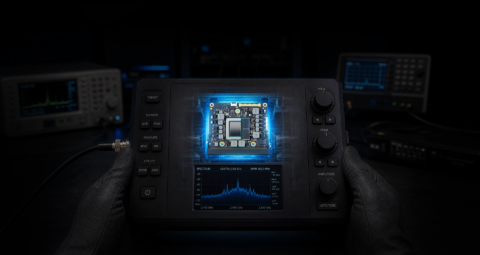
NVIDIA announced Jetson Orin Nano 2, an embedded AI module for robotics, on August 25, 2026, local time. It delivers 78 TOPS of AI compute and doubles the inference performance of the previous Jetson Orin Nano Super. The board keeps the same compact form factor, and at matched performance it draws 40 percent less power. The module and developer kit are expected in the first half of 2027.
Twice the Inference Performance in the Same Footprint
Entry-class embedded AI modules have long served as the brain for machines that need compute in a small, low-power package: robots, delivery and inspection drones, and vision AI systems. Jetson Orin Nano 2 keeps that envelope untouched and replaces what is inside.
The CPU is an 8-core Arm Cortex-A78. Memory is 8GB of LPDDR5X with up to 120GB/s of bandwidth. The GPU uses the Ampere architecture with 1,536 CUDA cores and improved Tensor Cores. AI compute reaches 78 TOPS, up from the 67 TOPS of the previous Jetson Orin Nano Super.
What matters more than the headline TOPS figure is that real inference speed climbs further. NVIDIA attributes the 2x jump in model inference performance to the improved Tensor Cores combined with higher memory bandwidth. In embedded workloads, how fast the module can stream model weights often matters more than raw arithmetic throughput, so the move to LPDDR5X pays off directly.
A 15-Watt Mode That Matches the Previous Generation
The power envelope runs from 15 to 40 watts. The ceiling is higher than before, but the practical story is at the low end. In 15-watt mode, Jetson Orin Nano 2 delivers the same performance as its predecessor. If the performance a design already has is good enough, the power budget can drop by 40 percent.
For battery-powered machines such as drones and cleaning robots, where thermal and power budgets are tight, that difference translates directly into flight time, run time, and enclosure design freedom. The honest reading is that engineers now get to choose: add performance, or cut power.
Deepu Talla, vice president of robotics and edge AI at NVIDIA, said today's small and medium frontier models have reached the accuracy of last year's largest frontier models, unlocking real-time intelligence for edge devices. As models shrank, the hardware moved to meet them.
Built for Open Models, Including Gemma 4 and Qwen 3
Jetson Orin Nano 2 runs large language models (LLMs) and vision language models (VLMs) optimized for memory-efficient edge inference. Alongside NVIDIA's own open models, NVIDIA Cosmos and NVIDIA Nemotron, the supported list names outside open models such as Google's Gemma 4 and Alibaba's Qwen 3.
That reflects a shift in how edge AI is built. The old pattern was a single-purpose model for image classification or object detection. The current pattern is a model that handles language and vision together, understands context, and then acts. The interface for instructing a machine is moving from settings screens to natural language.
On the software side, NVIDIA provides its open software stack along with NVIDIA Jetson agent skills. More than 3 million developers already build on NVIDIA's robotics stack, which makes existing work easy to carry over.
Early Adopters and the Partner Ecosystem
Cognex in machine vision, Doosan Bobcat in construction equipment, and Matic in home cleaning robots are among the first to adopt and explore the module.
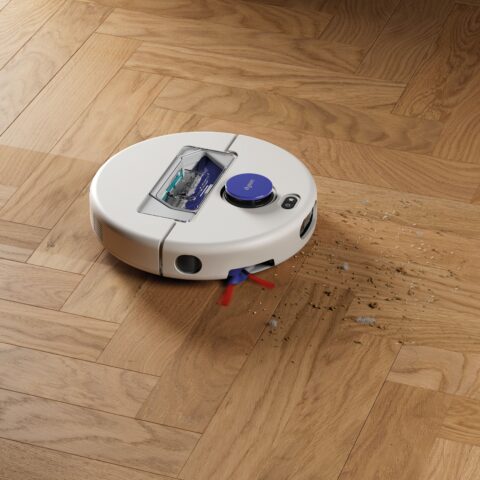
Matic plans to use Jetson Orin Nano 2 to make interactions with its cleaning robots more intuitive. Navneet Dalal, cofounder and CEO of Matic Robotics, said home robots need to understand people, map spaces precisely, understand the layout of objects and spaces, and clean autonomously in dynamic and constantly changing environments. Conversational AI, gesture detection, precision mapping, and semantic understanding are all meant to run inside a compact chassis.
Wing, the drone delivery company and Alphabet subsidiary, uses the current Jetson Orin Nano Super in its delivery drone fleet and plans to evaluate Jetson Orin Nano 2. Dinuka Abeywardena, head of perception at Wing, said drone delivery depends on AI that can enable fast, reliable understanding of the real world.
Beyond those companies, partners including AAEON, ADLINK, Advantech, Aetina, Antmicro, Aptiv, AVerMedia, Connect Tech, and Seeed Studio are preparing carrier boards, hardware systems, and reference designs. That depth is a large part of why the Jetson series keeps getting picked in embedded work.
Summary
Jetson Orin Nano 2 is an entry-class embedded AI module that reaches 78 TOPS and doubles inference performance without growing in size, and that in 15-watt mode matches the previous generation while using 40 percent less power. Its ability to run open LLMs and VLMs, including Gemma 4 and Qwen 3, at the edge is what separates it from designs built around single-purpose models. The module and developer kit are due in the first half of 2027, so real hardware is still some way off. Which open models settle in as the defaults for this class is the next thing worth watching.