
On November 12 (U.S. time), Anthropic announced Claude Meetings, a new feature that lets its AI assistant Claude join video calls. Claude takes part in the meeting as one of the participants, answering questions, writing up notes and co-creating documents and whiteboards. The feature is beginning to roll out in beta for users on Team and Enterprise plans.
Claude Joins Calls as a Visible Participant
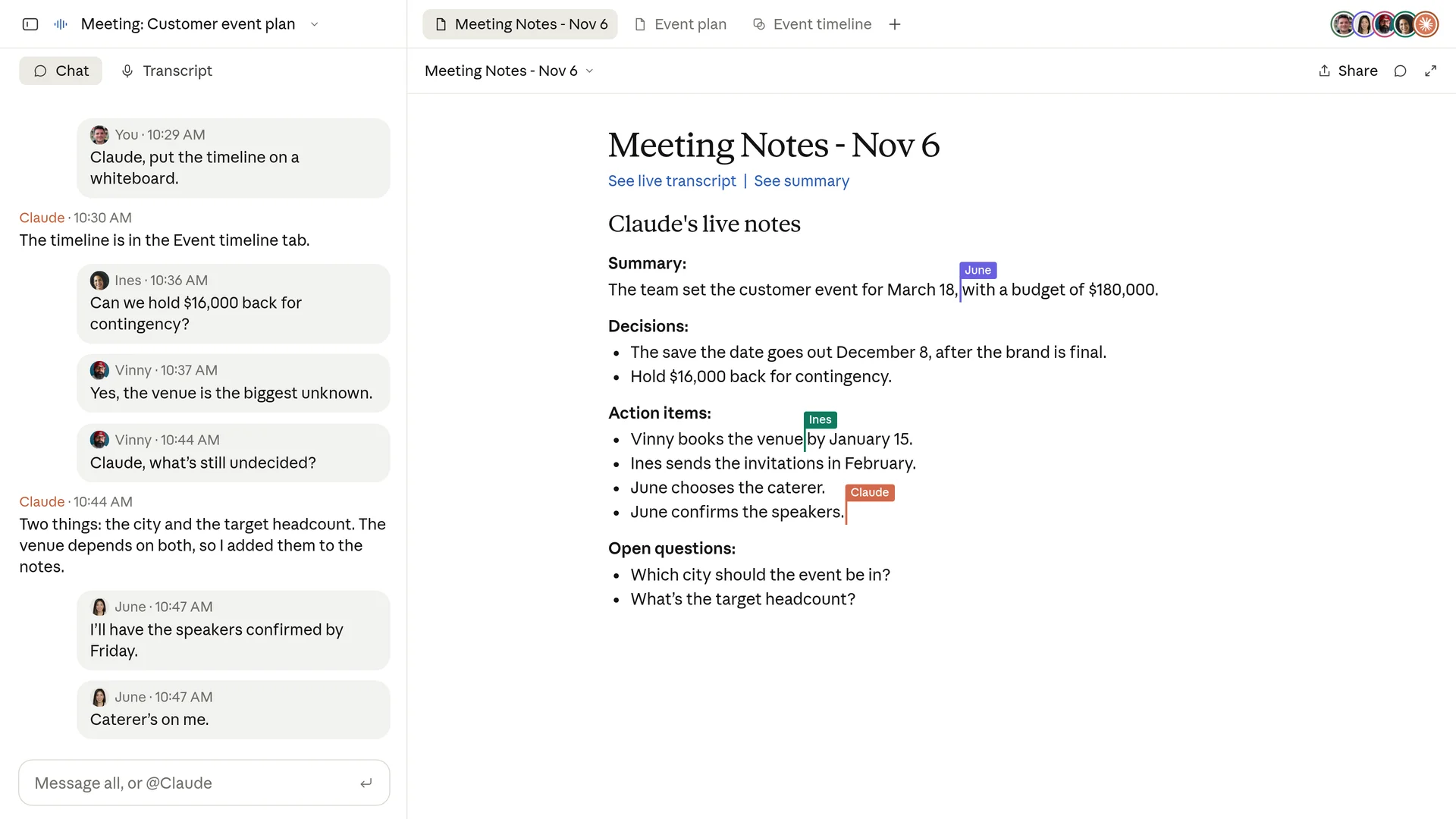
According to Anthropic's official announcement, Claude joins video calls as a visible participant. During a meeting it answers participants' questions by voice or in chat, and according to a report by Japan's PC Watch, it responds in text by default. With the permission of the person asking, Claude can also look up information using connected tools.
Claude can create artifacts such as documents and whiteboards while the meeting is under way, and other invited participants can edit them at the same time. Claude also writes the meeting notes and action items. The aim is for the minutes and materials to be ready by the time the meeting ends.
Google Meet First, With Other Platforms Coming Soon
For now, Google Meet is the only supported video conferencing service. Anthropic says support for other video conferencing platforms is coming soon.
How the feature is enabled depends on the plan. On Team plans, inviting Claude to meetings is available by default, and an admin can turn it off. On Enterprise plans, an admin turns it on for all or part of the organization.
During the beta, the feature is not available to organizations that use zero data retention (ZDR), HIPAA-ready configurations or customer-managed encryption keys (CMEK).
Notes and Transcripts Are Free During the Beta
On pricing, Claude's notes and transcripts are free on Team and Enterprise plans during the beta. According to PC Watch, in-meeting answers are also free, but answers that use connected tools count toward the plan's usage. Artifacts Claude creates during meetings, such as documents and whiteboards, are free through February 10, 2027. Anthropic's announcement does not state pricing after the beta ends.
How External Participants and Recordings Are Handled
By default, Claude does not join meetings that include invitees from outside the organization, and it leaves if someone from outside the organization joins partway through. Admins can change the setting to allow Claude to join meetings with external guests.
What is stored is the transcript, a summary and descriptions of the screen; the audio itself is not stored. In its announcement, Anthropic advises users as follows.
Before you add Claude or turn on auto-join, make sure everyone on your calls is OK with being transcribed.
(In other words, users should confirm that all participants agree to being transcribed before adding Claude or turning on auto-join.)
Anthropic also says it is working with Gong, Attention, Granola, Fireflies.ai, Otter and Plaud so that meeting transcripts can be sent to those companies' existing tools. Setup instructions are available in the Help Center.
Our Take
There are already many tools that automatically transcribe and summarize meetings, but Claude Meetings puts its emphasis on answering questions during the meeting and producing materials on the spot. If less time is spent cleaning up minutes afterward, the burden of post-meeting wrap-up should shrink. At the same time, some participants are likely to be uncomfortable with an AI joining the meeting at all, so the design choice not to join meetings with outside participants by default, along with the push to confirm consent, looks set to be an important factor for companies deciding whether to adopt it. When support beyond Google Meet arrives, and which services come first, will also be worth watching.
Summary
Anthropic has begun offering Claude Meetings in beta, letting Claude join video calls to answer questions, take notes and co-create materials. It is available on Team and Enterprise plans, and Google Meet is currently the only supported service. During the beta, notes and transcripts are free, and artifacts created in meetings can be used free of charge through February 10, 2027.