Render images of what appear to be Lenovo's first Googlebook devices have surfaced, giving the clearest look yet at the brand Google is using to replace the Chromebook. Two clamshell laptops, a 2-in-1 tablet, and even a matching wireless mouse are visible, and the keyboard carries a "G" key where the Windows key normally sits. With a fall launch on the calendar, the shape of the lineup is finally coming into focus.
Two laptops, a 2-in-1, and a mouse
What leaked is not product photography but a promotional render, with three devices arranged in a single frame: a slim clamshell laptop on each side and a 2-in-1 tablet with a detachable keyboard in the middle. A wireless mouse sits in the foreground.
The details read as unmistakably Lenovo. Both laptops use a reverse notch above the display, the small tab that houses the webcam and lets the bezels stay thin without cropping the camera. It is a design cue the company has used for years. Along the sides, both USB Type-A and USB Type-C ports are visible, so the practical port selection that defined the Chromebook era survives.
The 2-in-1 shows four speaker openings along the keyboard section, with Dolby Atmos branding in the frame, suggesting the tablet is meant to hold its own on audio. Stylus support is also indicated, and a single camera sits on the back. That combination points at a mainstream device aimed at handwriting and video, whether for education or general consumer use.
The wireless mouse has a dedicated AI button. A thin light strip runs along its side, and the same strip appears on both laptops and the 2-in-1. Matching the lighting across all four products looks like a deliberate move to give the new brand a visual signature.
Nothing in the render reveals processors, memory, pricing, or final product names. This is an exterior look and the features that can be inferred from it, nothing more.
Why the "G" key matters
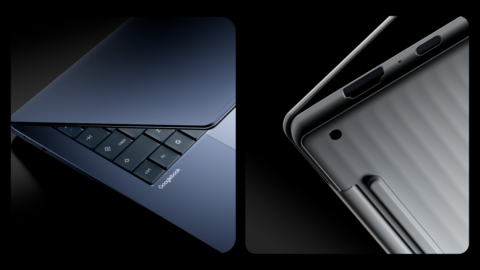
The most telling detail is the bottom-left corner of the keyboard. Where a Windows key would normally sit, there is a key marked with a single letter "G." Below the keyboard on the left side, the render also shows "Googlebook" lettering on the palm rest.
The natural reading is that this key succeeds the search, or launcher, key found on ChromeOS machines. Because Aluminium OS is built with Gemini embedded at the system layer, it is plausible that pressing it summons the assistant directly. Handing over the physical real estate the Windows key has occupied for decades is a fairly literal illustration of what a laptop keyboard is now expected to call up: not the OS, but the AI.
The lettering and finish suggest the render reflects a near-final design. It is still a render, though, so details can shift before mass production.
Retiring the Chromebook to bet on the Googlebook
Some background on what a Googlebook actually is. On May 12, 2026, at The Android Show: I/O Edition, Google announced Aluminium OS, a desktop operating system based on Android, along with Googlebook as the brand for the laptops that run it. On the consumer side it replaces ChromeOS, which effectively retires the Chromebook name.
Aluminium OS is built on Android 17, and Play Store apps sit alongside the full Chrome browser on the same machine. Where ChromeOS put the browser at the center, the Googlebook brings the app library over from Android. Combined with the Gemini-first design, this is more than a rename.
The hardware comes from Acer, ASUS, Dell, HP, and Lenovo, all of them long-time Chromebook builders. Processors are expected from Intel, Qualcomm, and MediaTek, meaning x86 and Arm will run in parallel. The target is the premium tier above 999 USD (about 160,000 yen), a very different segment from the budget education market Chromebooks built.
※1 USD = 159 JPY
That is what makes this leak interesting. The fact that Lenovo's first showing is a three-device set including a 2-in-1, not just a clamshell, signals that the Googlebook is being designed as a category that lines up directly against Windows laptops and the MacBook.
August 12, or IFA in the fall?
Google holds its Made by Google event in New York on August 12. The Pixel 11 series, the Pixel Watch 5, and the company's first tracker, the Pixel Tag, are all expected there. With phones and wearables headlining, it is unclear whether Googlebook details get any real stage time.
A separate fall moment looks more likely. IFA 2026 opens in Berlin on September 4, and it is where Lenovo and its rivals traditionally bring new PCs, so seeing Googlebook hardware on the show floor is a reasonable bet. The launch window for the Googlebook itself has been described as this fall from the start.
In other words: August belongs to Pixel, and September onward belongs to the Googlebook. The timing of this leak, right before August 12, serves as a reminder that the second act is coming.
Summary
The leaked renders of Lenovo's first Googlebook devices show two clamshell laptops, a 2-in-1 tablet with Dolby Atmos audio and stylus support, and a wireless mouse with an AI button. Putting a "G" key where the Windows key belongs is the clearest sign of how central Gemini is to Aluminium OS. Specifications and pricing remain unknown, but between the August 12 Made by Google event and IFA in September, the full picture should arrive soon.