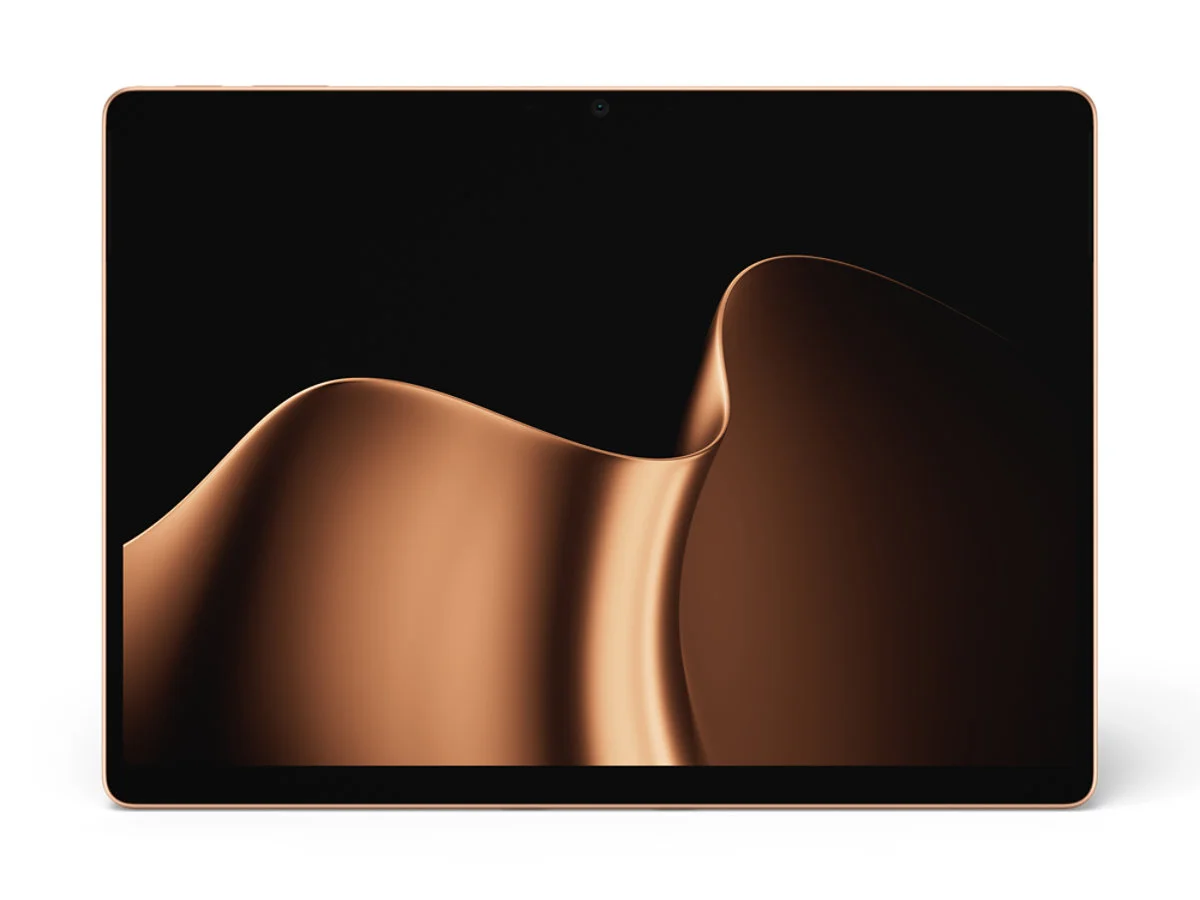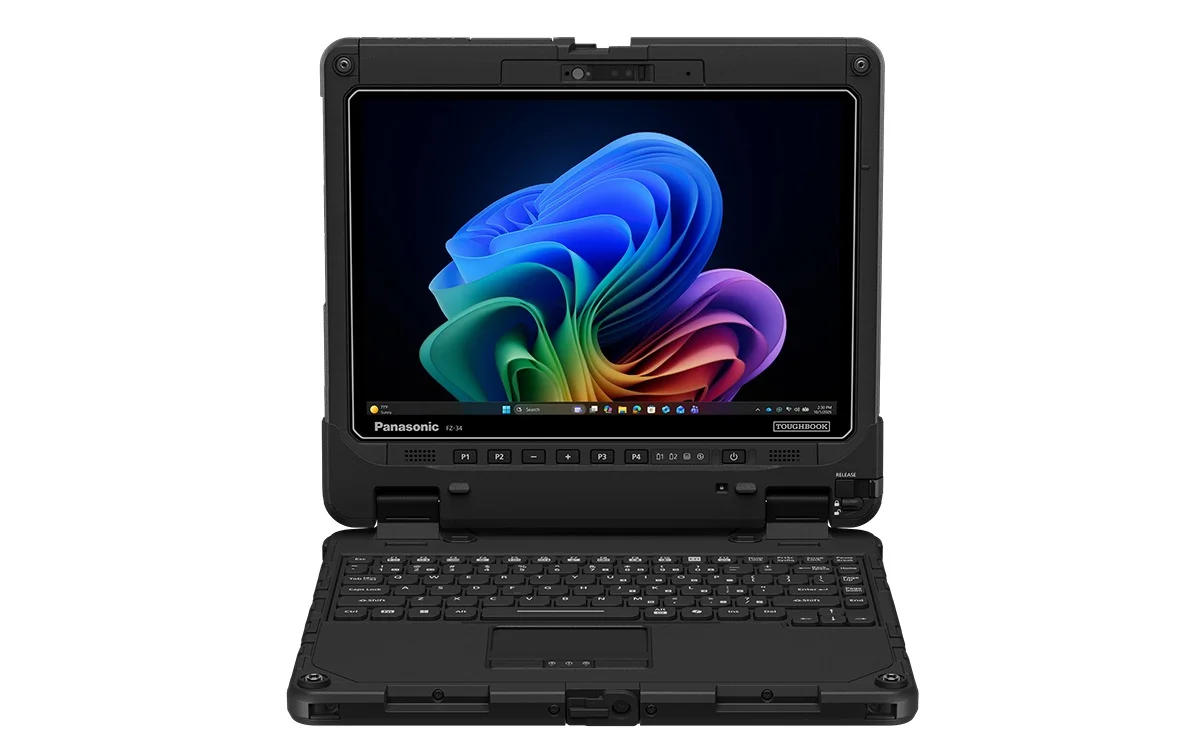

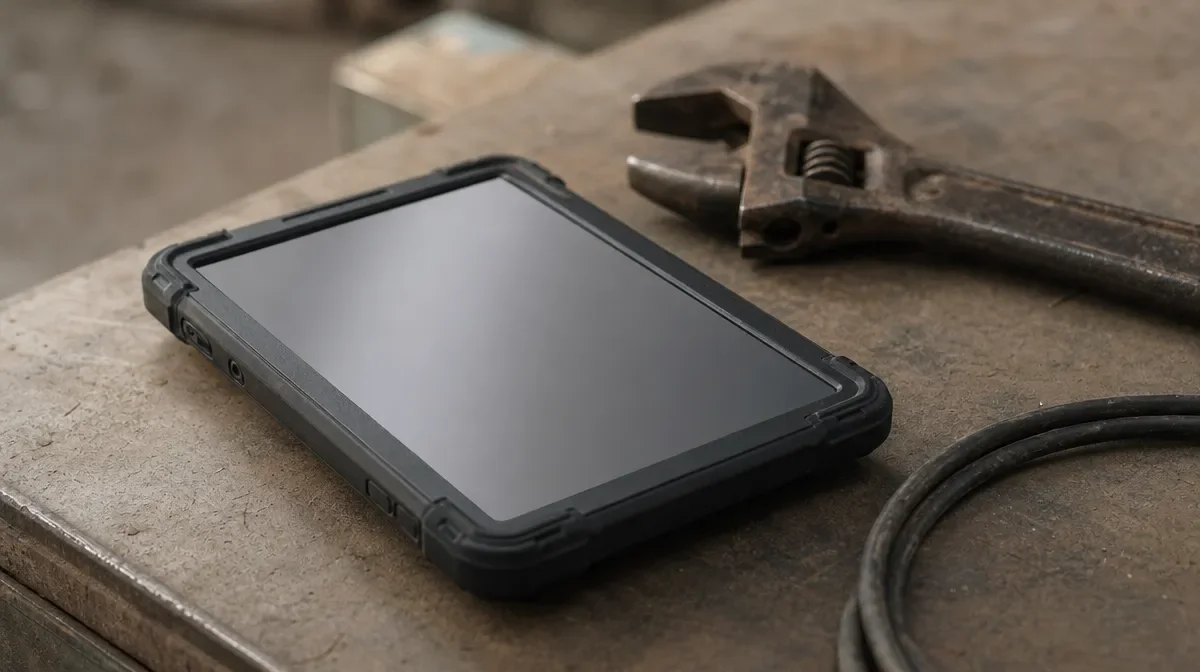
Panasonic Connect announced the TOUGHBOOK FZ-G3, a 10.1-inch rugged tablet PC, on November 13, 2026 (JST). The model combines durability that lets it go into the field without a protective case with Copilot+ PC support, and it will go on sale in Japan in stages from January 2027. Pricing is open, meaning the company sets no list price.
Four Models Cover Standard, Lightweight, LTE, and 5G
According to the company's press release, the FZ-G3 will be sold under four part numbers. The models differ in the battery they ship with and in whether they include wireless WAN, meaning data connectivity over a cellular network.
| Model | Part number |
|---|---|
| Standard model | FZ-G3AY10XAJ |
| Lightweight model | FZ-G3AY20XAJ |
| Wireless WAN (LTE) model | FZ-G3AY10BAJ |
| Wireless WAN (5G & LTE) model | FZ-G3AY10FAJ |
The product page says every model shares an Intel Core Ultra 5 335 CPU, 16GB of memory, and a 512GB SSD. The operating system is Windows 11 Pro. The NPU, a processor dedicated to AI workloads, delivers at least 40 trillion operations per second, and the company says the device supports Copilot+ PC.
The display measures 10.1 inches with a maximum brightness of about 1,000 cd/m². Users can switch to operating modes meant for gloved hands or for a screen with water droplets on it, and a digitizer pen is included. The rear camera is about 12.6 megapixels, and the front camera is an IR camera of about 5 megapixels that supports face authentication.
Tested for 180 cm Drops, Rated IP66, and Built to Run From -10 to 50°C
The FZ-G3 has undergone drop tests based on MIL-STD-810H, the U.S. military's environmental test standard. According to the product page, it was dropped from 180 cm onto plywood and from 120 cm onto a steel plate, in 26 orientations each. It meets IP66 for dust and water resistance, and its operating temperature range is -10 to 50°C.
The IP66 rating, however, applies only to the main unit with its interface covers closed. The company also notes that these tests do not guarantee the device against damage or failure.
The lightest model, fitted with the lightweight battery, weighs about 1.07 kg. A comparison graphic on the product page puts the previous model, the FZ-G2, at about 1.19 kg.
The Standard Battery Lasts About 22 Hours, and Expansion Modules Can Be Added Later
Three battery packs are available: 35Wh (lightweight), 70Wh (standard), and 99Wh (high capacity). With the standard battery pack, the tablet is said to run for about 22 hours of video playback. That figure is an estimate based on the JEITA Battery Run Time Measurement Method (Ver. 3.0).
Fitting the high-capacity pack makes the back of the tablet protrude by about 7.8 mm.
The back has two expansion areas, so modules can be added later to suit the job. The tax-inclusive prices of the optional modules listed on the product page at the time of writing are as follows.
| Expansion module | Part number | Price (tax included) |
|---|---|---|
| Serial port | FZ-VSRG31U | ¥19,580 |
| Barcode reader | FZ-VBRG31W | ¥62,260 |
| USB 2.0 Type-A | FZ-VUBG31U | ¥9,020 |
| Smart card reader | FZ-VSC3G1U | ¥13,530 |
| Contactless IC card reader | FZ-VNF3G1W | ¥20,900 |
The gap between the most expensive module, the barcode reader, and the cheapest, the USB port, is more than ¥50,000. An optional keyboard base that turns the tablet into something like a notebook PC is also planned, but the product page gives no part number or price for it.
Extreme Heat and Labor Shortages Form the Backdrop as TOUGHBOOK Turns 30
TOUGHBOOK debuted in 1996 and marked its 30th anniversary in 2026. The company's slogan for the line translates roughly as "never stop the field," and it says it has held the top global share of the rugged notebook PC market for 24 consecutive years, citing data from research firm VDC.
In this announcement, the company cited its own 2026 survey on extreme weather and worksites in Japan. More than 80% of worksites said they feel weather-related risks are increasing, and 45.8% had experienced malfunctions or shutdowns caused by overheating, according to the company.
The target industries are construction and civil engineering, logistics, infrastructure, manufacturing, and local government and fire and disaster response. The company has not disclosed a sales target.
It Works Without a Protective Case and Runs AI Tasks on the Device Itself
Two things change for users in the field. First, because the tablet can be used without a protective case, the weight they carry stays down. Second, Copilot+ PC support means AI processing can run on the device itself.
The product page says AI processing can also run offline. The aim is for the tablet to remain useful at sites with limited connectivity.
On the other hand, pricing is open, and the company has not disclosed a street price for the tablet itself. Estimating deployment costs will require checking with a reseller.
Our Take
About 1.07 kg, a -10 to 50°C operating range, and about 22 hours on the standard battery look sufficient for a full day of outdoor use. Being about 0.12 kg lighter than the previous model's roughly 1.19 kg should also matter in work that involves holding the tablet in one hand for long stretches.
That said, the 1.07 kg figure is for the configuration with the 35Wh lightweight battery. Choosing the standard battery with its 22-hour runtime will likely add weight, so buyers may not be able to get the lightest weight and the long runtime at the same time. The lack of a price for the tablet itself also makes it hard for prospective buyers to judge.
Even so, letting each worksite choose its battery and expansion modules makes sense for a business device, since requirements differ by industry. How it rates depends on the use case, and the sensible approach is probably to settle on the required runtime and modules first and then narrow down the configuration.
Summary
Panasonic Connect has announced the FZ-G3, a 10.1-inch rugged tablet PC that can be used without a protective case, highlighting Copilot+ PC support and operation from -10 to 50°C. It is relevant to organizations that use PCs outdoors or in harsh environments, including construction, logistics, infrastructure, manufacturing, and local government. Sales in Japan begin in stages from January 2027, and the street price of the tablet has not been disclosed.