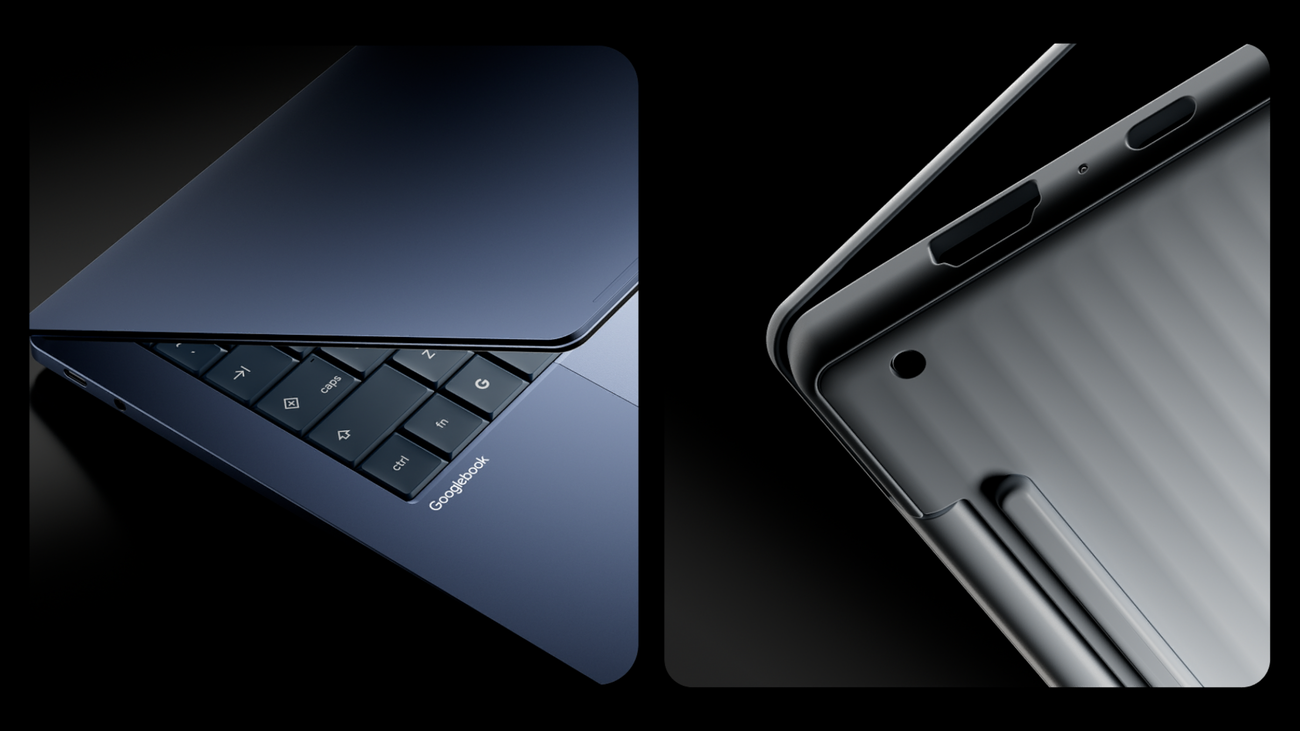
Google announced a new laptop category called "Googlebook" on September 21, 2026, local time, combining an Android foundation with ChromeOS desktop features. Five models are launching from Acer, ASUS, Dell, HP, and Lenovo, starting at 899 USD (about 142,000 yen). US sales begin October 4, and the laptops come packed with new features built around the Gemini AI assistant.
An Android Foundation Merged With ChromeOS Desktop Capabilities
Googlebook builds on Android, refined over years for smartphones, while borrowing the desktop-oriented conveniences of window management and multitasking from ChromeOS. It is being launched as a distinct new brand rather than a replacement for existing Chromebooks, and Google appears to be aiming to redefine the laptop category from the ground up.
Regarding OS updates, Google says it will deliver quarterly feature drops and updates for up to 10 years. That kind of long-term support is generous for a PC operating system, where updates are often cut off after just a few years.
Five Models From Five Manufacturers, Starting at 899 USD
The first wave of Googlebooks comes from Acer, ASUS, Dell, HP, and Lenovo. All models feature high-resolution touchscreens ranging from 13.4 to 15.3 inches, with OLED panels on every model except the Dell, and rated battery life ranges from up to 13 hours to up to 19 hours depending on the model.
The most affordable option, the Acer Googlebook 14, starts at 899 USD (about 142,000 yen). It has a 14-inch, 2,880 x 1,800 OLED display with a 120Hz refresh rate, an Intel Core Ultra processor, 16GB of RAM, and 512GB of storage, in a convertible design with a 360-degree hinge.
The Dell XPS Googlebook is priced at 999 USD (about 158,000 yen, discounted from a regular 1,199 USD, or about 189,000 yen). It pairs a 13.4-inch, 2.5K display with Qualcomm's Snapdragon X Elite chip, and at 12.7mm thick, it is the slimmest of the five models announced.
The ASUS Googlebook 14 is priced at 1,299 USD (about 205,000 yen). It shares the same 14-inch OLED display as the Acer model, but stands out for its lightweight build at around 1kg and a premium trackpad.
The HP Googlebook 14 also starts at 1,299 USD (about 205,000 yen). It uses the Snapdragon X Elite chip with a touch-enabled 14-inch 2.8K OLED display, and supports both facial recognition and a fingerprint sensor, aimed at business users.
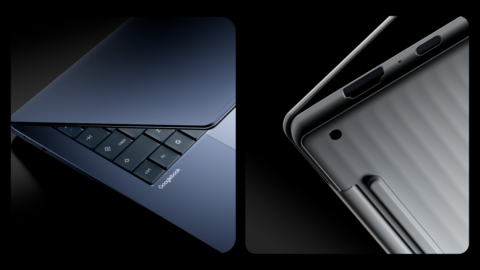
The Lenovo Googlebook 15 has the largest display of the five at 15.3 inches, starting at 1,099 USD (about 174,000 yen), with pricing said to vary by retailer. It pairs an Intel Core Ultra processor with 16GB of RAM and Dolby Atmos-tuned speakers. Its lid features a glowing design element called the "Glowbar," making it instantly recognizable as a Googlebook.
※1 USD = 158 JPY (as of September 25, 2026)
Built Around Gemini: "Magic Pointer" Summons AI From the Cursor
The centerpiece of Googlebook is a set of new features deeply tied to the Gemini AI assistant. Chief among them is "Magic Pointer," a multimodal cursor that understands text, images, and on-screen context, letting users summon Gemini simply by wiggling the cursor. Examples include selecting a training schedule to automatically add it to Google Calendar, having Gemini analyze a suspicious email, or combining multiple images on the spot without needing to upload them.
The "Rambler" voice dictation feature goes beyond simple transcription: it cleans up speech errors and reorganizes content into structured bullet points resembling a task list, and it can handle language switches mid-sentence.
Every model also comes standard with "Create My Widget," which lets users build custom widgets just by describing what they want, and "Google Antigravity," which gives users a full Linux terminal environment to write and deploy their own applications. The lineup also includes "Continue On" for smoother continuity with a user's phone, conversational control through Gemini Live, and proactive suggestions that anticipate what users need — all part of what Google frames as reinventing how people use a laptop through AI.
Release Date and Preorders
Preorders for Googlebook opened alongside the announcement through the Google Store, Best Buy, and select other retailers. US sales begin October 4, 2026, with Canada, the UK, Ireland, France, Germany, and Australia following a day later on October 5. Availability in other regions, including Japan, has not yet been announced.
Summary
Google has introduced "Googlebook," a new laptop category that merges the usability of Android with the desktop capabilities of ChromeOS, launching five models with Acer, ASUS, Dell, HP, and Lenovo. Backed by a starting price of 899 USD and Gemini-powered features like Magic Pointer and Rambler, all eyes will be on whether Googlebook can carve out a place alongside Chromebook as a new choice for laptop buyers.
Sources
[1] https://googlebook.google/shop/
[2] https://blog.google/products-and-platforms/devices/googlebook/pre-order-googlebook/