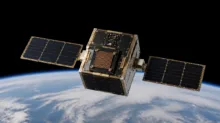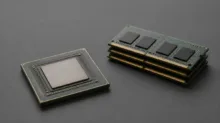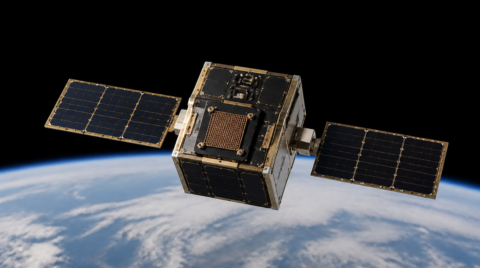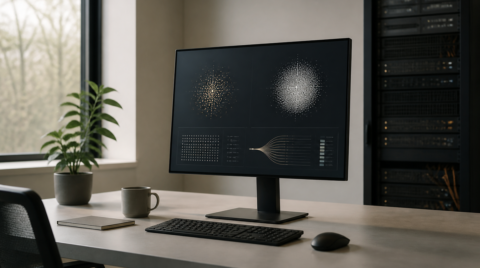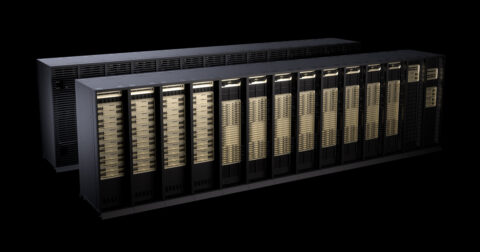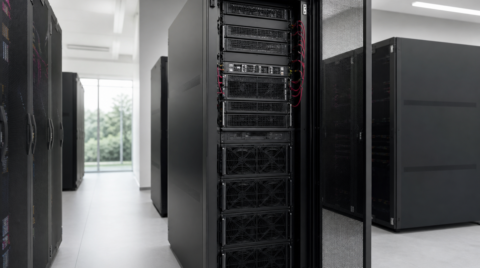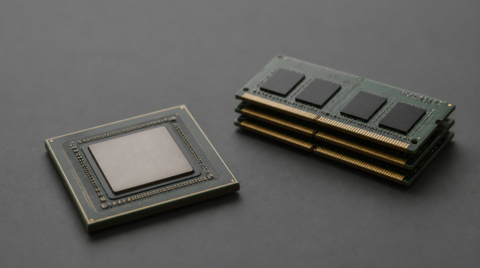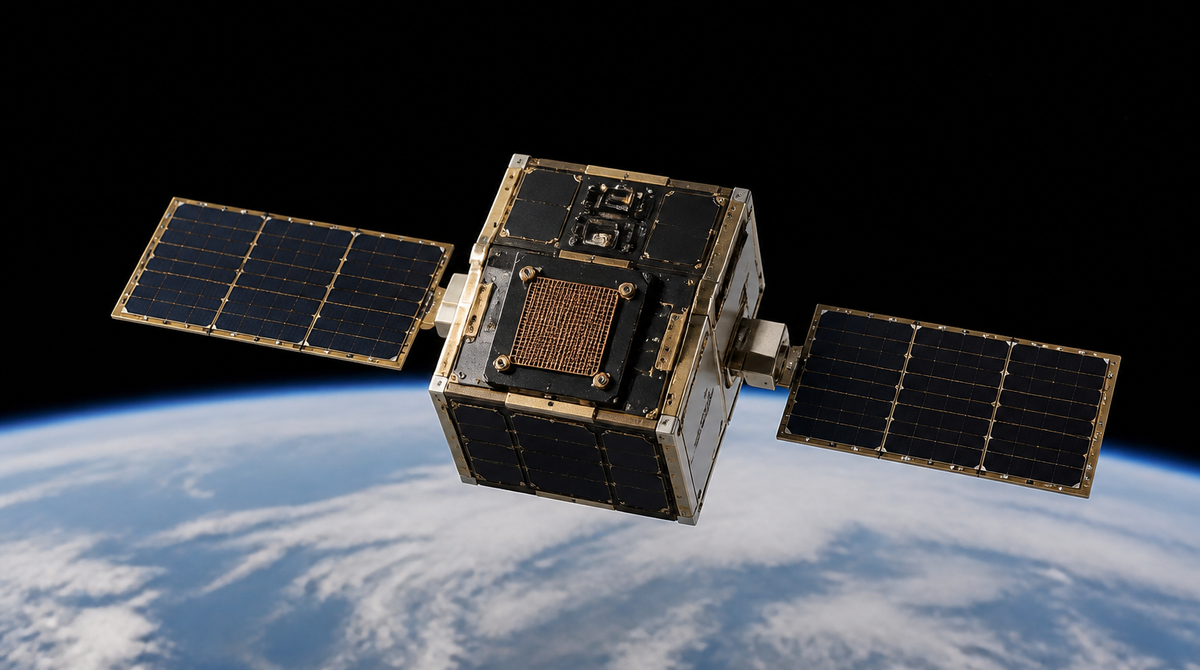
Google is sending a test satellite carrying its own AI accelerator chips, TPUs, into orbit as part of Project Suncatcher, a long-term research effort exploring whether space could host large-scale AI computing infrastructure. Built in partnership with the satellite imaging company Planet and riding aboard SpaceX's Transporter-18 rideshare mission, the prototype marks a first step toward understanding how launch vibration, space radiation, and thermal extremes affect TPU hardware.
The case for a data center in orbit
Project Suncatcher was announced last year as a long-term moonshot examining whether space could eventually become a viable site for scalable machine learning infrastructure. In low Earth orbit, satellites can receive near-constant sunlight, generating up to eight times more solar power than an equivalent system on Earth. Google's longer-term vision involves linking multiple satellite constellations together so they can handle larger AI workloads while in orbit.
Trillium TPUs survive launch stress and radiation
A rocket launch subjects a spacecraft to acceleration loads of up to 10 times the force of gravity, with individual components sometimes experiencing 50 to 100 times that force. Google's team shook the satellite along all three axes to simulate launch vibration, and the hardware, including the TPUs, held up as intended.
Radiation exposure beyond Earth's atmosphere posed another challenge. Engineers tested the chips at a proton beam facility at UC Davis's Crocker Nuclear Laboratory while running AI workloads, and found that the current-generation Trillium TPUs withstood a total radiation dose greater than what they would receive over an entire five-year space mission. Google CEO Sundar Pichai said early results showed the chips survived the simulated radiation without damage.
Cooling in a vacuum, and satellites that talk by laser
Without airflow in the vacuum of space, conventional air cooling won't work. Google's engineers are testing a combination of heat pipes and radiators, validated so far in a thermal vacuum chamber that replicates both the temperature extremes and vacuum of orbit.
Future satellites are expected to carry dozens of TPU chips each and operate in clusters, communicating with one another via laser links that require far higher bandwidth over much shorter distances than typical satellite communications. Google has compared the required precision to "hitting a coin-size target from miles away while both points are in motion." Some analyses describe a longer-term vision of roughly 81 satellites arranged within about a one-kilometer radius at an altitude near 650 kilometers, targeting aggregate bandwidth of up to 10 terabits per second per link. The next milestone, testing laser links between two satellites, is planned for 2027.
Commercial viability still years away
Google estimates that if launch costs fall to around 200 USD (about 31,600 yen) per kilogram by 2035, the amortized cost of launching and operating such hardware over its lifetime could become comparable to the energy costs of running a data center on Earth.※1 USD = 158 JPY (as of September 24, 2026) Even so, analysts note that real commercial viability remains years away given current launch costs, engineering hurdles, and limits on satellite manufacturing capacity. Orbital congestion is another concern: roughly 44,870 tracked objects already circle Earth in low orbit, a factor that could complicate plans for large satellite clusters.
Summary
Google is launching a TPU-equipped test satellite as part of Project Suncatcher, its long-running effort to determine whether AI computing infrastructure could eventually operate in space. Ground testing has already shown the hardware can survive launch vibration and space radiation; the next challenges are cooling in a vacuum and proving laser-based communication between satellites. Cost and orbital congestion remain significant hurdles, and Google itself describes the project as a deliberate, step-by-step effort working backward from an ambitious long-term goal.
Sources: [1] https://blog.google/innovation-and-ai/models-and-research/google-research/google-project-suncatcher-facts/