

Google opens pre-orders for Googlebook, its new category of laptop, at 9 a.m. Eastern on September 21. The official site has published the date and little else: no pricing, no list of launch models, no shipping window. Four months after the May reveal, Google's attempt to fold ChromeOS and Android into a single product finally reaches the point where you can put money down.
Why Google Calls It an Intelligence System Rather Than an OS
Googlebook was unveiled on May 12, 2026. Google frames it against the Chromebook, which arrived more than 15 years ago and was designed for a cloud-first world. The company argues that the moment calls for another rethink, and the phrase it keeps returning to is the shift from an operating system to an intelligence system.
Two assets sit underneath the product. Android contributes the Google Play app catalogue and a modern OS built for intelligence. ChromeOS contributes the world's most widely used browser. Googlebook combines the two and puts Gemini's assistance at the center of the experience.
This is not a replacement for the Chromebook. In its official FAQ, Google draws a clear line: Chromebooks run ChromeOS and prioritize simplicity, speed and efficiency for everyday use, while Googlebooks are a flagship category built around premium materials, stronger performance and tight connectivity with an Android phone.
The Cursor Is What Actually Changes
The clearest departure in Googlebook is how the cursor behaves. Google points out that the pointer has barely evolved since the right-click was introduced. Magic Pointer, developed together with Google DeepMind, is the response.
Wiggle the cursor and Gemini wakes up, offering contextual suggestions based on whatever you are pointing at. Point at a date inside an email and it moves toward scheduling a meeting. Select two images, such as your living room and a couch you are considering, and it renders them together on the spot. The underlying idea is that you can select anything on screen and immediately ask, compare or create with it.
The second headline feature is Create My Widget, which builds a custom widget from a plain-language request. Gemini can search the web or connect to Google apps such as Gmail and Calendar to gather the data, so a trip can be collapsed into a single panel holding flight and hotel details, restaurant reservations and a countdown to departure. The desktop itself becomes something you reassemble around your own routine.
Both Magic Pointer and Create My Widget require an internet connection, and Google lists them as available to users aged 18 and over.
Built So You Do Not Have to Reach for Your Phone
Because Googlebook is built on part of the Android stack, moving between laptop and phone is where the design shows its hand. Cast My Apps opens the apps already installed on your phone directly on the laptop, with no separate installation. A food order placed mid-task, or a daily language lesson cleared in a couple of minutes, no longer means leaving the screen you are working on.
Files are handled by Quick Access, which lets the Googlebook file browser view, search and insert files stored on your phone without any transfer step. Setting up either feature requires a phone running Android 17 or later.
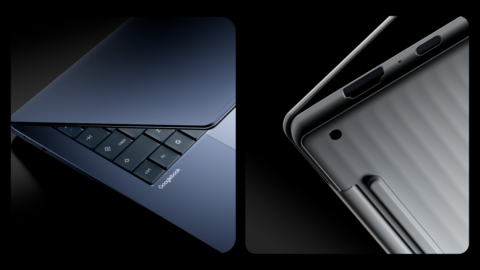
On the hardware side, an illuminated strip called the glowbar serves as the shared identifier across the lineup. Google describes it as a design element that is functional and a visual statement at the same time. The first wave comes from Acer, ASUS, Dell, HP and Lenovo, in a range of shapes and sizes.
What Is Still Unknown on the Day Pre-Orders Open
All Google has announced is when ordering starts. Pricing, the specific models that will appear first, the processors and displays inside them, and the date units actually arrive are all unpublished. Google has said the devices ship this fall, which means September 21 is when we find out how the five manufacturers position themselves on price.
There is also no information about availability in Japan. The pre-order notice applies to the US site, and no local launch timing or pricing has been disclosed. Given that Chromebooks spread through the Japanese education market, the more interesting question is which buyers a flagship-priced Googlebook is meant for, and that will only become clear once a domestic sales plan exists.
Summary
Pre-orders begin on September 21, but the only firm detail is the date itself, with pricing, models and shipping timing all withheld. The concept has held steady since May: fuse ChromeOS and Android, then put Gemini at the center of how you operate the machine through Magic Pointer and Create My Widget. The day orders open will be the first real chance to judge this new category against actual specifications and prices.