Reports published on August 28, 2026 revealed that Meta is testing robots to take over maintenance work inside the data centers powering its AI systems, including swapping networking cables and restarting stalled servers. Machines from three vendors are under evaluation and are already operating at facilities in Iowa and Ohio. Technicians on site have voiced concern about how their own roles will change.
Three vendors, each matched to a different task
Meta is evaluating machines from Watney Robotics of San Francisco, Kinova of Quebec, Canada, and ABB of Zurich, Switzerland. Rather than deploying one general-purpose robot, the company is matching each machine to the kind of work it suits.
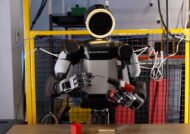
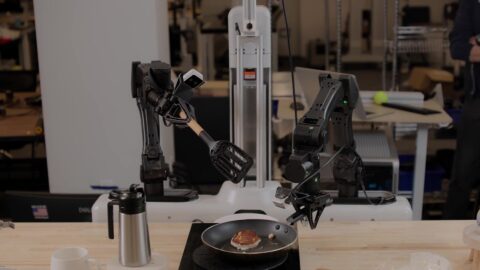
At the Altoona, Iowa campus, dual-arm robots from Watney Robotics are being tested for cable replacement, reportedly since June 2025. The reason for two arms is straightforward: inserting a cable requires one arm to hold the cable body while the other guides the connector into the correct port. Single-arm machines fail at exactly this step.
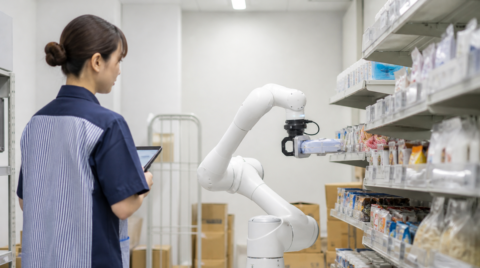
At the Prometheus campus in New Albany, Ohio, an ABB machine mounted on a four-wheeled platform with a lift and an arm is being used to reseat components that have partially come loose. ABB has supplied robots to automotive and manufacturing plants for decades, and this pilot brings that industrial track record straight into the data center.
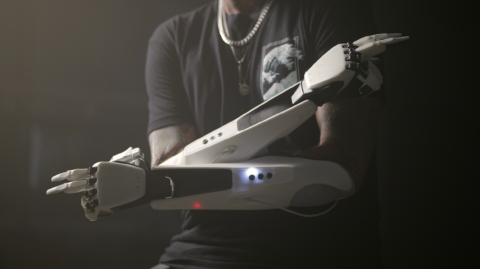
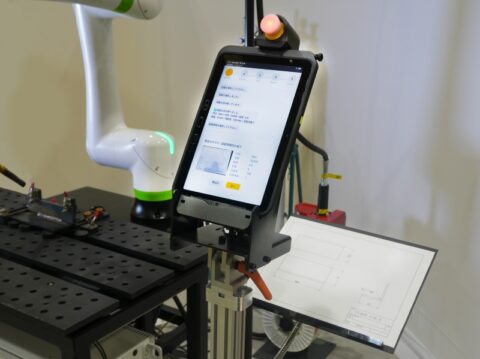
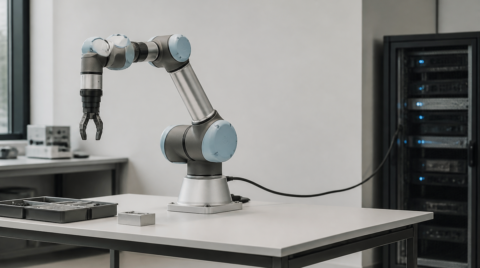
Kinova's Gen3 arm is being evaluated separately as a candidate for power-cycling servers. Kinova originally built assistive arms that mount to wheelchairs, and the fine force control that made those arms useful lines up well with handling server hardware without damaging it.
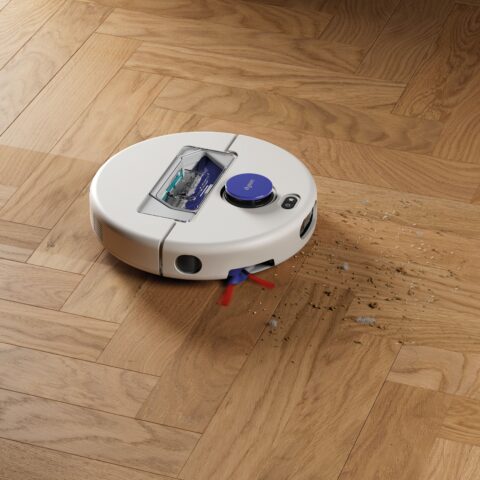
Simpler automation is already in production at several campuses. Self-driving tugger robots move heavy server racks, and wheeled inventory robots scan equipment and assist with inspections. Some facilities also use a remotely operated device resembling a mechanical finger for the single job of pressing power buttons.
The machines cannot yet replace people
Today's robots are not substitutes for skilled technicians. Across every task under evaluation they are slower than people, and all of them require human supervision.
Four constraints stand out. Battery life is short, and server hall aisles were never designed with charging infrastructure for mobile robots, so machines have to leave the floor to recharge. Visual inspection is also difficult: spotting a discolored capacitor or a burned trace on a board demands high-resolution imaging and stable machine vision, and neither is reliable under the variable lighting of a dense server environment.
Cable density is another obstacle. A fully populated rack presents hundreds of flexible cables that block both sensor lines of sight and the arm's path. Navigating the aisles is harder than it looks as well, since they are narrow, filled with non-standard equipment, and sometimes occupied by human technicians.
One concrete limitation reported is that the inventory robot uses a grayscale camera and cannot tell red status lights from green ones. Some failure checks therefore still fall to people. The robot also slows down at corners and over cables, and when it moves between buildings a person has to open doors and guide it remotely.
What workers fear is a two-stage shift
The concern among employees is not simply that a robot will take their job. According to the reports, internal chat groups have carried worries that routine maintenance work could disappear within a few years.
One unnamed employee said that a robot able to swap cables reliably could eventually replace as much as 80 percent of the workload in certain roles. That figure was the worker's own estimate rather than a Meta projection, and current machines still cannot match a person's speed.
The more concrete worry is a two-stage shift. First, robots absorb the most repetitive tasks. Then the remaining work is handed to less experienced staff following instructions generated by an AI system. If both happen at once, the experienced technician who used to handle the entire range is squeezed from above and below, and the higher-paid role itself shrinks.
Meta points to a labor shortage, and the tax debate follows
Meta pushed back on that framing. A company spokesperson said the United States is in the middle of its biggest infrastructure boom since World War II, that there is a major shortage of skilled workers to fill these roles, and that the country needs more workers rather than fewer.
Policy is moving in parallel. Microsoft co-founder Bill Gates published an essay on August 26 arguing that governments should tax robots and AI tokens. Hiring a person incurs payroll taxes, while robot and AI purchases are typically written off as business expenses, an asymmetry that Gates says makes machines look cheaper than people. He proposed directing the resulting revenue toward retraining displaced workers. WIRED reported on Meta's trials two days later, which makes the two stories hard to read separately.
The case for automation is equally clear. NVIDIA chief executive Jensen Huang describes data centers as AI factories run jointly by people, software agents, and robots, and argues that machines fill roles humans cannot.
Meta is not alone in this. Alibaba released its Qwen-Robot Suite in June, covering navigation, object handling, and physical simulation. NVIDIA researchers have presented AI agents that train fleets of robots. Wang Xiaogang, chairman of ACE Robotics, said that embodied AI, the capability that lets machines perceive and act in physical environments, could reach a ChatGPT moment by the end of 2027. Outside the data center, Bedrock Robotics is automating construction equipment and Mercedes-Benz has tested humanoid robots on repetitive factory work.
Summary
Meta is testing robots from Watney Robotics, Kinova, and ABB at data centers in Iowa and Ohio for cable replacement, server restarts, and component reseating. All of them still need human supervision, run slower than people, and struggle with dense cabling, battery life, and visual inspection. What is clear is that the data centers built to run AI are becoming a proving ground for the automation that same AI enables. Whether the result is more jobs or fewer will depend on how good these machines get.