Alongside IFA 2026 in Berlin, Lenovo has announced the ThinkBook 14x Gen 2, a 14-inch notebook that keeps the thin-and-light chassis of its predecessor at 12.9 mm thick and 990 g while swapping in Intel's newer value-segment processor line. It arrives in Europe from September 2026 at 1,079 EUR (about 195,000 yen), and in the United States in the first quarter of 2027 starting at 999.99 USD (about 155,000 yen).
A Generational Change Only Months After the Original
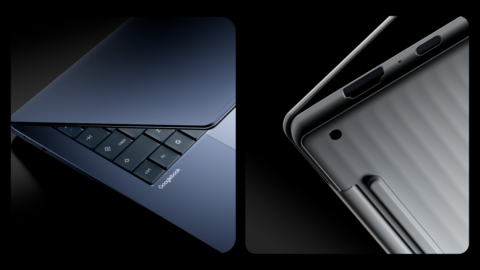
The first ThinkBook 14x appeared at the end of June 2026 with Intel Lunar Lake silicon. Gen 2 follows less than three months later. The metallic exterior and the thin, light character carry over, so from the outside this reads as a straightforward refresh.
The processor swap is the unusual part. Lenovo has moved to Intel Core 7 processors (Series 3), known by the codename Wildcat Lake. That line launched in April 2026 and targets a different segment than the higher-tier Lunar Lake and Panther Lake families.
What Wildcat Lake Actually Is
Wildcat Lake is aimed at entry-level notebooks, commercial endpoints, and edge systems. Even the top Core 7 part is a 6-core design: 2 performance cores and 4 low-power efficiency cores. Integrated graphics are Xe3 with 2 cores, and the NPU lands around 17 TOPS. Base power is 15 W, with turbo capped at 35 W.
Those numbers look modest on paper, but what they buy is low heat and low power draw. Pack a high-performance processor into a 12.9 mm chassis and you usually end up with either thermal throttling or fan noise. Choosing a chip that simply does not generate much heat is a coherent way to make 990 g work.
The trade-off is real. Video editing, 3D rendering, and similar sustained workloads will run into the limits of a 6-core, 15 W envelope. Lenovo frames the machine around browsing, collaboration, and everyday work in meetings, classrooms, airports, and shared workspaces, and does not position it as a creator laptop.
Two Panel Choices, With HDR up to 1,100 Nits on the OLED
The 14-inch display runs at 120 Hz and comes in two versions.
The first is a 1200p IPS panel at 400 nits with 100 percent sRGB coverage, optionally with touch. The second is an 1800p OLED rated at 500 nits in SDR and 1,100 nits in HDR, with 100 percent DCI-P3 coverage.
Pairing a value-class processor with an OLED that reaches 1,100 nits in HDR is a fairly uncommon combination. Rather than chasing raw performance, the budget goes into the part of the machine users look at all day. Above the display sits a full HD webcam with an infrared sensor for facial login.
Memory Is Fixed, Storage Is Not
Memory tops out at 32 GB of LPDDR5x-7467, soldered to the board and not upgradeable after purchase. Storage reaches 2 TB.
The SSD layout is the interesting detail: one M.2 2242 slot, occupied out of the box, plus one free M.2 2280 slot. That means capacity can be added later instead of forcing a whole-machine replacement. Thin notebooks increasingly seal off storage as well, so leaving this open has practical value.
Wireless is Wi-Fi 6E/7, and the battery comes in 54.7 Wh or 65 Wh versions. A 65 W USB Type-C charger is included.
A Straightforward Port Selection, No SD Card Reader
Ports consist of two USB 3.2 Gen 2 Type-C, two USB 3.2 Gen 1 Type-A, one HDMI 2.1 output, and a 3.5 mm audio jack. Keeping two Type-A ports on a machine this thin makes existing office peripherals easy to plug in directly.
There is no SD card reader. Given that this is not built for pulling in photos and video on a regular basis, the omission matches the product's character.
Color options are Celestial White, Luna Grey, Veil Blue, and Mystic Violet. ThinkBook is a business-oriented brand, but offering a color range points at personal use as well.
How to Read the Price
European pricing starts at 1,079 EUR (about 195,000 yen), with sales beginning in September 2026. In the United States the machine arrives in the first quarter of 2027 from 999.99 USD (about 155,000 yen), so timing differs by region. Exchange rates as of September 4, 2026: 1 USD = 155 JPY, 1 EUR = 181 JPY
For a machine built on a value-segment processor, that is not cheap. At this price, notebooks around 1.2 kg with higher-tier silicon come into view. If the ThinkBook 14x Gen 2 wins anyway, it comes down to two things: the 990 g weight and the 1,100-nit OLED.
For something carried every day, 200 g matters more than it sounds like it should. If the workload is reading documents, writing email, and sitting in meetings, spending the budget on weight and screen quality instead of compute is a defensible call. If the day involves running models locally or exporting video, this machine was never in the running.
Real-world assessments will follow once European sales begin. Two questions cannot be answered from a spec sheet: how comfortable long sessions feel on a 15 W processor, and what battery life looks like with the OLED configuration. Japanese availability and pricing have not been announced.
Summary
Lenovo announced the 14-inch ThinkBook 14x Gen 2 alongside IFA 2026. The 12.9 mm, 990 g chassis houses a value-segment Intel Core 7 processor (Series 3, Wildcat Lake), with up to 32 GB of memory and 2 TB of storage. The 120 Hz display comes as either IPS or OLED, with the OLED reaching 1,100 nits in HDR. Europe gets it from September 2026 at 1,079 EUR and the United States in the first quarter of 2027 from 999.99 USD, in a design that trades processing headroom for weight and screen quality.