

Ahead of a launch event in China on August 5, Huawei has been revealing the internals of its 14-inch MateBook Pro S laptop bit by bit. On top of a 798-gram weight and an 11.9mm thickness, the company has confirmed that the machine runs on Kirin XE90, its own in-house processor. Huawei positions the model as the lightest 14-inch laptop in the world.
How the 798 Grams Was Achieved
The laptop measures 11.9mm thick and weighs 798 grams, which puts a 14-inch machine below the weight of Apple's 13-inch MacBook Air. The figures are low enough to invite a second look, and Huawei points to two elements behind them.
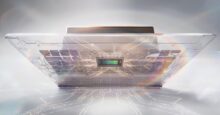
The first is a magnesium-lithium alloy chassis. The second is a motherboard split into 3 sections, so that instead of laying down a single flat board, the components are distributed to avoid stacking the tallest parts in one place. Thickness is decided by wherever the tallest component sits, which ties this layout directly to the 11.9mm figure.
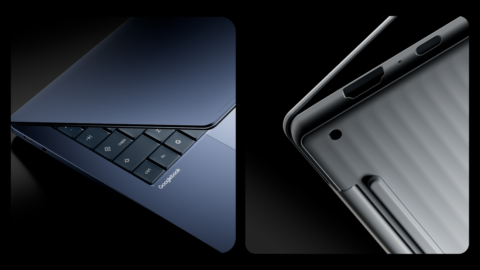
Hands-on photos already circulating show a USB Type-C port on each side, 2 cameras on the lid, and a conventional webcam. The keyboard appears to include a dedicated key for calling up AI features. Configurations are expected to range from 16GB to 32GB of memory and 512GB to 1TB of storage, though that part is not confirmed yet.
Kirin XE90 Makes Its First Appearance
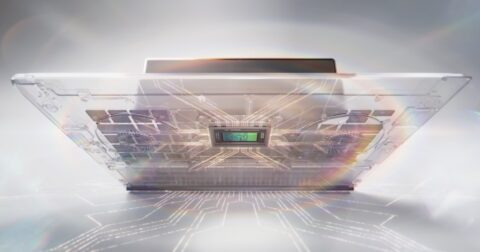
The chip inside is Kirin XE90. It carries 10 CPU cores running at up to 2.45GHz. According to Huawei, single-core performance is 23 percent higher than the earlier Kirin X90, and energy efficiency improves by 25 percent. The company also claims a 40 percent gain in the smoothness of the NPU, the unit that handles AI processing.
In a thin laptop, real-world speed depends less on raw chip performance than on how much heat the design can tolerate. Given the constraint of fitting into a 798-gram body, the 25 percent efficiency gain likely matters more than the performance number itself.
Battery and Cooling Built From Small Gains
The battery uses a cell with a 10 percent silicon anode. Huawei says it offers 15 percent higher energy density and 10 percent lower weight than a conventional cell. That translates to up to 18 hours of video playback, and the laptop also supports 66W reverse fast charging from either side.
On the cooling side, a diamond aluminum fan with 102 three-dimensional blades increases airflow by 20 percent, which Huawei says releases up to 20W of additional performance. The MateBook Pro S is also the first in the line to adopt super charge pump technology, adding 1 hour of runtime. Power management work contributes another 3.7 hours, while a ceramic composite heat dissipation package and a substrate micro-hole thermal conductivity process are said to improve the chip's own heat handling by 70 percent.
For connectivity, the laptop supports Wi-Fi 7+ and is billed as the first ultra-thin PC to offer kilometer-class long-range networking. Exactly what use cases that feature targets should become clear at the launch event.
A Foldable PC Arrives the Same Day
The August 5 event is not about the MateBook Pro S alone. The 2026 edition of the 18-inch foldable MateBook Fold Ultimate Design also arrives, with a 3.3K dual-layer OLED panel, stylus support, and the Kirin X90 Plus, which raises performance by 25 percent. A new MatePad Pro, the nova 16 SE smartphone, and RGB MiniLED televisions round out the lineup.
Neither product has any announced availability outside China. Huawei's recent laptops have consistently paired in-house chips with the company's own operating system, and the MateBook Pro S follows that line. Buying one outside China looks unlikely, but reviews after August 5 should show how far the 798-gram figure holds up in practice.
Summary
The MateBook Pro S is a thin 14-inch laptop that combines a 798-gram, 11.9mm body with Huawei's in-house Kirin XE90. A magnesium-lithium alloy chassis, a 3-section motherboard, a silicon-anode battery, and a 102-blade fan add up to a claimed 18 hours of video playback. Full specifications and pricing will be confirmed at the August 5 event.