
GrapheneOS, the privacy-focused Android-based operating system, has revealed that its Motorola plans extend to foldable phones. Future versions of the book-style Razr Fold and the flip-style Razr Ultra are both on the roadmap. Vertical folding would be a first for GrapheneOS, and support for the Pixel 11 series is planned alongside it.
The end of a Pixel-only era
GrapheneOS is an independent OS built from the Android source code, stripped of tracking and dependence on Google services, with a hardened permission model and stronger memory protections. Its hardware requirements are strict, and for years that meant it ran only on Google Pixel devices. The project demands specific security features in silicon plus a long update guarantee, and no phone outside the Pixel line met the bar.
That changed with the long-term Motorola partnership announced at MWC 2026, which covers a device shipping with GrapheneOS preinstalled and closes the Pixel-only chapter. The first supported handset is expected in 2027 and is thought to sit above Pixel on price. The latest disclosure makes clear that the partnership will not stop at a single model.
A first for flip phones, familiar ground for book-style
According to GrapheneOS, the initial focus remains a regular non-folding device. Beyond that, the project plans to extend support to future versions of the Razr Fold and Razr Ultra.
Book-style folding is already proven territory: the original Pixel Fold (Pixel 7 generation), the Pixel 9 Pro Fold and the Pixel 10 Pro Fold are all supported today. GrapheneOS considers that tablet-like unfolded screen well suited to web browsing, reading and maps.
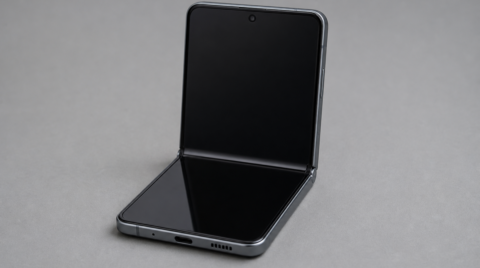
A flip device such as the Razr Ultra, on the other hand, would be an entirely new form factor for the OS. Its main appeal is a phone small enough to use one-handed when closed, which is a different use case altogether. Support for 11th-generation Pixels is also still planned, and that includes the Pixel 11 Pro Fold.
Why the 2026 models miss the cut
The obvious question is why the Razr Fold and Razr Ultra already on sale in 2026 are excluded. GrapheneOS describes them as close to meeting its requirements, but says a few pieces are missing.
The two named gaps are memory tagging (MTE) and secure element integration. MTE tags regions of memory so that invalid reads and writes are caught in hardware, addressing classic vulnerability classes such as buffer overflows. A secure element is a dedicated chip that isolates keys and biometric data. Both are already implemented on Pixel devices.
Motorola is reportedly folding these into its 2027 releases, and the next generation of Qualcomm Snapdragon chips is said to offer better MTE support than before. This is not something a software update can add to current hardware; it requires a silicon generation change.
The other condition is the update window. Motorola devices running GrapheneOS are set to receive 7 years of OS updates. The important detail is that this means keeping the OS itself current, not merely shipping security patches for 7 years. If the underlying Android version stalls, porting work becomes impossible for an independent OS project.
GrapheneOS also says Motorola will directly handle a large portion of the work. A small project cannot realistically maintain deep hardware support without the manufacturer's involvement, so that division of labour matters for long-term sustainability. For Motorola, it also provides clear differentiation for privacy-minded buyers.
Summary
GrapheneOS has confirmed that its Motorola partnership will not end with one conventional handset, extending to future Razr Fold and Razr Ultra models. Flip support would be a first for the OS, and work on the Pixel 11 series, including the Pixel 11 Pro Fold, continues in parallel. The 2026 models are excluded because they lack MTE and secure element integration, so 2027 hardware is the earliest that qualifies. Seven years of OS updates and Motorola shouldering most of the engineering work are the foundations that make the plan viable.