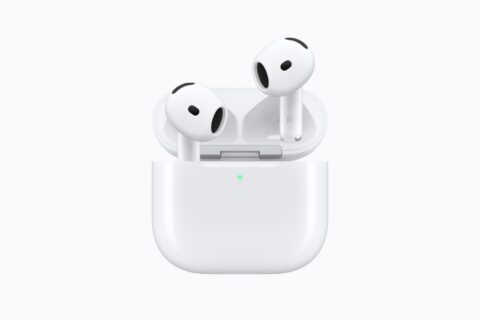
Brand-new, sealed AirPods Pro are often listed on Mercari and similar marketplaces at a steep discount — anywhere from 20,000 to 28,000 yen (about 130 to 180 USD), considerably cheaper than buying from the Apple Store or a major electronics retailer. Many readers have probably seen these listings.
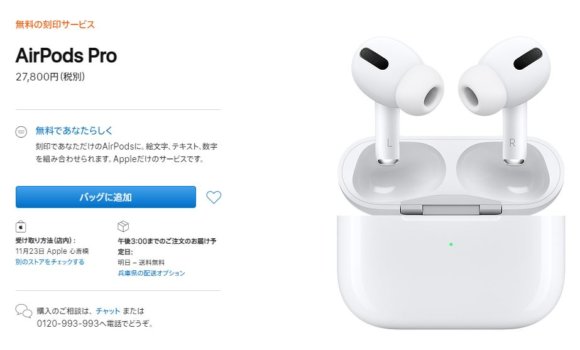
Looking at the photos and the model numbers in the descriptions, most are overseas models — what we call parallel imports — which is why they're so cheap. Sellers also frequently hand out their own coupons, so if you're lucky you can get them for even less. The catch: counterfeits are mixed in with the real thing, and increasingly the fakes look indistinguishable from the originals on the outside. For this article, someone unlucky enough to have bought a fake AirPods Pro on Mercari kindly handed the counterfeit over to me, so I'll lay out a side-by-side comparison of the fake and the real one. I hope it helps anyone considering a purchase, or anyone who's already bought a pair and wants to verify whether they're authentic.
Let's compare the fake and the real one
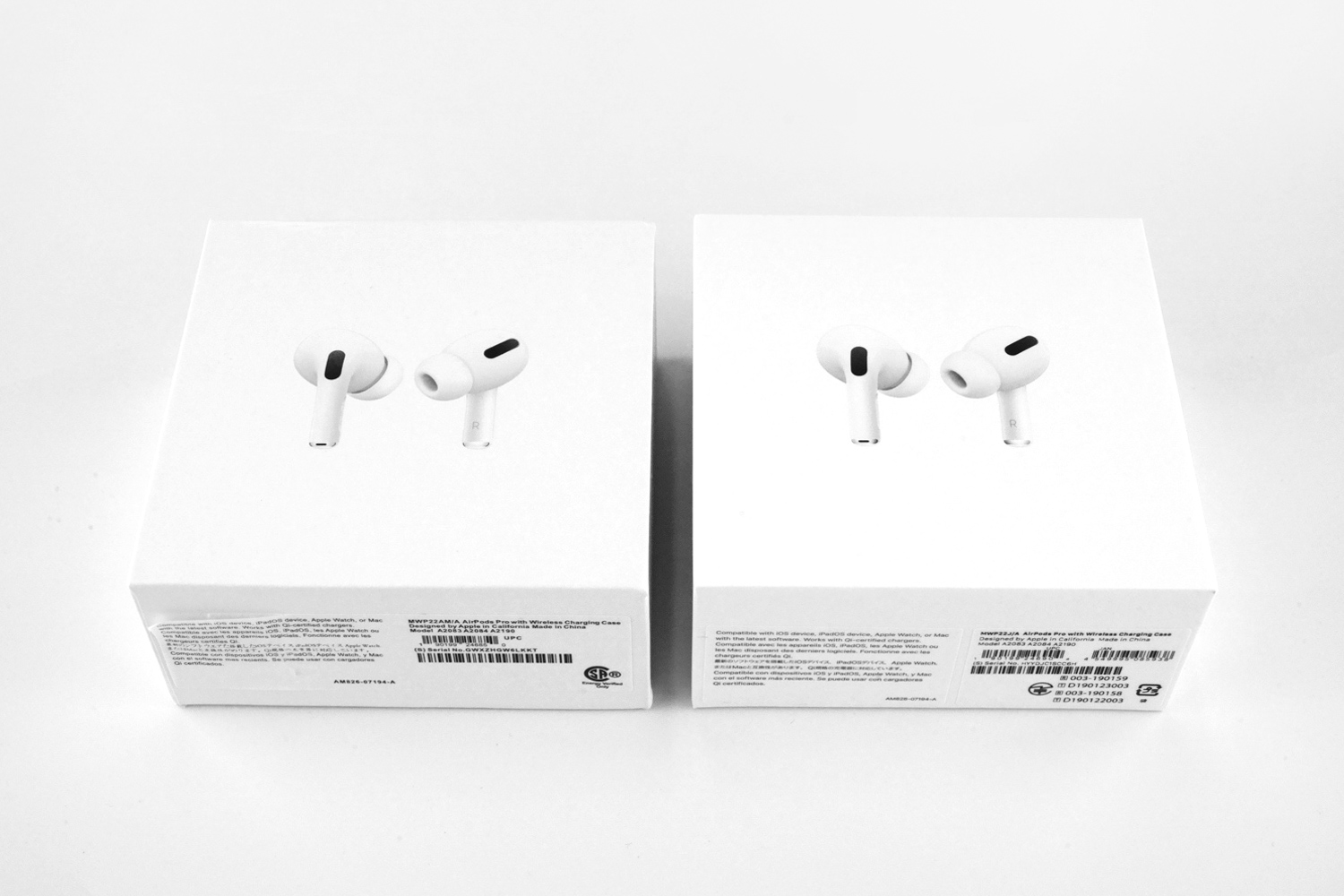
First, let me put the "fake" next to a "real one purchased from a major electronics retailer." The counterfeit I obtained this time is a copy of the overseas model — the kind sold as a parallel import — so the sticker text differs from the Japanese domestic version. Otherwise, they look almost the same.
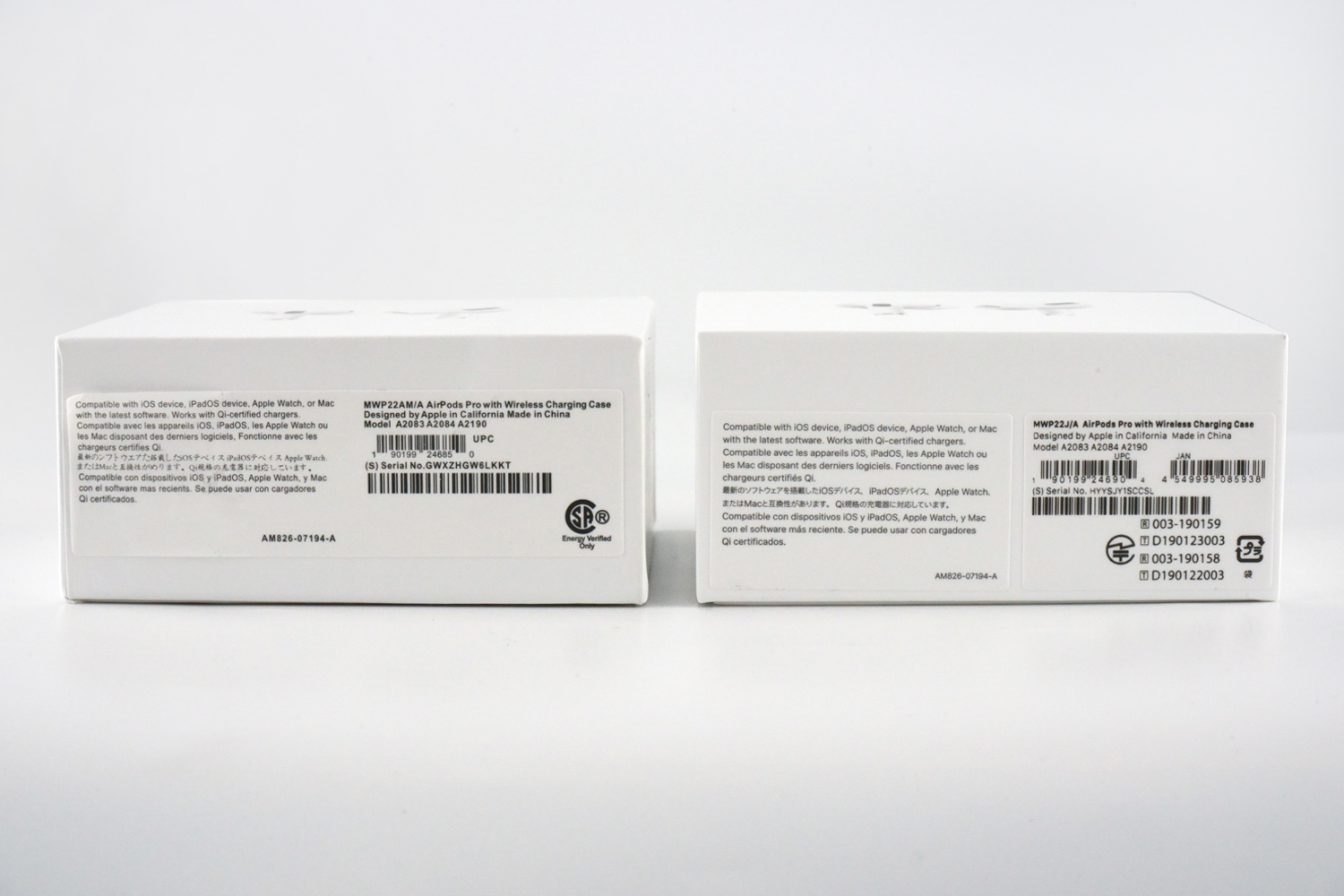
The fake imitates the original well, but you can spot rough patches here and there. The worst is this sticker.

Read it carefully and you'll find clearly off Japanese phrases like "互換性がめります" and "ンフトウェア." If you'd been able to see this part before buying, you would have noticed immediately. (Although, to be fair, not many people scrutinize this part that closely...) Fortunately the fake I got this time is the kind you can spot at a glance once it's in your hands, but more sophisticated counterfeits may be impossible to tell apart, so caution is warranted. In a previous investigation, "Are the Lightning cables sold on Mercari counterfeit? I compared them with genuine ones," there was nothing odd about the Japanese on the box or in the manual.
Checking the serial number
When buying through an auction, you can't see the actual product in advance, but at minimum you should check the serial number. Apple provides a page where you can look up serial numbers — Check Your Service and Support Coverage — Apple Support. Enter the serial on this page and if "AirPods Pro with Wireless Charging Case" comes up, you're at least off to a decent start. For brand-new sealed units it shows "Estimated Purchase Date Unknown," and for used units it shows "Purchase Date: Verified." This fake also has a serial number printed on it, but when I entered it the result came back as "Replacement Product." Confirming whether that's correct requires contacting Apple, and not many people will go that far.
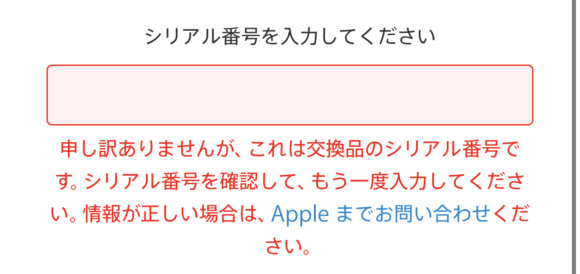
Counterfeit operations can't tamper with Apple's system, so this means they're recycling the serial number of someone's real, exchanged product. The fact that the result comes back as something gray rather than a clean black or white is sneaky.
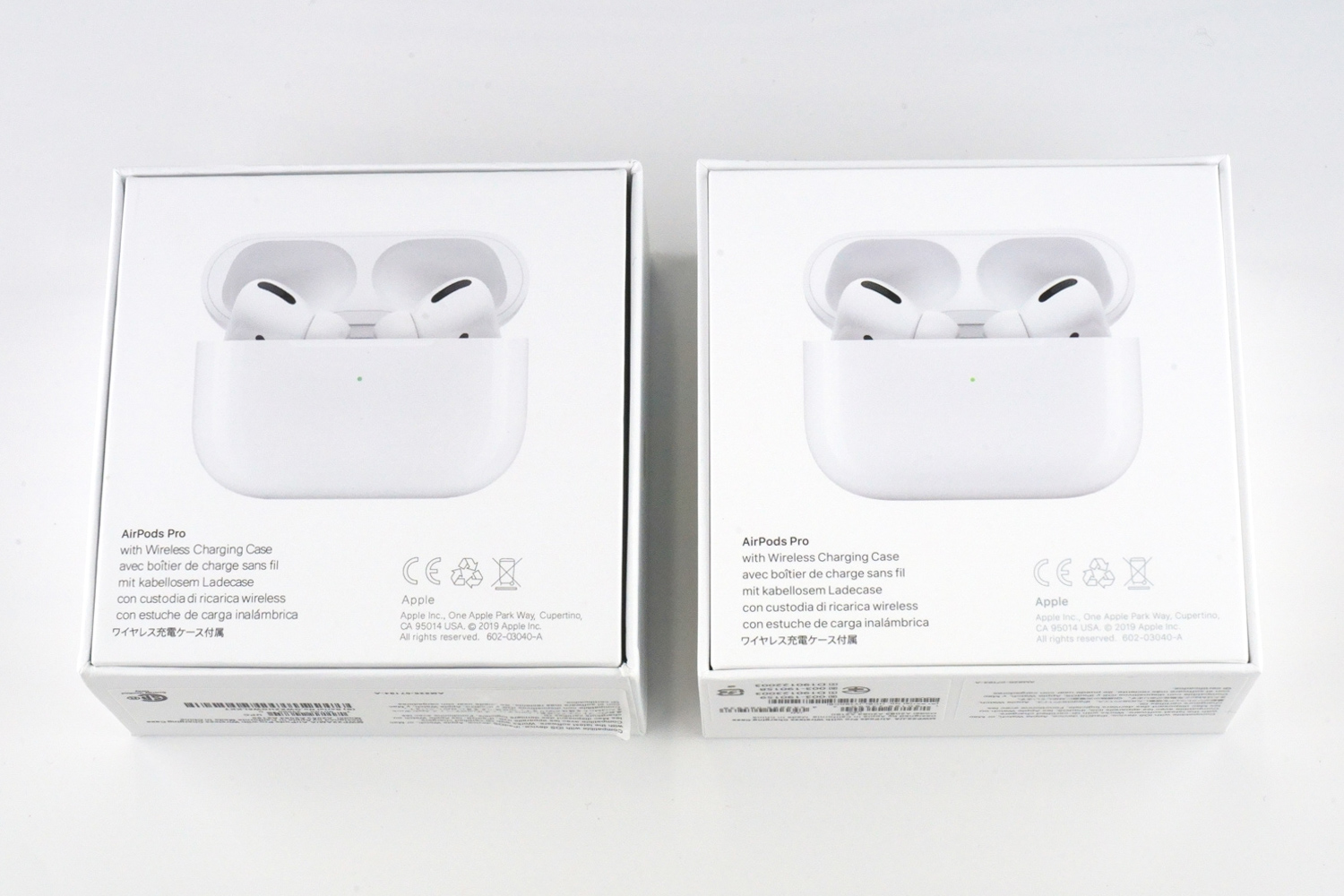
Next, here are the backs. Print quality is identical on both, and frankly I couldn't tell them apart. The only subtle difference is the size of the box itself — the fake is a touch smaller. There also seems to be a gap, but it might have warped between the time it was passed on to me, so I can't say for sure.
Can the manual help you tell them apart?
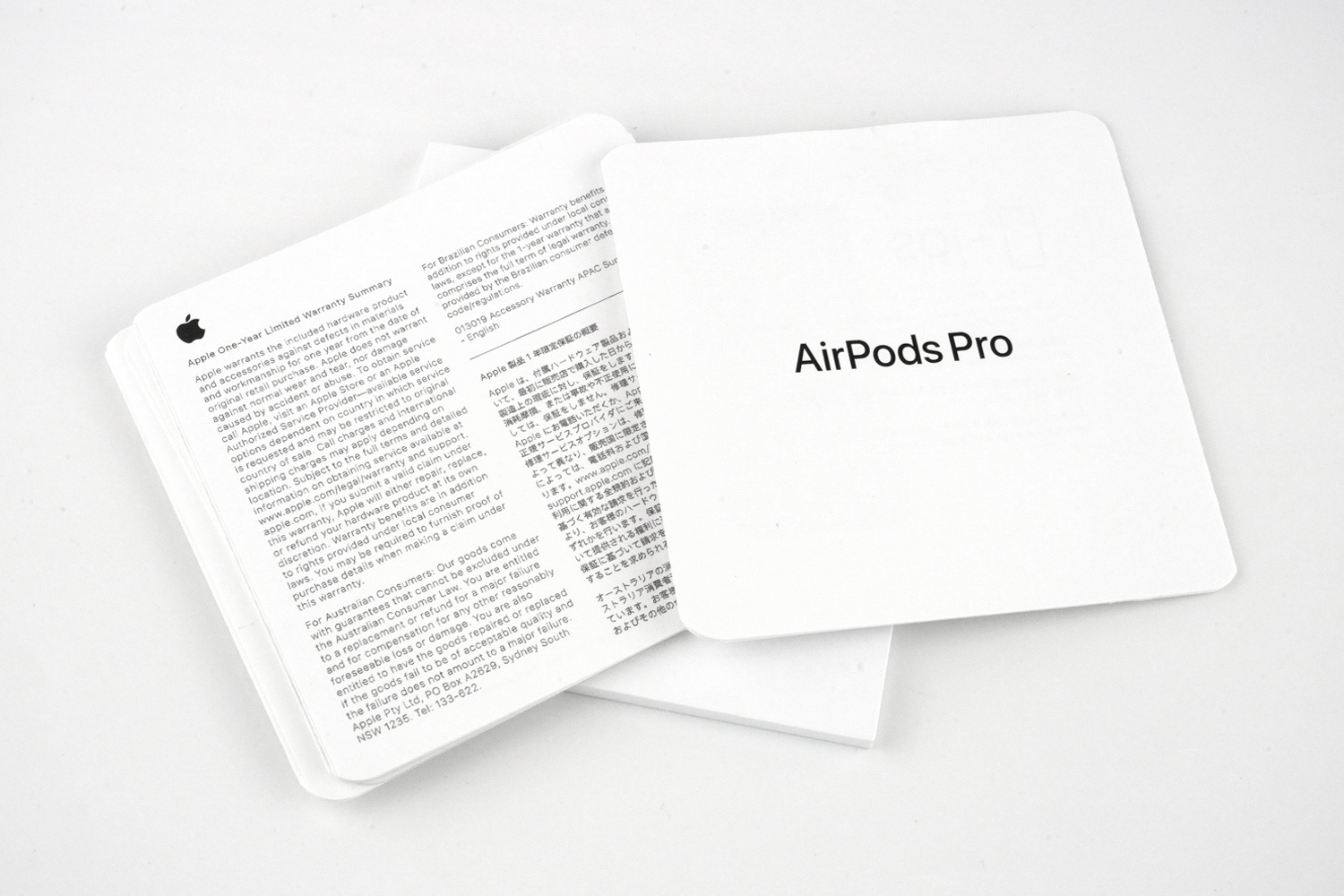
The fake comes with a properly included manual. And here's the manual from the real one.
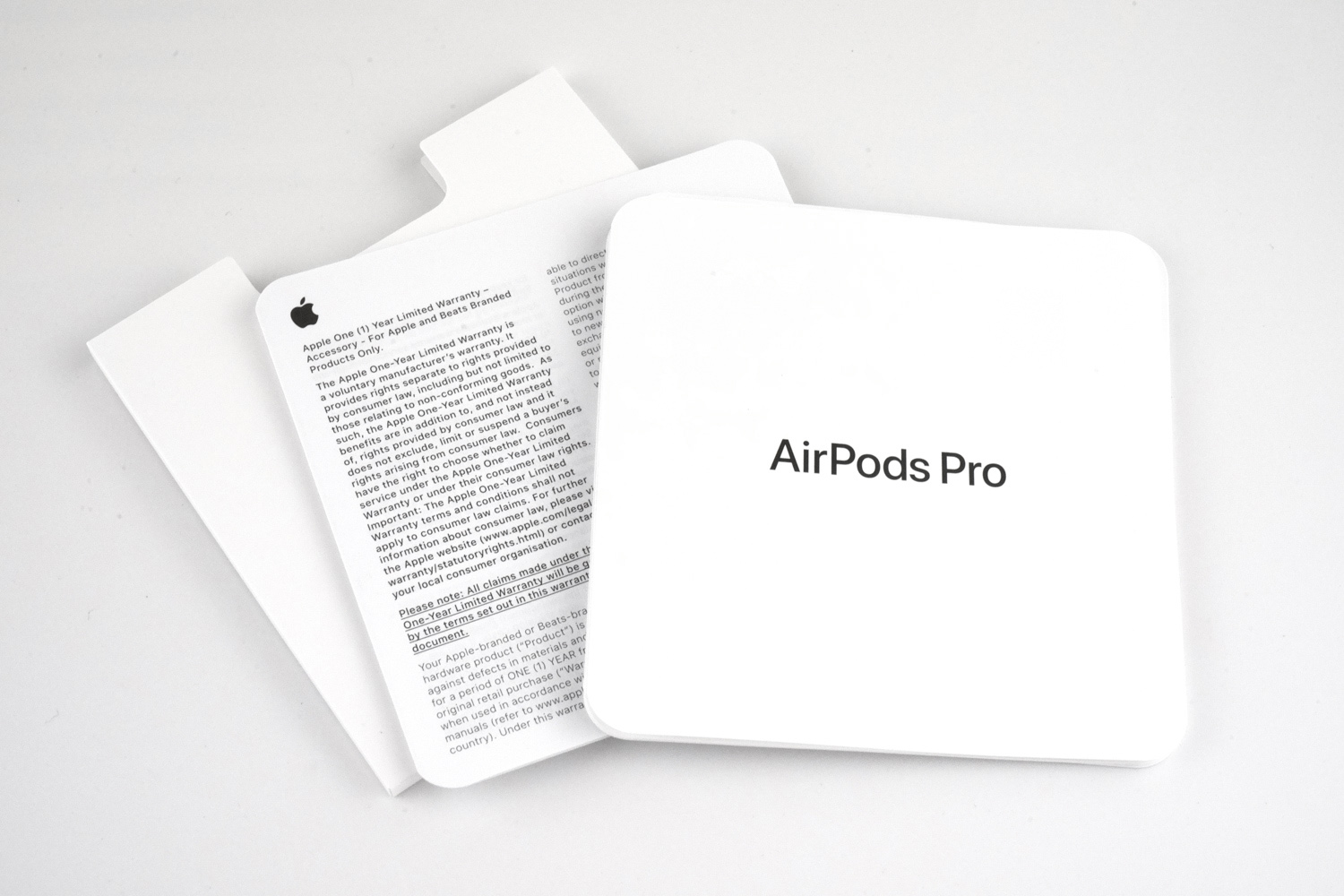
Just looking at it, I honestly can't tell. The paper of the real one is thinner and feels higher quality. It's hard to see with the naked eye, so I made an enlarged comparison too.
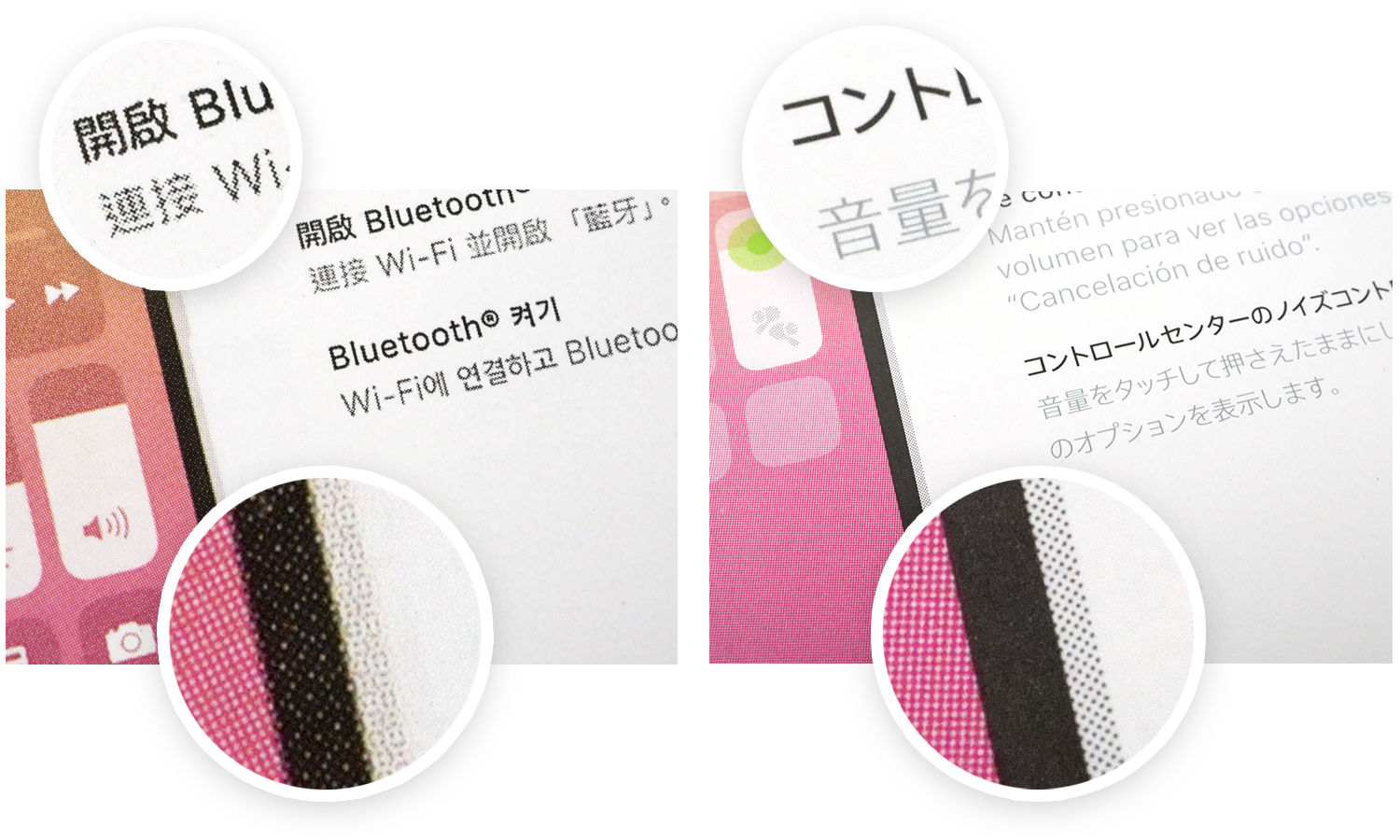
The fake looks like it was printed on a generic color laser printer, while the real one has even dots and crisp print quality. Apple's manufacturing standards don't drop this drastically just because something is a parallel import, so a close look at the print quality of the manual and similar items might help you tell.
The body unit is hard to tell apart at a glance, too
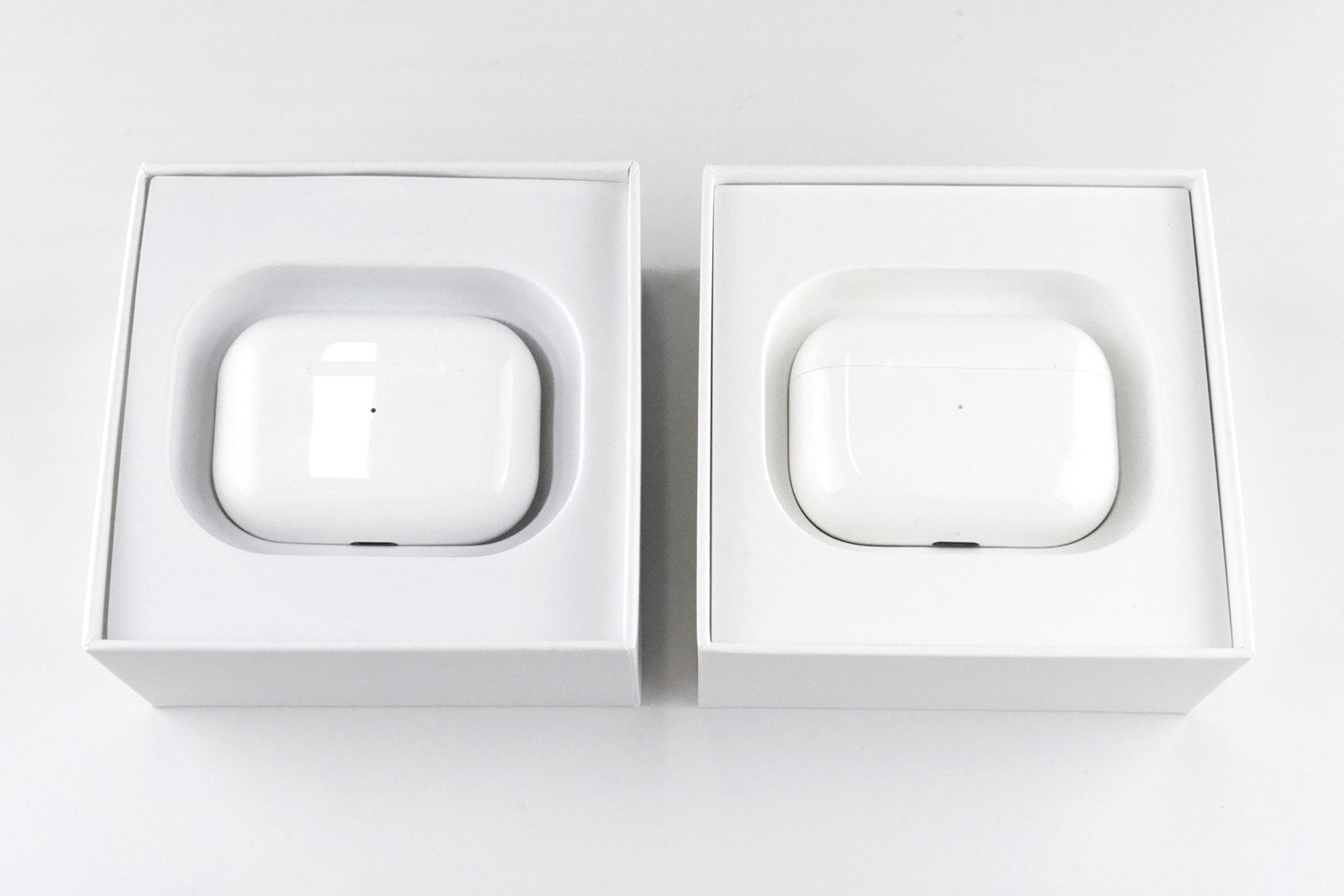
Now let's look at the body. The biggest difference is the tray material — plastic versus paper. Both have engravings on the back of the case, but the font on the fake is a little more elongated.
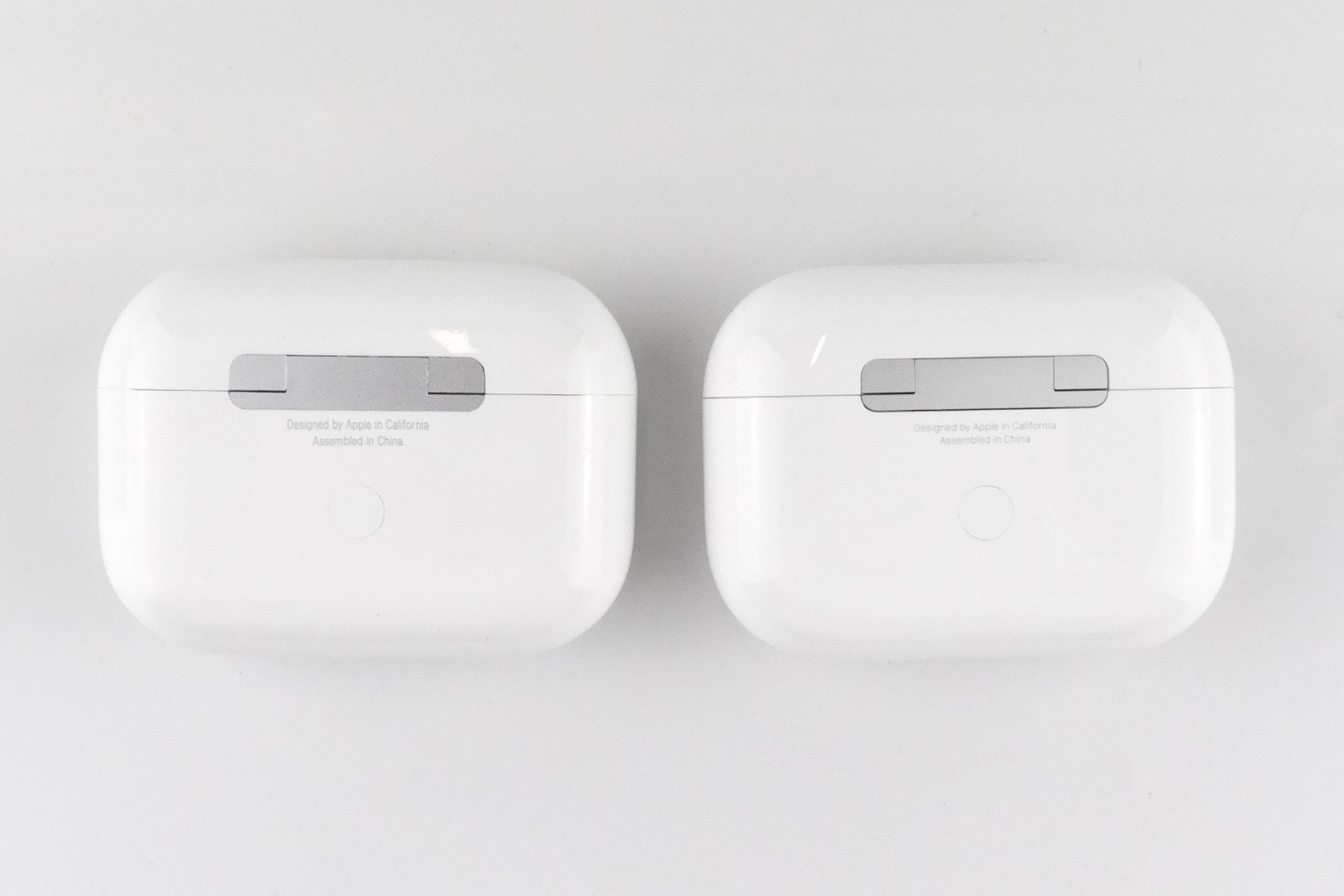
The "Designed by Apple..." text is the same on both. When I opened the lid of the fake, I was surprised at how closely it matched the real one.

The LED indicator lights up properly. Battery life isn't bad either — even after two weeks of sitting around, the lamp turns on when you open and close it.
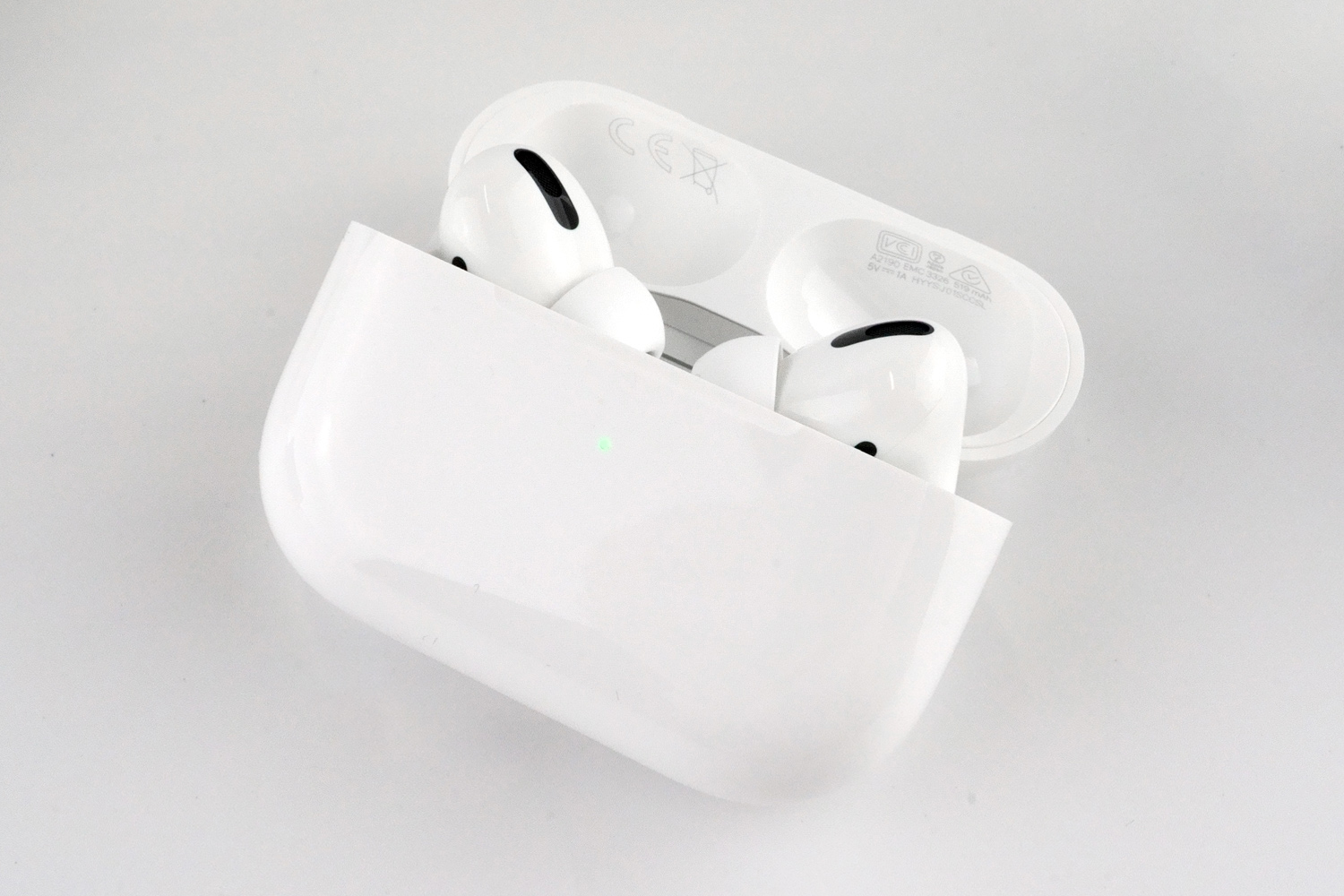
On the real one the LED is just a touch more subdued in color, giving it a more premium feel. Next, let's look at the inside of the lid. This is where the serial number and other identifiers are engraved, making it the ideal spot for verification.
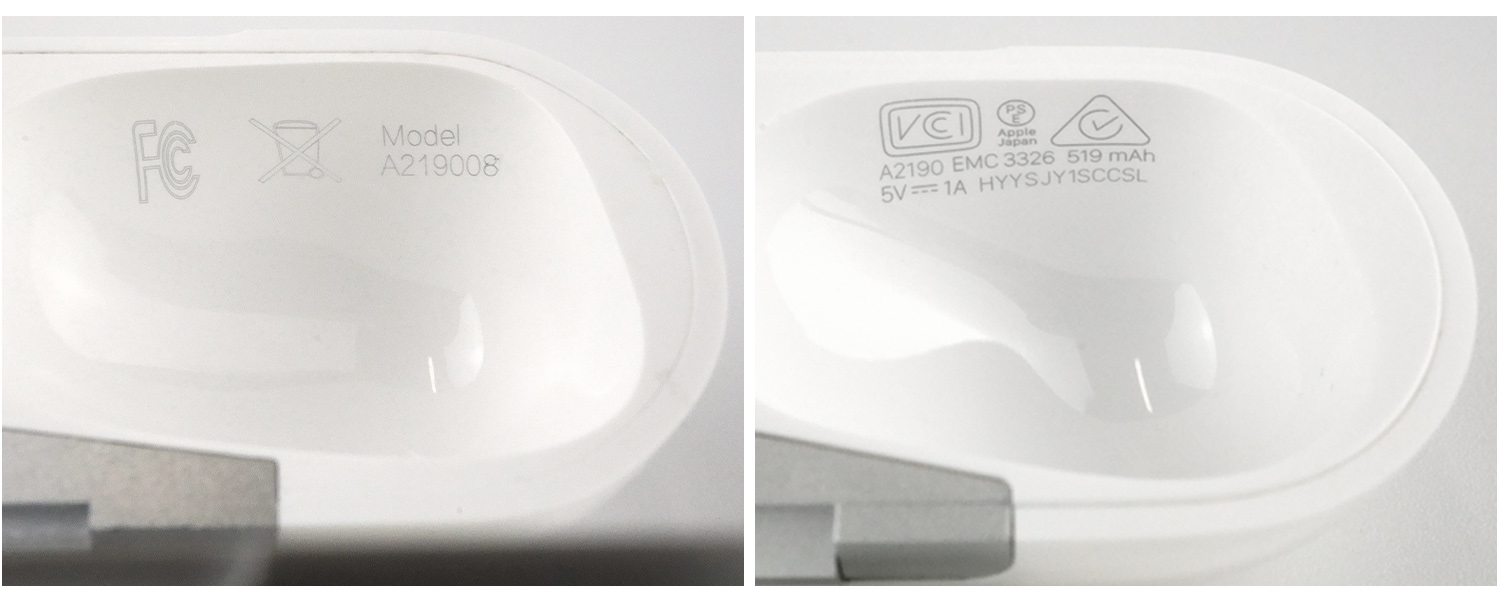
Officially the unit is the overseas (parallel import) version, so there are differences in markings compared to the domestic version, but even so, the engraving differs significantly. On the fake, the text is stretched vertically, and the model number is fictitious — the fake reads "A219008" while the real one reads "A2190," which is easy to spot. Whether it's a printing mistake by the counterfeiters, or a deliberate marker so they can identify their own fakes, who knows. Either way, anything that looks distorted or stretched is highly suspicious. Additionally, since February 1, 2019, regulations under the "Electrical Appliance and Material Safety Act" apply in Japan: the charging case for earphones is treated the same as a mobile battery※1, and AirPods Pro cannot be sold in Japan without the proper marking※2. Even on auction sites used for individual transactions, listing them is similarly prohibited※3. You'll also want to check that there's a proper company name like "Apple Japan" beneath the PSE mark. If a company name is missing, it's a violation, and that means it's a fake.
※1 FAQ on mobile batteries — Electrical Appliance and Material Safety Act (METI) Q7
https://www.meti.go.jp/policy/consumer/seian/denan/mlb_faq.html
※2 Portable lithium-ion storage batteries (mobile batteries) become subject to regulation under the Electrical Appliance and Material Safety Act (METI)
https://www.meti.go.jp/press/2017/02/20180201001/20180201001.html
※3 [Update to prohibited listings] From February 1 (Fri), mobile batteries without a PSE mark are prohibited from being listed | Mercari Biyori (Official)
https://jp-news.mercari.com/articles/2019/01/29/mobile-battery/
The earbud quality itself is shocking
Next up is the AirPods Pro earbud body. The image below shows real AirPods Pro — but actually, one of them is a fake.
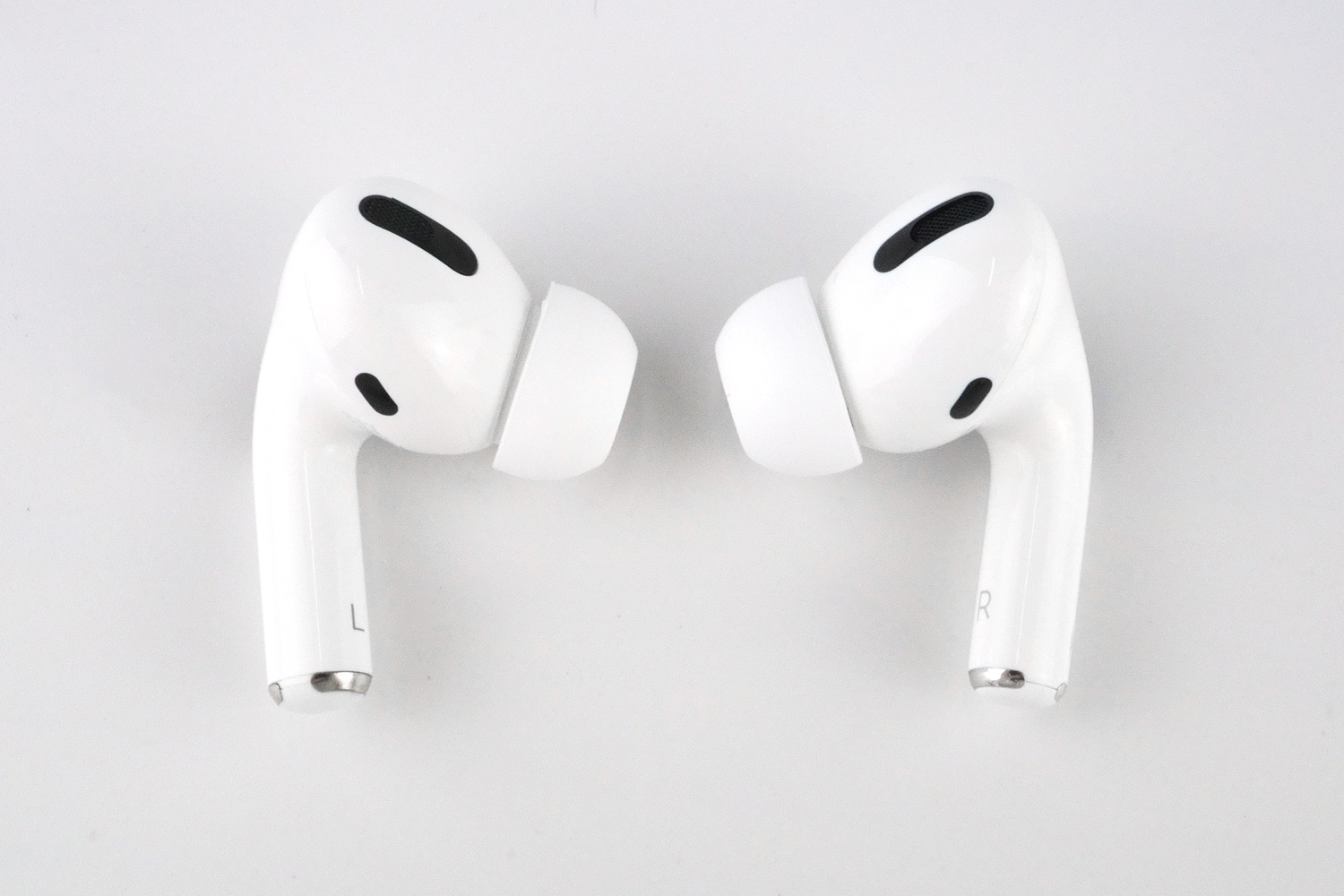
The answer: the left one is fake, the right one is real. The overall detail is so finely reproduced that it gets hard to tell which is which. It makes you worry the molding dies were stolen straight from the legitimate factory.
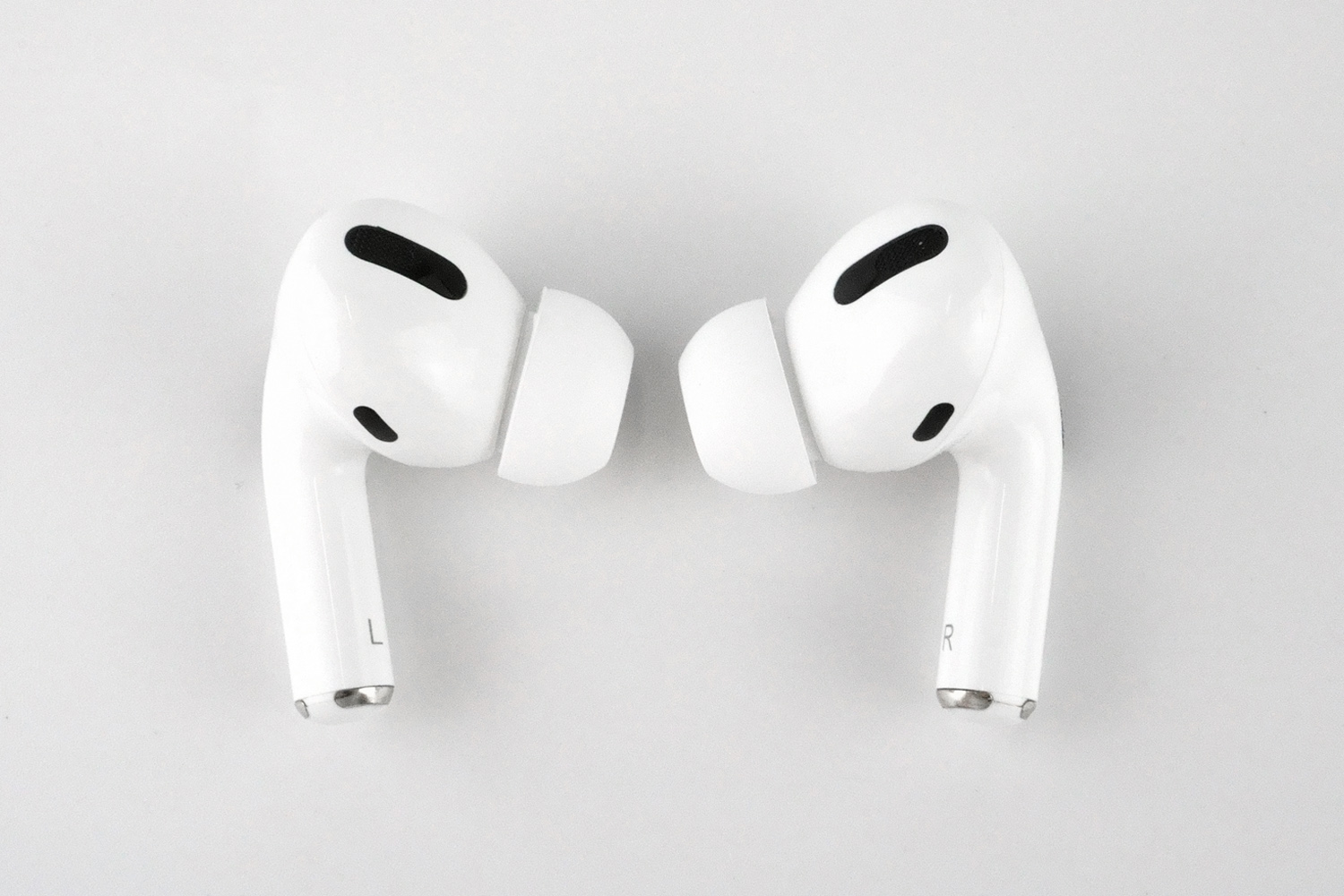
Here's a photo of two fakes. At thumbnail size you can't tell them apart at all. If someone showed you only this picture and asked which is real and which is fake, I think it'd be quite difficult. Honestly, while writing this article I almost lost track of which photo was which. The only difference is some leftover flash on the eartips. But when it comes to the engraving on the back...
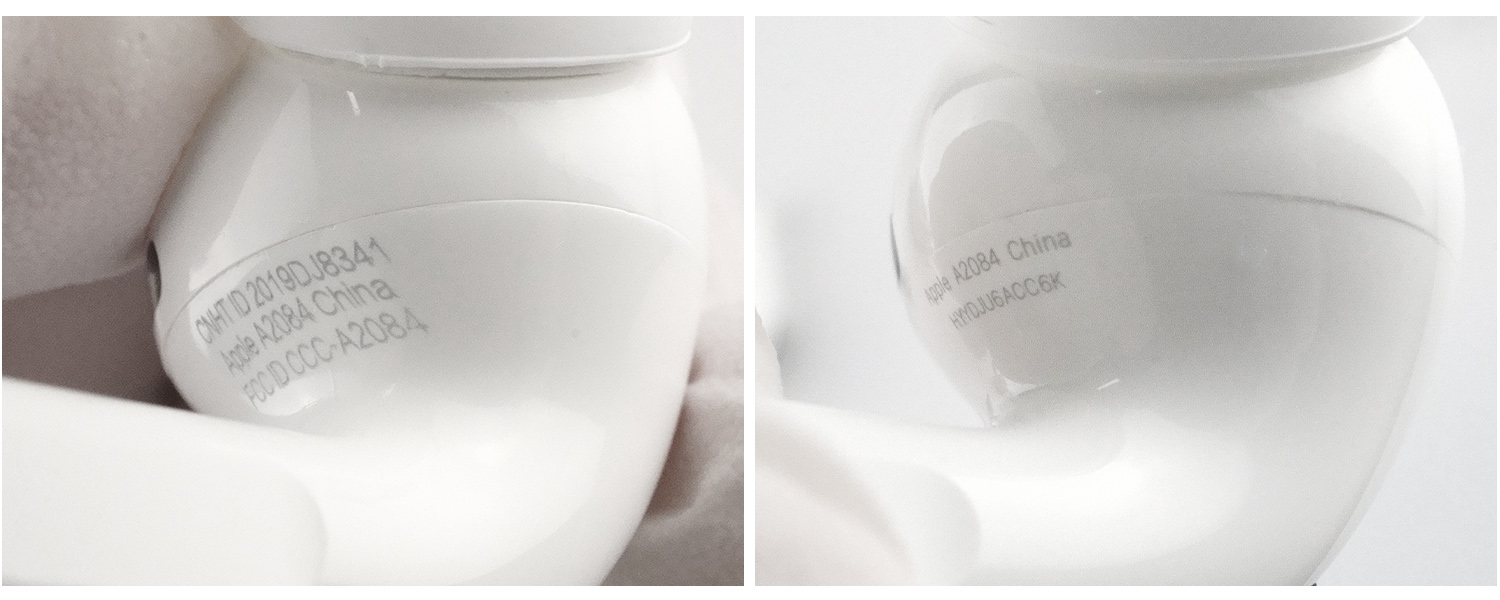
On this fake, the font, the number of lines, and the engraving quality were all different. The font is elongated, and the edges look stretched as if they were pulled. Engraving evenly on a curved 3D surface like this must be difficult. By the way, fakes that have a cleaner, two-line engraving — just like the real one — are also widely circulating, so be careful. For reference, the layout of this engraving is the same on overseas and domestic versions. The model number is "A2084," and as for serial numbers, even on genuine products the "battery case" and the "earbuds" carry different serial numbers — that's the proper specification.
To avoid getting burned
Once you get caught up in trouble, you lose both time and money. To avoid these counterfeits, the most reliable steps are:
- Buy from the Apple Store or a major electronics retailer
- Buy the domestic Japanese version, not parallel imports
- Check the serial number before buying if possible
- Check seller ratings on auction sites
Buying cheap will get harder, but you can keep the risk to a minimum. High-quality counterfeits are out there too, and telling them apart by appearance alone is difficult. If you can't tell from the box, you'll have to actually open it — but once opened, you may not be able to return it, and it can become a source of conflict with the seller, so it's best avoided. With online transactions, you can't see the item in person before buying, which only raises the risk further. Sellers need to be careful too. Even if you ship a legitimate, genuine product, there are real cases where the buyer says "actually, I want to return it" and the item that comes back has been swapped for a fake. To avoid unnecessary trouble, I strongly recommend buying from the Apple Store or major electronics retailers.
※The serial numbers on the genuine AirPods Pro shown in this article have been replaced with fictitious ones via image editing.
※Some overseas versions also carry the PSE mark.
※The earbuds of the counterfeit AirPods Pro do not function.