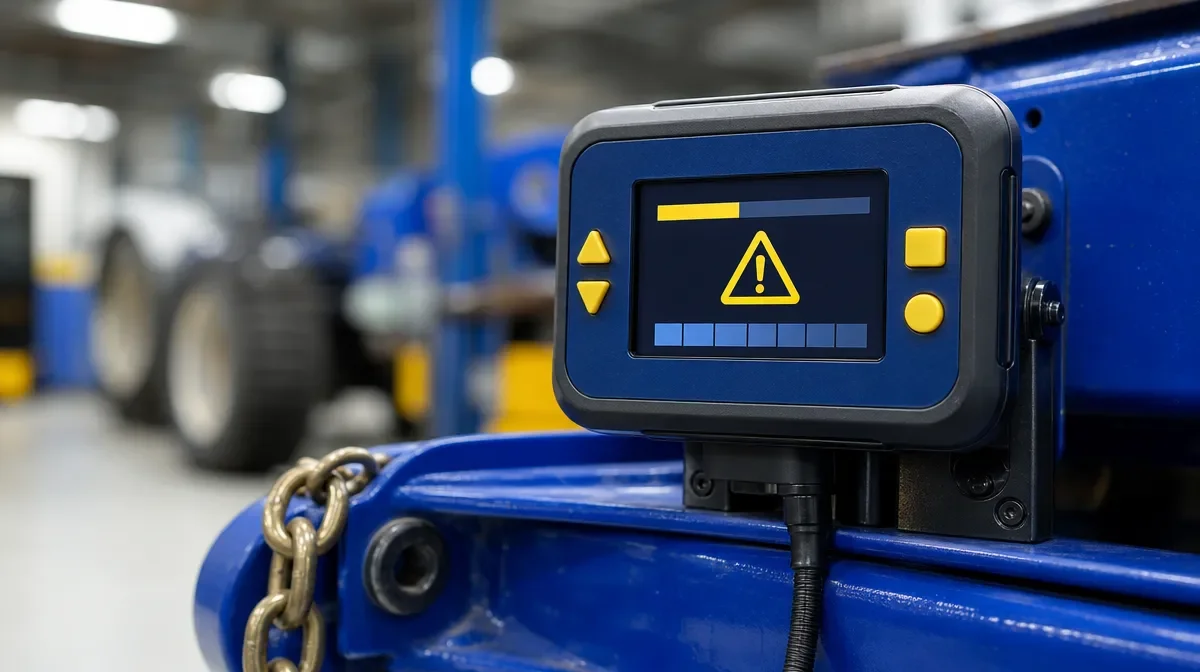
The U.S. Cybersecurity and Infrastructure Security Agency (CISA) published advisory ICSA-26-323-02 on November 19, 2026 (U.S. time), covering the EB2, VM1 and ELBC2000 electric trailer brake controllers made by Australian manufacturer Elecbrakes. According to the advisory, a third party within Bluetooth range could operate a trailer's brakes without any authentication. The flaws were found by Patrick Forck and Jeremy McCarthy of Element Digital, based in Hobart, Tasmania. Elecbrakes also posted a firmware update notice on its official website on November 23.
Two of the Three Flaws Score 9.6 on CVSS
CISA lists three vulnerabilities. CVE-2026-96805 is a missing authentication for a critical function (CWE-306): a BLE (Bluetooth Low Energy) device in range can write to the control interface and influence braking. CVE-2026-125273 stems from commands lacking sequence numbers or nonces, so captured commands can be replayed (CWE-294). Both carry a CVSS v3.1 base score of 9.6 (Critical).
The remaining flaw, CVE-2026-124281, is an unprotected firmware-update channel with a base score of 6.1 (Medium). Affected and fixed versions are as follows.
| Product | Affected firmware | Fixed version |
|---|---|---|
| EB2 | 3.0.4.2.0 and earlier | 3.0.4.4.3 or later |
| VM1 | Earlier than 1.3.4.2.1 | 1.3.4.2.1 or later |
| ELBC2000 | All versions | None (as of this writing) |
CISA identifies the affected sector as transportation systems and lists Australia and New Zealand as the deployment regions. As of publication, CISA said no known public exploitation specifically targeting these vulnerabilities had been reported to it.
A Few Bytes Were Enough to Apply the Brakes
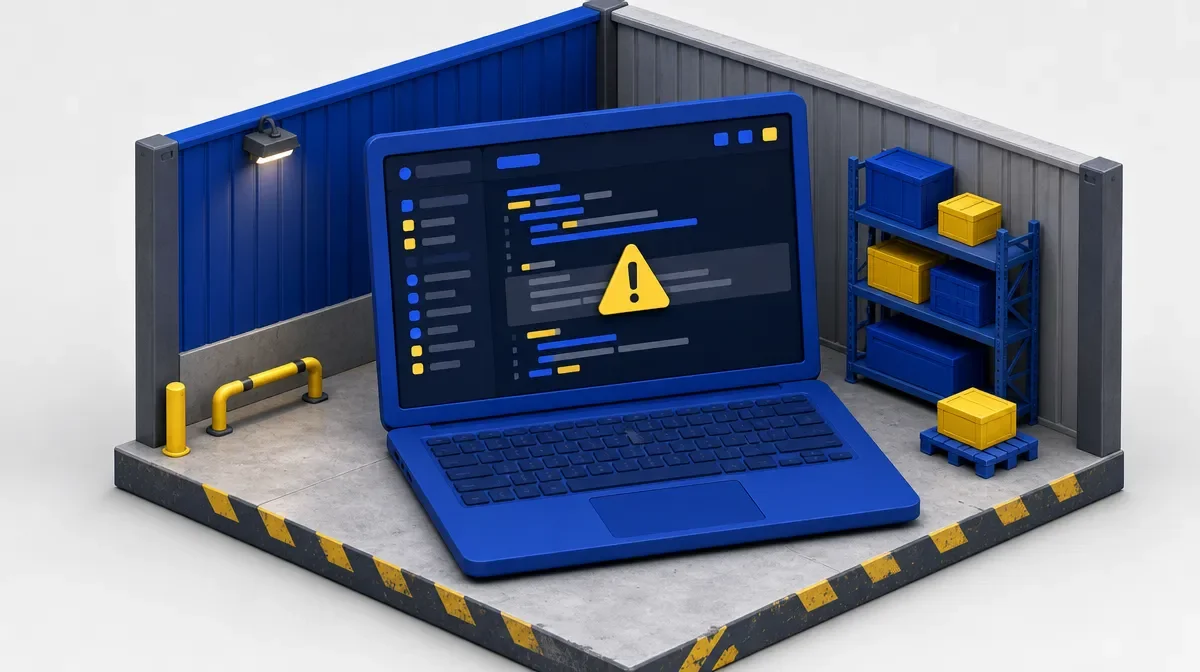
In a technical write-up published the same day, Element Digital explained that brake control sat in a part of the device that required no pairing or PIN. Writing just a few bytes to a GATT characteristic, part of Bluetooth's communication specification, could apply the brakes at any force, the company said. Once the attacker's connection dropped, the brakes released after two to five seconds.
Over-the-air (OTA) firmware updates were also unsigned and protected only by a CRC32 check, according to the company. Element Digital noted, however, that it did not go as far as flashing modified firmware.
For the research, Element Digital decompiled the official Android app and identified 47 GATT characteristics across four services. It disclosed that it used Anthropic's AI, Claude, for analysis and for building tools. The resulting tool runs on Web Bluetooth in Chrome and was tested from a laptop and a smartphone on private gravel roads.
Fix Shipped in Seven Weeks, Disclosure Took Half a Year
According to Element Digital's timeline, it reported the issue to Elecbrakes on May 18, 2026. Elecbrakes reproduced and validated the findings and released a fixed app and firmware on July 6. The fix moves brake control behind an authenticated, encrypted, bonded connection (a connection that stores pairing information) and requires a set brake-pedal sequence for first-time pairing.
Coordinating the disclosure, on the other hand, dragged on. Element Digital reported the issue to CISA on July 3, but there were stretches with no contact from the vendor, and publication slipped to November 19. As of October 30, about 60% of daily active EB2 and VM1 users were on the latest firmware, the company said.
In addition, a second review on November 17 found that the fixed firmware image was still unsigned. According to Element Digital, Elecbrakes said its next app release will add firmware signing, among other measures.
Owners Should Check Firmware Versions; Older Remotes Replaced Free
In its November 23 notice, Elecbrakes asked owners to update the EB2 to version 3.0.4.4.3 or later and the VM1 to version 1.3.4.2.1 or later. The update is done by updating the app, connecting to the controller and following the on-screen prompts. The company said it is not aware of any exploitation or of related property damage or injuries.
One point to watch is the in-car remote. Because the new firmware changes the wireless framework, older "V2" remotes will no longer work. Elecbrakes is offering a free exchange for a "V3" remote and says it will cover shipping within Australia.
The older ELBC2000 cannot receive this update. Elecbrakes advises owners to keep it connected to a smartphone or remote at all times while in use. CISA says the vendor is determining how to address the vulnerabilities for this controller.
Our Take
The manufacturer deserves credit for shipping a fix within seven weeks of the report and for requiring a pedal sequence for first-time pairing. Because only someone at the vehicle can register a device, it looks like a sensible defense against wireless attacks.
That said, roughly 40% of users appear to have still been on unpatched firmware at the end of October, and the ELBC2000 has no fix, both of which remain concerns. Even for equipment tied to vehicle safety, protection does not spread unless users learn that they need to update.
Still, the manufacturer's official notice makes it easier for owners to check where they stand, which is a step forward. The use of AI to speed up analysis and tool building may also become a more common way to examine device security.
Summary
Vulnerabilities that let anyone apply the brakes over Bluetooth without authentication have been disclosed in Elecbrakes' EB2, VM1 and ELBC2000. The products are trailer brake controllers used in Australia and New Zealand, and EB2 and VM1 owners should check their firmware versions. The vendor is still determining its approach for the ELBC2000, and its next app release is expected to add firmware signing, among other measures.