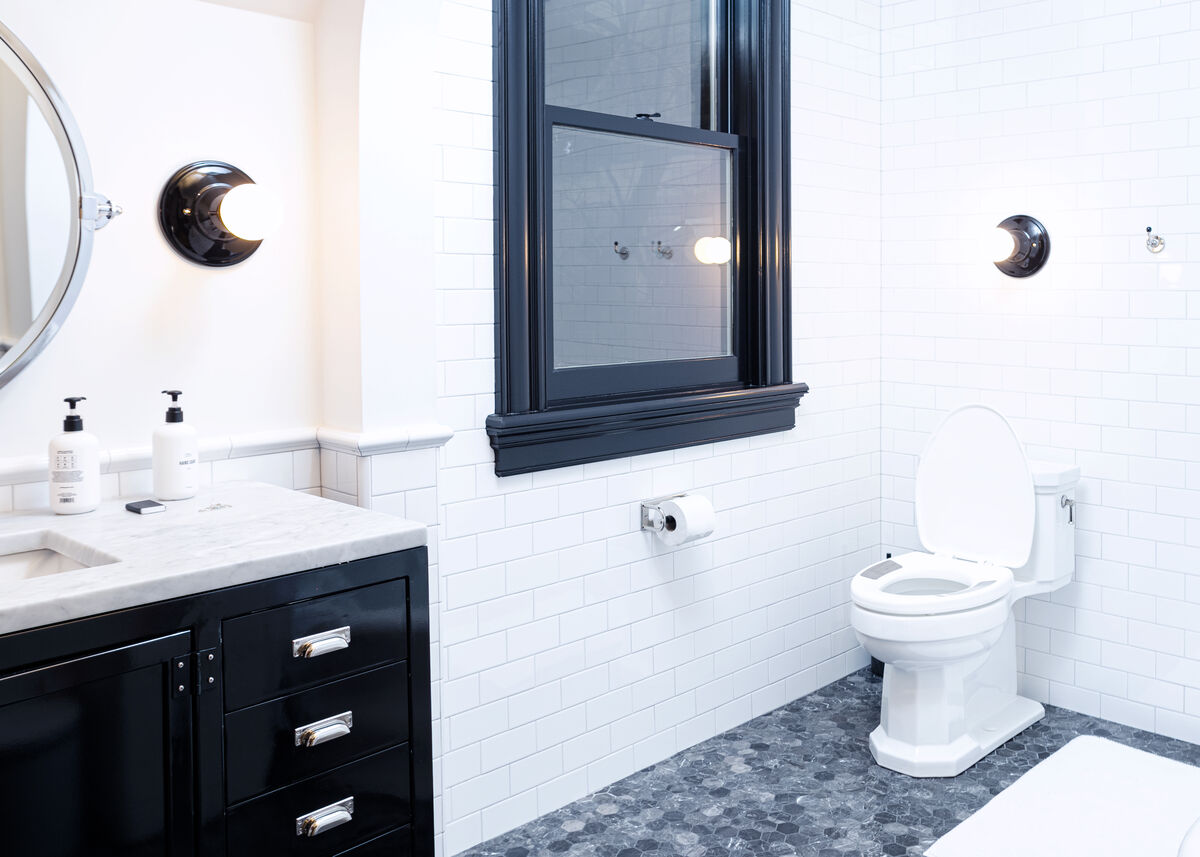
Casana, based in Rochester, New York, has launched the Smart Seat, a toilet seat that doubles as a home vital signs monitor. It replaces an existing seat, and every time someone sits down it records heart rate, blood oxygen and blood pressure trends. There is nothing to wear and nothing to charge, and the price is 199 USD (about 33,000 yen) including the first year of service.
※1 USD = about 164 JPY (as of July 24, 2026)
What it measures while you sit
The Smart Seat logs heart rate, heart rate variability, blood oxygen saturation (SpO2), respiration rate, blood pressure trends, and Sit-to-Stand Power, which looks at the force used when standing up. A reading finishes within 2 minutes of sitting down, and the results appear as daily changes in the Smart Seat Companion App.
Readings are not framed as good or bad against a fixed scale. They are shown as trends against the user's own baseline, with a nudge when something drifts from normal. Casana says daily use is not required and that sitting a few times a week is enough to establish a trend.
The clearest difference from a smartwatch or a smart ring is that the user does not have to think about it. There is no strap to forget in the morning and no charger to remember at night. The core idea is that data accumulates without any change in habit.
Three sensors built into the seat
Three types of sensors sit inside the seat: a single-lead electrocardiogram (ECG), a photoplethysmogram (PPG) that reads blood flow from reflected light, and a load-cell-derived ballistocardiogram (BCG) that captures the mechanical signal of the heartbeat. Combining the three lets the seat estimate several vitals without a cuff or a fingertip clip.
There is no camera and no microphone. Captured data is encrypted, and sharing it with family or a physician is the user's choice. The seat uses bioidentification to tell household members apart, recognizing up to 5 people automatically.
The battery is designed to last 2 years, and installation takes minutes. The seat connects over Wi-Fi to work with the app.
Pricing and conditions
The Smart Seat costs 199 USD, which covers the hardware and the first year of service. Shipping is free, the warranty runs 1 year, and there is a 30-day money-back guarantee. After the first year, service moves to a monthly plan, listed on Casana's own site at 9.99 USD per month (about 1,600 yen). The launch press release cited roughly 19.99 USD per month (about 3,300 yen), so the rate appears to have been revised at launch. Units for the July launch are limited.
Installation uses the two-bolt mounting standard common in the United States, and only elongated toilet bowls are supported. There is no announced availability in Japan at this point.
There are limits worth noting. The Smart Seat is a wellness device for general monitoring, not a medical device intended for diagnosis or treatment. Casana states that it is not intended for, or has not been tested on, people who are pregnant, people under 18, people weighing under 90 pounds (about 41 kg) or over 350 pounds (about 159 kg), people with persistent arrhythmias, and people with pacemakers.
A decade of research behind the product
Casana began more than 10 years ago, when founder Nick Conn was working on his doctoral research at the Rochester Institute of Technology (RIT). The company says it has since run clinical research with more than 5,000 subjects and filed more than 20 patents. Accuracy for the Smart Seat was validated in a study using an arterial line.
In 2023 the company shipped the Heart Seat, which measured heart rate and SpO2. The Smart Seat widens the set of measurements and brings the price down for general consumers. Casana says new guidance issued by the US Food and Drug Administration (FDA) in January 2026 for low-risk devices opened clear regulatory room for at-home wellness vitals.
Investors include General Catalyst, Matrix, Morningside, Outsiders, Kaiser Permanente, and Bemis, the world's largest toilet seat maker. Manufacturing takes place in Rochester, and CEO Olivia Lew said the company spent more than a decade building something that asks nothing of the user.
Wanting to keep an eye on an aging parent from a distance is hardly a niche concern in Japan either. Slipping measurement into a place everyone uses every day could reach the people that wearables have failed to hold on to.
Summary
Casana's Smart Seat is a home wellness device that records heart rate, blood oxygen and blood pressure trends simply by replacing a toilet seat. It packs ECG, PPG and BCG sensors, finishes a reading within 2 minutes of sitting down, and recognizes up to 5 people automatically. The price is 199 USD including the first year of service, with 9.99 USD per month afterward according to Casana's site. It assumes an elongated bowl and US-standard mounting, and Japanese availability is undecided, but health tracking that requires nothing to wear looks like one plausible shape for home health monitoring going forward.