Product pages for the ASUS Mini PC VM31, an ultra compact desktop, are now live on ASUS's global site. The machine packs seven USB ports and quad display output into a chassis that measures 0.55 liters and weighs 330 grams. The AMD processors inside carry the new Ryzen 10 Series branding, but the silicon underneath dates back to the Zen 2 designs that have been shipping since 2022.
The Dimensions Are the Headline
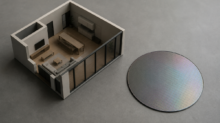
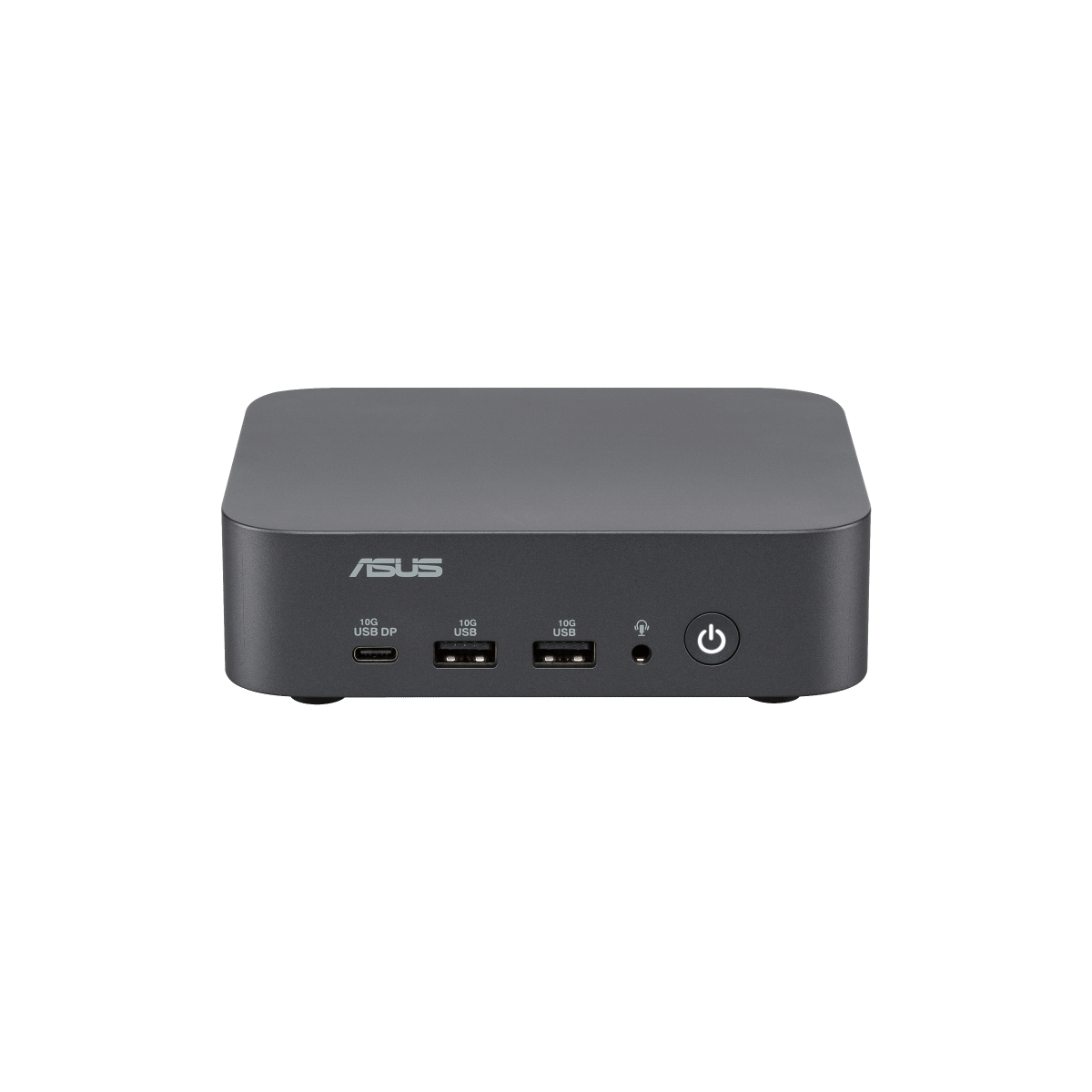
The VM31 measures 135 x 115 x 35.8 mm and weighs 0.33 kg. At 0.55 liters, its volume is roughly that of two stacked hardcover books. A VESA mount ships in the box, so the unit can be fixed to the back of a display or to a wall.
Those dimensions matter most where desk space does not exist. Behind a checkout counter, under a classroom lectern, inside a reception desk: places where a tower is out of the question and even a mini tower is awkward. ASUS points to small and mid sized businesses, small and home offices, educational institutions, and retail and service environments running digital signage or POS terminals. It is not a flashy product, but in deployments like these the physical volume of the chassis is itself part of the spec sheet.
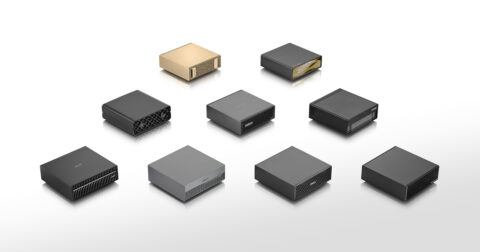
Power comes from a 19V, 4.74A, 90W AC adapter. The chassis is finished in Iron Grey, and a logo free version is available. Businesses placing equipment in lobbies or storefronts often ask for hardware without vendor branding, and this option covers that request.
The Ryzen 10 Series Is Mendocino Underneath
Three CPUs are on offer: the AMD Ryzen 5 40, the AMD Ryzen 3 30, and the AMD Athlon Silver 10, each with a configurable TDP of 15W. Graphics are handled by integrated AMD Radeon 610M.
The catch is that all three are new names on old parts. The Ryzen 3 30 is a rebrand of the Ryzen 3 7320U from 2022, the Ryzen 5 40 of the Ryzen 5 7520U, and the Athlon Silver 10 of the Athlon Silver 7120U. The foundation is the 6nm Mendocino design, with Zen 2 CPU cores. Zen 2 first shipped in the Ryzen 3000 series in 2019, which makes this a rather old architecture to be carrying into a 2026 product.
The Ryzen 3 30 offers 4 cores and 8 threads at up to 4.1GHz with 4MB of L3 cache. It will handle a browser, a spreadsheet, and a business web app running side by side, but it is not built for video editing or heavy development work. ASUS frames it as suited to everyday office productivity and embedded applications.
Model numbers advancing while the silicon stays put has become routine in mobile APUs. The only defense on the buying side is to check the generation and architecture rather than the model name. In volume corporate procurement especially, knowing the real design vintage is useful when estimating how soon a refresh will be needed.
Memory and Storage Are Modest, With Little Room to Grow
Memory tops out at 16GB of LPDDR5-5500, soldered to the board. Adding more later is not an option, so the decision about whether 16GB is enough has to be made before purchase.
Storage is a single M.2 2280 NVMe SSD on a PCIe 3.0 x4 link. Prebuilt models ship with 128GB, 256GB, or 512GB, and supported capacities run from 128GB to 512GB. A barebone version without an operating system is also available and supports Windows 11 Home, while prebuilt units can be ordered with Windows 11 Pro or Windows 11 Home.
PCIe 3.0 looks thin at a time when 4.0 and 5.0 are standard, but Mendocino itself tops out at PCIe 3.0. The constraint sits on the CPU side, and there is no way to lift storage alone above it.
Seven USB Ports, Quad Display, and 2.5G Wired Networking
For such a small chassis, the I/O is generous. The front carries one USB 3.2 Gen2 Type-C port with DisplayPort 1.4 output, two USB 3.2 Gen2 Type-A ports, and an audio jack, with a Kensington lock slot on the side.
The rear adds two USB 3.2 Gen2 Type-A ports, one USB 3.2 Gen2 Type-C port with DisplayPort 1.4, one USB 2.0 port, a DisplayPort 1.4 output, an HDMI 2.0 output supporting up to 4K at 60Hz, a 2.5G RJ45 LAN port, and DC-in. That comes to seven USB ports in total, three at the front and four at the back, which is enough headroom for reception or POS terminals loaded with peripherals.
Combining the rear DisplayPort and HDMI outputs with the two Type-C ports gives support for up to four displays. For signage or monitoring setups that need different content on each screen, that number alone can decide whether the machine qualifies. Networking covers 2.5G LAN plus Wi-Fi 6E and Bluetooth 5.2. Access to the 6GHz band makes a real difference in congested offices and stores. Audio runs through a Realtek ALC 233 codec.
Why Dated Silicon Still Works Here
Judged on performance, the VM31 has little to recommend it as a 2026 product. Machines in this class keep getting built because what business endpoints are asked to do sits on a different axis from raw throughput. A fixed set of applications has to run reliably, failures have to be rare, the box has to fit anywhere, and the units have to be cheap enough to buy in quantity. Meet those four conditions and whether the CPU is Zen 2 or Zen 5 barely registers on the floor.
Mature silicon can even count as an advantage in corporate procurement. Drivers are well settled, and a 15W class power envelope keeps cooling and noise undemanding. ASUS advertises a one year international warranty covering more than 50 countries, which makes maintenance planning easier for companies with distributed sites.
The product itself has been circulating in German speaking markets including Germany and Austria since earlier in 2026. Its arrival on the global English site marks the point where availability starts expanding worldwide. No official information has been announced about Japanese availability or pricing.
Summary
The ASUS Mini PC VM31 is an ultra compact business desktop that fits seven USB ports, quad display output, 2.5G LAN, and Wi-Fi 6E into a 0.55 liter, 330 gram chassis. The CPU options are the Ryzen 5 40, Ryzen 3 30, and Athlon Silver 10, all of which are Mendocino generation parts from 2022. Memory tops out at 16GB of LPDDR5-5500 and storage runs from 128GB to 512GB over PCIe 3.0, both modest figures. In signage, POS, and education deployments where placement and reliability outrank expandability, those tradeoffs turn into the product's argument.