

As of September 1, Apple has a new chief executive officer: John Ternus. Tim Cook, who held the role for 15 years, has stepped into the position of executive chairman, and the board lineup shifted on the same day. It is the first CEO handover since Cook took over from Steve Jobs in 2011, and the job Ternus inherits starts not with a product but with AI, an area where Apple has unusually little advantage.
Announced in April, Effective Exactly as Planned on September 1
The change was made public on April 20 and described as the outcome of a long-term succession planning process approved unanimously by the board of directors. Cook stayed on as CEO through the summer to work through the handover with Ternus, and the transition took effect on September 1 as scheduled.
Titles were not the only thing that moved that day. Arthur Levinson, non-executive chairman for the past 15 years, became lead independent director, and Ternus joined the board himself. Cook continues to handle certain aspects of the company as executive chairman, including engaging with policymakers around the world. He is not leaving; his center of gravity has shifted to outward-facing work.
A Hardware Engineer at the Top
Ternus joined Apple in 2001 as a member of the product design team, became vice president of Hardware Engineering in 2013, and joined the executive team in 2021 as senior vice president of Hardware Engineering. Before Apple he worked as a mechanical engineer at Virtual Research Systems, and he holds a bachelor's degree in mechanical engineering from the University of Pennsylvania. His path runs straight up through the technical side of the company.
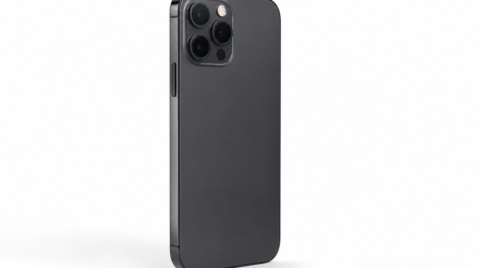
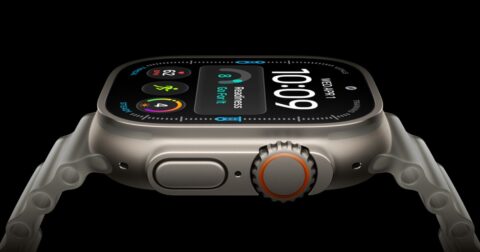
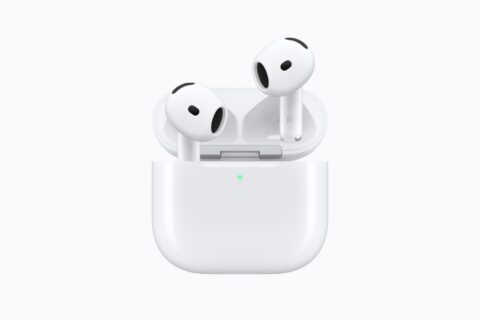
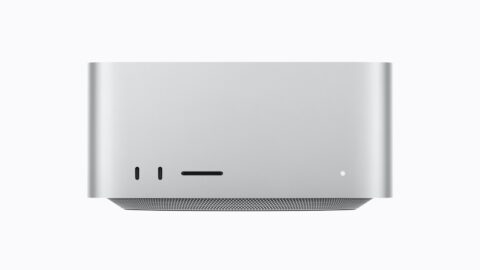
The range of products he has touched is wide. He was involved in launching entirely new lines with iPad and AirPods, and he has overseen hardware development across successive generations of iPhone, Mac, and Apple Watch. More recently his organization delivered iPhone 17 and iPhone 17 Pro, the thin iPhone Air, and on the Mac side the new MacBook Neo. His team also pushed improvements from the materials and manufacturing side, including 3-D printed titanium in Apple Watch Ultra 3 and a new recycled aluminum compound rolled out across multiple product lines.
Apple is moving from a leader who mastered supply chain operations to one who built the products themselves. The change in the CEO's background is the kind of thing that shows up gradually in how products get made.
The Numbers Cook Leaves Behind
Over 15 years the scale of the company changed by an order of magnitude. Market capitalization grew from roughly 350 billion USD (about 56 trillion yen) at the start of his tenure to 4 trillion USD (about 640 trillion yen), a gain of more than 1,000 percent. Annual revenue went from 108 billion USD (about 17 trillion yen) in fiscal year 2011 to more than 416 billion USD (about 67 trillion yen) in fiscal year 2025, nearly quadrupling.
※1 USD = 160 JPY (as of August 31, 2026)
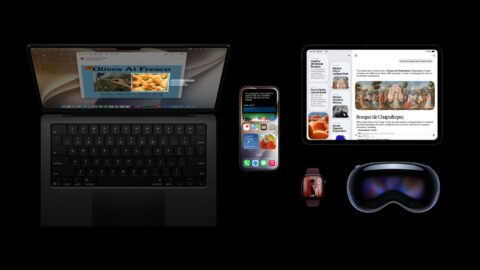
The footprint expanded just as much. Apple now operates in more than 200 countries and territories, runs over 500 retail stores, and has surpassed 2.5 billion active devices. Headcount grew by more than 100,000, and new categories including Apple Watch, AirPods, and Apple Vision Pro joined a services lineup running from iCloud to Apple Pay. Services alone is now a business of more than 100 billion USD (about 16 trillion yen), large enough to stand on its own. The move to Apple silicon was decided in this period as well, alongside a reduction of more than 60 percent in the company's carbon footprint against 2015 levels.
For the person taking over, all of that becomes the benchmark, which is its own kind of pressure.
The First Test Arrives on September 9
The clearest challenge Ternus inherits is generative AI. The Siri overhaul has slipped, the AI organization has reportedly seen repeated leadership changes, and the new Siri is reported to be built on Google's Gemini, under a January agreement to license a custom version for roughly 1 billion USD (about 160 billion yen) per year. For a company that has insisted on building its own stack, putting an outside technology under its core voice assistant is a notable call.
That work goes on display at the event scheduled for September 9 under the tagline Surprise and Shine. Alongside the new Siri, new iPhone models including a foldable are expected, which means the real test arrives just 8 days after the handover. The executive reshuffle is also described as unfinished, and continued departures among the leaders who supported the Cook era remain a near-term concern.
Summary
The handover itself was settled back in April, so the date arriving on schedule is no surprise. What is notable is that the Ternus era begins facing the field where Apple has fallen furthest behind in recent years. How a leader who delivered results in hardware directs a recovery in software and AI is the open question, and the first answer is due 8 days into the job, on September 9.