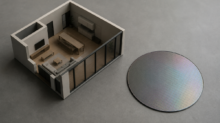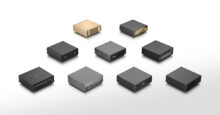
At IFA 2026 in Berlin, Anker showed off MindBase, a new hub for the smart home. What sets it apart is that camera analysis and device control run on the unit itself rather than being pushed to the cloud. It also carries its own storage, doubling as a NAS, and is positioned as a system that does not depend on monthly fees. Pricing and availability have not been announced.
A design built around not sending data out
Most smart home gear decides whether a camera saw a person, and stores the footage, on the manufacturer's cloud. That is convenient, but it means video from inside your home is constantly leaving it, and that some features end up tied to a subscription.
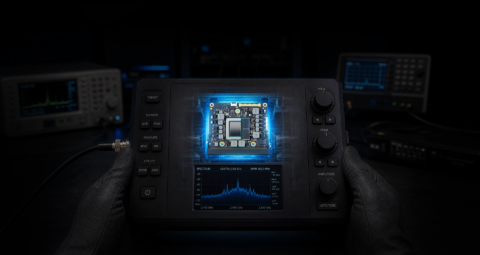
MindBase flips that arrangement. It carries an inference engine Anker calls TrueSmart Agent, running on a dedicated AI core rated at 26 TOPS. Faces, body posture, behavioral patterns, vehicles, pets and unfamiliar people are all identified on the device. Because the footage needed for those decisions never travels to an outside server, there is a secondary benefit as well: the system is less likely to stall when the connection is unstable.
Anker is marketing the product under the tagline "The Mind Within Your Home," making the direction plain enough — the brain of the house stays in the house.
A hub that is also a NAS
MindBase is not merely a relay box. It has 64GB of built-in storage plus two drive bays that accept either 2.5-inch or 3.5-inch disks. With those filled, total capacity reaches up to 48TB, enough that Anker expects owners to keep family photos and video there alongside camera recordings.
Folding the hub and the storage into a single unit has a practical point. Keeping surveillance footage for any length of time has usually meant either watching cloud storage fees pile up or setting up a separate NAS and linking the two. When the recording target sits inside the box, the video stays local from the start.
It handles the watching, and the response
To put MindBase on guard duty, you pair it with Anker's camera lineup. At IFA the company showed the new eufy Video Doorbell S4, a Window Camera E10 that mounts on glass, a fall detection sensor, and its existing pan-tilt-zoom cameras as compatible devices. Their feeds arrive at MindBase and are evaluated in real time.
The interesting part is that the product description covers what happens after detection. If MindBase judges there is a risk, it can change the lighting, issue a spoken warning, or take what Anker describes as active deterrence. Rather than stopping at a push notification, the hub is meant to respond on the spot.
That said, automated responses of this kind live or die on false positives. An alarm that goes off at a delivery driver or a neighbor is a problem in daily use. How accurate the local processing turns out to be is something that will have to wait for shipping hardware.
The first offering is the MindBase Security Kit, which bundles the hub with the new eufy devices.
Matter 1.5 support opens it to other ecosystems
It is also notable for not being a walled garden. MindBase works as a Matter 1.5 controller and is said to support more than 40 Matter device categories, covering lighting, sensors and HVAC.
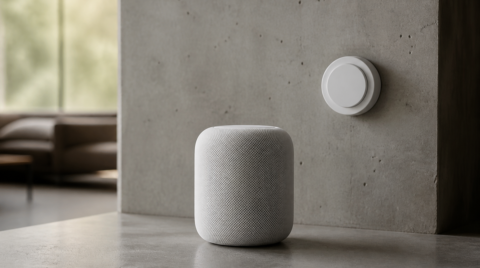
On top of that, it runs alongside Apple HomeKit, Amazon Alexa, Google Home and Home Assistant. The smart home has long been a field of competing standards and apps, where every additional hub means another control screen. Whether you can layer this on without discarding what you already have is a real factor in deciding to buy it.
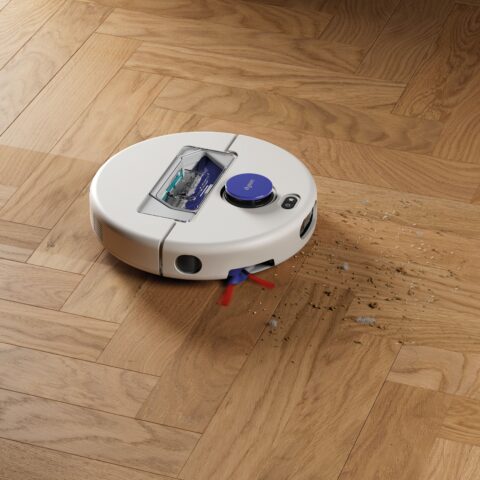
Anker has also signaled plans for agents covering energy management and appliance control beyond security, with the hub as the starting point for coordinating its vacuums, audio gear and battery storage.
Pricing and release timing are unannounced
Anker has not published pricing for MindBase or the MindBase Security Kit. On availability, the company has said only that it intends to bring the product to market later this year, with no specific date.
Products that sell on local processing carry more hardware cost than cloud-dependent ones. The flip side of not charging a monthly fee is that the upfront price has to stay reasonable, and that is likely where adoption is decided. Now that IFA has shown the hardware and the direction, that is the next thing worth checking.
Summary
MindBase, revealed by Anker at IFA 2026, is a smart home hub that keeps AI processing and storage inside the home. A 26 TOPS AI core analyzes camera footage on the device, and recordings go to drive bays expandable to 48TB. It supports Matter 1.5 and works alongside HomeKit, Alexa and Google Home. Pricing and a release date have yet to be disclosed, with launch signaled for later this year.