Images believed to show Lenovo's first Googlebooks have surfaced ahead of the platform's launch this fall. Three devices are visible: two white laptops in different sizes, and a 2-in-1 tablet with a detachable keyboard. All of them carry the glowing bar that Google described as the mark of a Googlebook. Android Headlines published the images on July 31.
The only logo on the lid says Lenovo
The color scheme is the first thing that stands out. All three devices are stark white, a clear break from the darker lids common on Chromebooks. Each laptop has a small protrusion along the top edge of the lid, shaped much like the one on the Lenovo Chromebook Plus 14 — the raised camera housing that also makes the display easier to open.
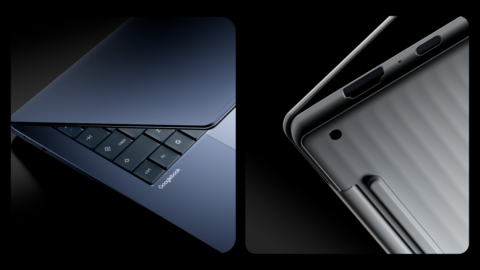
Branding is handled in an interesting way. The lid carries only the Lenovo logo, with no Googlebook wordmark anywhere on it. That is the opposite of how Chromebooks have advertised their category on the outside. On this new platform, the name appears to sit on the keyboard deck instead, on the left palm rest.
What does occupy the lid is a bar glowing in blue. Back in May, Google said every Googlebook would carry a functional glowbar. These images confirm that the description translates to actual hardware.
Two sizes, told apart by their ports
No dimensions are listed for either laptop, but the underside and the edges make the size difference readable.
The smaller unit has no left and right speaker grilles on the bottom, and its right edge carries a USB Type-C port and a headphone jack. The larger one shows USB Type-A, USB Type-C, and an illuminated power button along the right edge. On the left there is an audio jack and a USB Type-C port, plus one more opening that cannot be identified at this resolution — it is either another USB Type-A port or HDMI.
Keeping USB Type-A looks conservative for a device built on Android foundations. For anyone who parks the machine on a desk with a mouse and wired peripherals, though, it remains a practical call for now.
A 2-in-1 with pen support, and a mouse to match
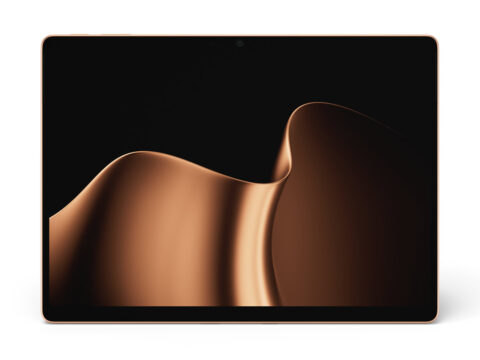
The third device is a different animal. It is a tablet with a detachable keyboard and a kickstand on the back. Its glowbar sits next to the camera inside a narrow pill-shaped housing.
Each side carries two sets of speaker cutouts, suggesting real attention to audio. A stylus attaches magnetically to the top edge. The matching keyboard cover carries the Googlebook name and a reasonably large touchpad — the branding the laptops left off their lids shows up here on the accessory instead.
Lenovo is also said to be preparing a mouse with a light strip of its own. The idea of using a glowing bar as the signature of the category is evidently extending beyond the machines themselves.
What a Googlebook actually is
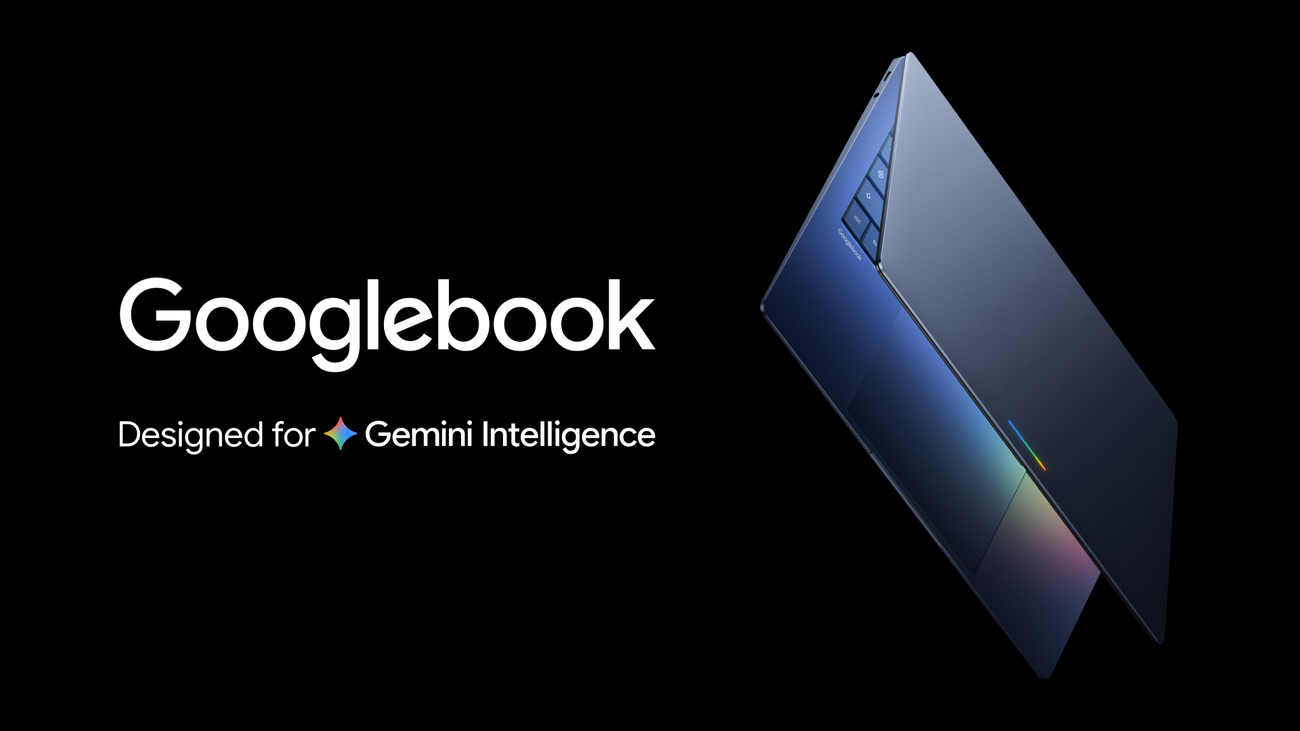
Googlebook is a new laptop category Google introduced on May 12, 2026. It is built on part of the Android tech stack, bringing together Android with its Google Play app library and ChromeOS with its browser strengths. Google framed the shift as moving from an operating system to an intelligence system.
Gemini sits at the center. Magic Pointer, developed with Google DeepMind, responds when you wiggle the cursor and offers suggestions based on whatever you are pointing at — point at a date in an email to set up a meeting, or select a photo of your room alongside a piece of furniture to see them together. Create your Widget builds a personalized dashboard from a prompt, and Quick Access lets the laptop's file browser reach files stored on your phone.
Acer, ASUS, Dell, HP and Lenovo are the launch hardware partners. Availability is described only as fall 2026, with no dates or prices yet. Google has a Made by Google event scheduled for August 12.
Summary
The leak shows what appear to be the first three Googlebooks from Lenovo: two white laptops in different sizes and a 2-in-1 tablet that works with a stylus and a keyboard cover, all fitted with a blue glowing bar. The Googlebook name is absent from the lids, appearing instead on the left palm rest and on the keyboard cover. Port layouts and speaker placement reveal the size difference, but screen sizes, silicon, pricing and release dates all remain unconfirmed.