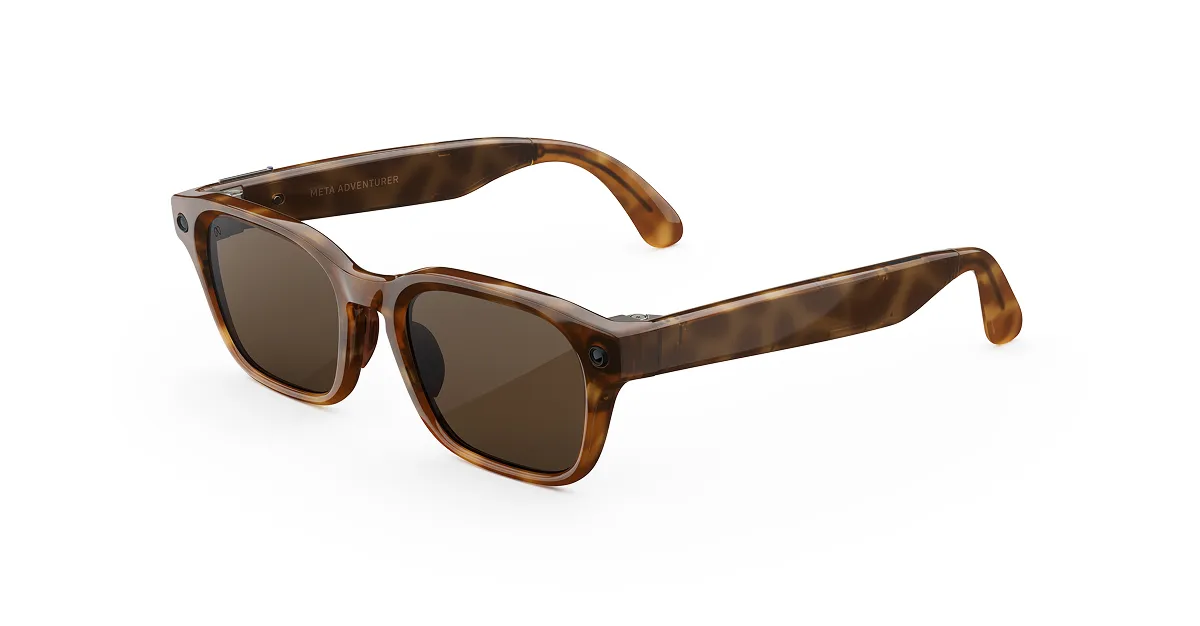
Meta used its late-September 2026 annual event to introduce Hearing Enhancement, a new software feature for its smart glasses aimed at people with mild to moderate hearing loss. The feature has been cleared by the U.S. Food and Drug Administration (FDA) and is available for a one-time payment of 149 USD (about 23,400 yen) or as part of a Meta One subscription. No prescription is required, and setup takes only a few minutes at home.
A separate feature from the existing Conversation Focus mode
Meta's smart glasses already include Conversation Focus, a mode that makes conversations easier to follow in noisy environments. Hearing Enhancement is a distinct, newly added feature. While Conversation Focus is a situational boost, Hearing Enhancement is aimed squarely at people with mild to moderate hearing loss who would otherwise rely on a hearing aid.
Setup is simple. Wearing the glasses, users complete a short one- to two-minute hearing assessment in the companion app, which then builds a personalized amplification profile. No clinic visit or professional fitting is needed, and the feature can be turned on or off anytime with the voice command "Hey Meta, start Hearing Enhancement."
FDA clearance, priced from $149
Hearing Enhancement has received FDA clearance (via the 510(k) pathway) as a Class II medical device software, placing it in the over-the-counter (OTC) hearing aid category that doesn't require a prescription.
It costs 149 USD (about 23,400 yen) as a one-time purchase, included at no extra charge for Meta One subscribers, with a 30-day free trial available before committing. In the U.S., it can also be paid for using HSA or FSA health savings accounts, easing the effective cost for eligible users.
Meta-branded glasses only, U.S. launch first
One limitation to note: Hearing Enhancement is only available on Meta-branded smart glasses, which start at 249 USD (about 39,100 yen), and is not available at launch on the company's Ray-Ban co-branded models. The rollout is planned for later in 2026, starting in the U.S. only. The companion app will be iOS-first, with Android support to follow.
Meta also said it improved Detailed Responses, its scene- and object-description feature for blind and low-vision users, and added new customizable audio and control options at the same time — suggesting this is part of a broader accessibility push rather than a single standalone feature.
A challenge to the hearing aid market
Roughly one in six American adults has some form of hearing loss, making this a sizable market. Apple already offers a free hearing aid feature on AirPods Pro 2, which was referenced as a comparison point in Meta's FDA filing. EssilorLuxottica's Nuance Audio, meanwhile, is an OTC hearing aid eyewear product priced from around 699 USD (about 109,700 yen) that relies on preset amplification profiles rather than an in-app hearing test, marking a different approach from Meta's.
By layering a health-focused capability onto an already-established product category, Meta appears to be positioning everyday eyewear as an entry point into health devices. With the initial rollout limited to a narrow set of models, how far Meta expands support from here will be worth watching.
Summary
Meta has announced Hearing Enhancement, an FDA-cleared hearing aid feature for its smart glasses. Aimed at people with mild to moderate hearing loss, it's available for a one-time 149 USD (about 23,400 yen) payment or through a Meta One subscription, and requires nothing more than a brief at-home hearing test to generate a personalized profile. For now, it's limited to Meta-branded glasses starting at 249 USD (about 39,100 yen), with a U.S. rollout planned for later in 2026.
*Exchange rate: 1 USD = 157 JPY (as of September 27, 2026)