A humanoid robot running Qualcomm's robotics platform collapsed on stage during a demonstration at COMPUTEX 2026 in Taiwan. The footage spread quickly, but Qualcomm says this was not a breakdown: a built-in safety routine did its job. The machine was NEURA Robotics' 4NE1, and the brain behind it is the Dragonwing IQ10.
A robot walked out, then folded on the spot
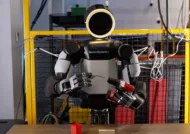
The demonstration took place at COMPUTEX 2026 in Taipei. A humanoid was supposed to walk onto the stage and take part in the presentation alongside a human presenter.
Seconds after it arrived, the machine came down with a loud thud. It managed to raise one fist, but it could not get back up on its own. Handlers ran in, draped a cloth over it, and several people carried it away, cutting the demonstration short. The clip circulated widely and was picked up by outlets on July 31.
The script for the segment reportedly had the robot carrying a circuit board on a tray for a Qualcomm representative to collect. The board it was carrying was the very development kit that drives the robot.
A safe collapse is a designed behavior
Qualcomm's account is as follows. A brief communication fault occurred, and the machine detected it and executed its built-in safety sequence. The behavior is known as a safe collapse: once the robot judges that it cannot hold its posture, it lowers itself onto its knees to limit harm to people and objects nearby.
The company noted that live demonstrations always carry some degree of risk, and said the safety systems worked as designed. It also framed the real-world data from the incident as useful for improving software and overall system reliability, and for speeding up the development of more resilient robots.
This is a case where appearances and engineering assessments part ways. A humanoid hitting the floor reads as failure, but for a machine that shares space with people, controlling how it falls is a capability in itself. An 80 kg machine toppling in an uncontrolled direction and one sinking onto its knees present very different levels of risk to everyone around it.
Dragonwing IQ10, the brain of the machine
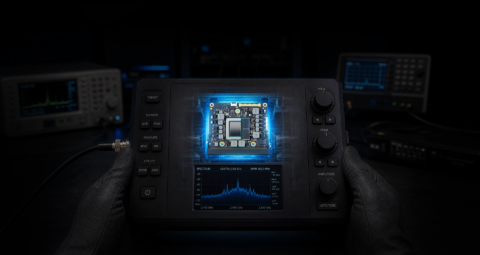
The robot was running the Qualcomm Dragonwing IQ10 Robotics Reference Design (RRD), released in June. It bundles compute, sensor input, networking, real-time control, and software into a single package, with the goal of shortening the distance between prototype and production. The targets are industrial robots, autonomous mobile robots (AMRs), and humanoids.
The Dragonwing IQ10 processor at its core delivers up to 700 TOPS of AI performance (350 TOPS dense at INT8), with an 18-core Qualcomm Oryon CPU, a dedicated NPU, and an Adreno GPU. It handles up to 12 high-speed GMSL2 camera inputs and can take in LiDAR, ToF sensors, and inertial measurement units as well. The configuration assumes workloads that build a picture of the surroundings from many directions at once.
The interconnect side follows industrial conventions. It offers deterministic I/O such as PCIe, TSN, USB, and CAN, and supports Ethernet, EtherCAT, and CAN-FD. Operating temperature runs from -40 to 70 degrees Celsius, and it works from either 12 V or 24 V supplies. These are the plain requirements for machinery that sits on a factory floor.
On the software side it supports ROS 2, on-device AI runtimes, platform services, and lifecycle management through Qualcomm AI Hub. For functional safety, the product page lists a dedicated safety island rated up to SIL-3, and the safety sequence that fired here sits on that kind of foundation. Ecosystem partners include NEURA Robotics along with Advantech, APLUX, Booster, Innodisk, MeiG, NEXCOM, Radxa, Thundercomm, and VinMotion.
What the 4NE1 actually is
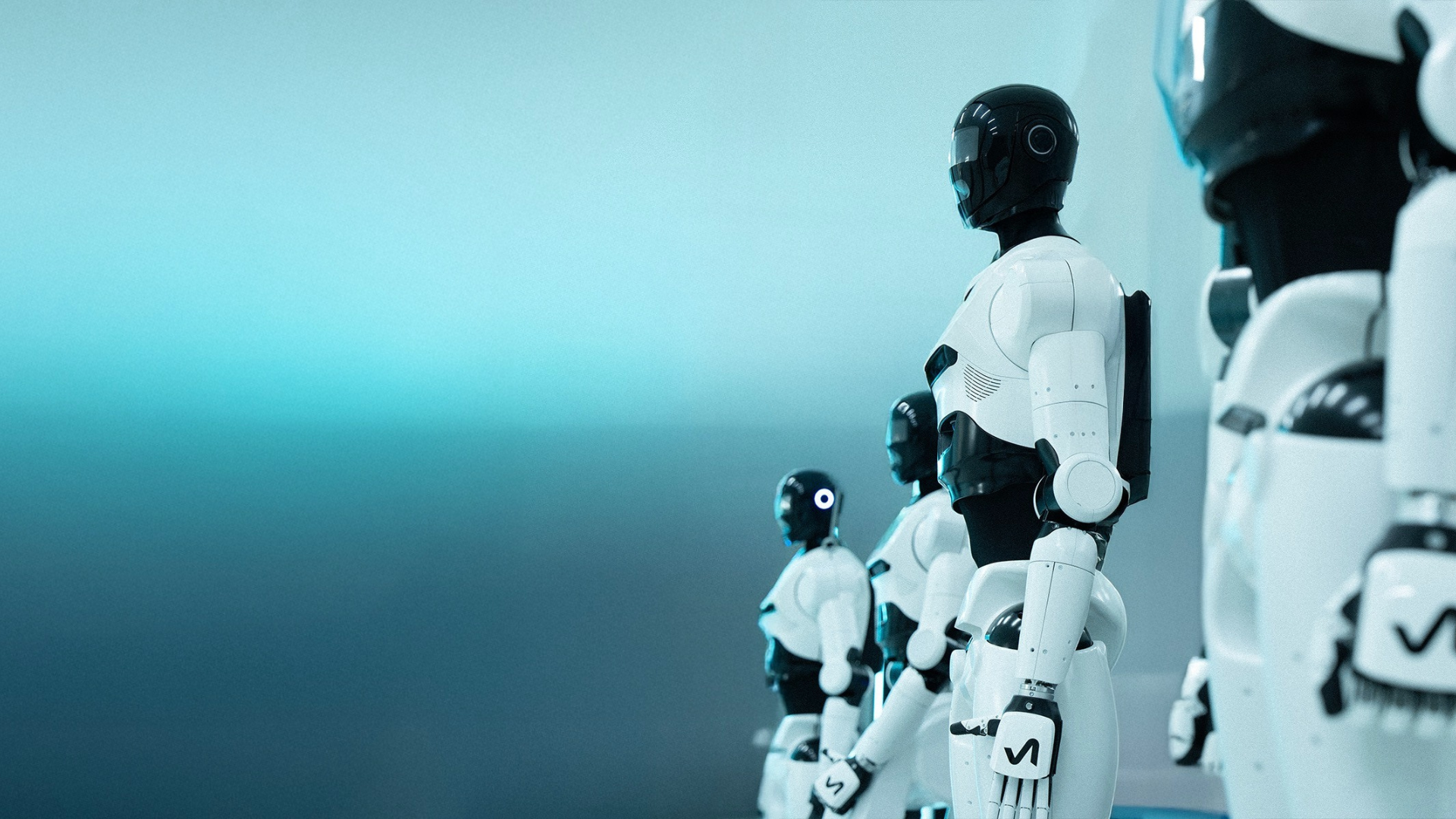
The 4NE1 is a humanoid robot developed by Germany's NEURA Robotics. Official figures put it at 180 cm tall and 80 kg, with a travel speed of 5 km/h and payload ranging from 10 kg to 100 kg depending on the model.
The listed strengths are 360-degree perception, a sensor skin that gives the body a sense of touch, multimodal AI covering language models and computer vision, and motion learned through reinforcement learning. Because it is meant to work where people are, the weight of the design sits on the sensing side. Variants are offered for different environments, including a wheeled configuration for factory floors and a version with a seventh axis that extends the arm's reach.
Read that way, the incident was a machine built to operate next to people falling exactly the way that premise requires. A clip of a spectacular tumble does not carry that part.
Summary
Qualcomm says the humanoid that collapsed during a COMPUTEX 2026 demonstration did so because a brief communication fault triggered its built-in safety sequence, and that the safety systems worked as designed. The machine was NEURA Robotics' 4NE1, a 180 cm, 80 kg humanoid. Its brain, the Dragonwing IQ10 RRD, offers up to 700 TOPS, an 18-core Oryon CPU, and up to 12 camera inputs, and the platform was only released in June. The moment looked bad on stage, but the fact that the fall itself was controlled means something different when the yardstick is machines that work in the same space as people.