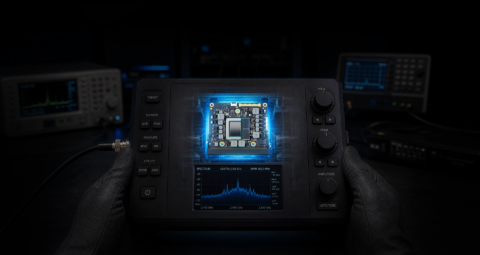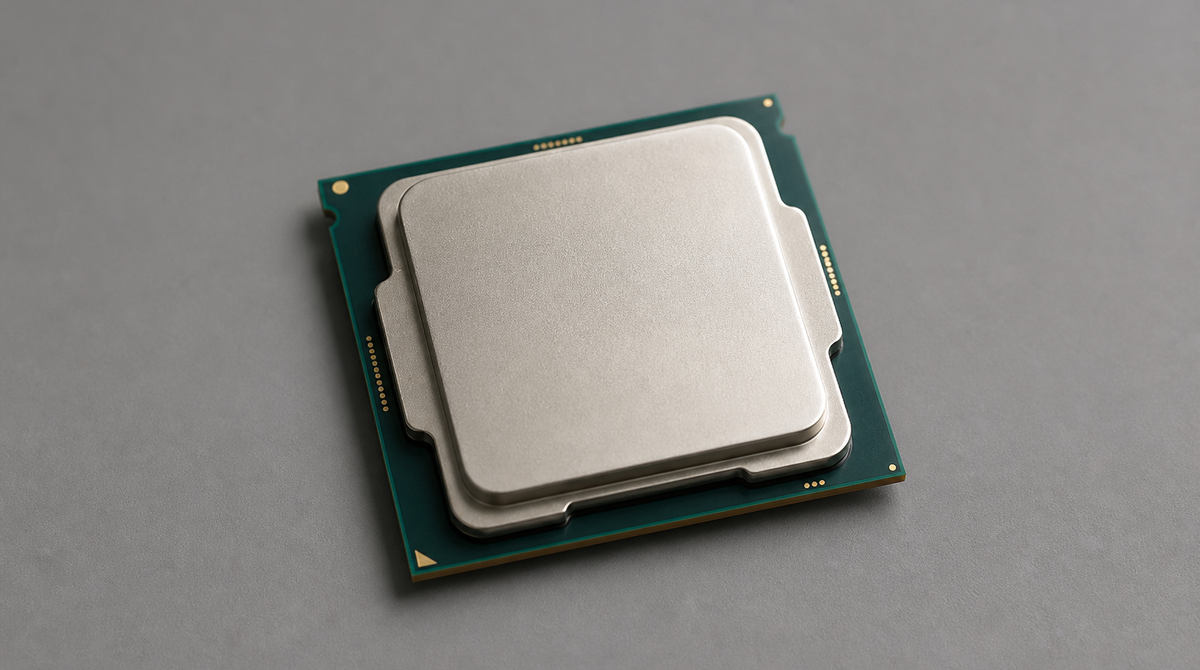
On April 16, 2026, Intel formally launched a new "Intel Core Series 3" brand. Developed under the Wildcat Lake codename for the entry price band, the new SoC adopts Intel 18A — the company's most advanced process node manufactured in the United States — and ships in six consumer SKUs. Intel's goal is to bring hybrid AI inference capabilities down to value laptops and edge devices.
Inside Wildcat Lake — Cougar Cove and Darkmont on 18A
Intel Core Series 3 reuses much of the IP foundation of the higher-end Core Ultra Series 3 (codename Panther Lake) but trims the chiplet design for the entry segment. The compute die combines Cougar Cove P-cores and Darkmont low-power E-cores (LP E-cores) with the new Xe3 integrated GPU and an NPU 5 block. The process is Intel 18A, which Intel describes as "the most advanced logic node developed and manufactured in the United States" — and which now reaches Intel's value lineup. Source: Intel Newsroom "Intel Launches Intel Core Series 3 Processors: Changing the Game for Everyday Computing" (https://newsroom.intel.com/client-computing/intel-launches-intel-core-series-3-processors-changing-the-game-for-everyday-computing)
The package uses two tiles: a compute die and an external platform controller tile. On the AI side, the standalone NPU 5 reaches 17 TOPS on the Core 7 360 and Core 7 350, with the platform total topping out at 40 TOPS. The 17 TOPS NPU figure, however, falls short of the "40 TOPS or higher NPU" requirement Microsoft sets for Copilot+ PC certification, so Wildcat Lake systems are not classified as Copilot+ PCs. Although they share the Xe3 GPU and NPU 5 family with Panther Lake, the trimmed core counts translate into a noticeable gap in AI-adjacent throughput. Source: VideoCardz "Intel details Core 300 Wildcat Lake series: up to 6 CPU cores, 2 GPU cores and slower NPU than Panther Lake" (https://videocardz.com/newz/intel-details-core-300-wildcat-lake-series-up-to-6-cpu-cores-2-gpu-cores-and-slower-npu-than-panther-lake)
Six SKUs at 15W, with the Top Four Sharing a 2P+4LPE Layout
Intel prepared six consumer SKUs. The flagship Core 7 360 carries 2 P-cores plus 4 LP E-cores (six cores total) and 2 Xe3 GPU cores, with a 15W base power and a 35W maximum turbo. The Core 7 350 and Core 5 320 follow the same 2P+4LPE configuration at 15W TDP, with boost clocks reaching up to 4.8GHz on the Core 7 350 and 4.6GHz on the Core 5 320.
Toward the entry of the lineup, the Core 3 304 narrows to a single P-core and a single Xe3 core in a 1P+4LPE layout, with a 4.3GHz boost clock and 15W TDP. Counting OEM-only variants, Wildcat Lake spans mainstream notebooks all the way down to edge AI appliances. Source: Tom's Hardware "Intel launches Wildcat Lake as Core Series 3 for value laptops and edge systems" (https://www.tomshardware.com/tech-industry/intel-launches-wildcat-lake-as-core-series-3)
On performance, Intel published comparison numbers against the previous Core 7 150U (Raptor Lake-U). It claims up to 47 percent better single-thread performance and up to 41 percent better multi-thread performance in Cinebench 2024, up to 2.7x more GPU AI throughput, and up to 2.1x more in creation and productivity tasks such as Topaz Video, while cutting processor power by up to 64 percent. For edge comparisons, Intel says Core Series 3 outperforms NVIDIA Jetson Orin Nano by 1.5x in object detection, 1.9x in image classification, and 2.2x in video analytics. Source: Intel Newsroom "Intel Launches Intel Core Series 3 Processors: Changing the Game for Everyday Computing" (https://newsroom.intel.com/client-computing/intel-launches-intel-core-series-3-processors-changing-the-game-for-everyday-computing)
More Than 70 OEM Designs and a "MacBook Neo"-Aware Strategy
The OEM uptake numbers are striking. Intel says more than 70 designs based on Core Series 3 will ship "throughout 2026," with Acer's Aspire Go 14 / 15 / 16 hitting shelves on launch day. ASUS will follow with the Vivobook 14 / 15 / 17 in Q2, the Vivobook S14 / S16 in Q3, and the ExpertBook B5 Flip / B3 G2 / P3 G2 in the second half. HP brings the Omnibook 5 14, while Lenovo is preparing ThinkBook, ThinkPad E series, IdeaPad Slim 3i / 5i, IdeaCentre AIO 3i, and ThinkCentre neo machines, with MSI lining up the Modern 14S / Modern 16S. Dell will join later. Edge systems will start shipping in Q2 2026.
Speaking to the targeting, Josh Newman, General Manager and Vice President of Consumer PC at Intel's Client Computing Group, said: "At a time when prices are rising and expectations are shifting, Intel Core Series 3 elevates value-orientated computing with exceptional battery life, boosted AI-ready performance, and broad ecosystem choice." Intel positions the family as a workhorse for students, families, small businesses, and edge deployments — a literal "everyday computing" engine.
The competitive backdrop, however, is sharper than ever. Apple's "MacBook Neo," launched in March from 84,800 yen with the education discount, carried Apple Silicon into the low-end notebook market in earnest. Source: Claypier "Apple MacBook Neo Launched, Education Pricing from 84,800 yen, Putting Pressure on Low-End Windows PCs" (https://claypier.com/apple-macbook-neo) AMD has also rounded out its Copilot+ PC-ready entry tier with the Ryzen AI 400 series, and third-party media outlet The Next Web frames Core Series 3 as "x86's strongest play to take on the MacBook Neo." Source: The Next Web "Intel Core Series 3 Wildcat Lake launches to challenge Apple's $599 MacBook Neo" (https://thenextweb.com/news/intel-wildcat-lake-core-series-3-macbook-neo-ai-budget-laptops)
The fact that the 17 TOPS NPU misses the Copilot+ bar is a small dent in Intel's AI PC story. If Microsoft keeps gating Copilot+ features on NPU TOPS, Wildcat Lake systems may sit out some of Windows' newest AI features. Even so, the division of labor is clean: Core Ultra Series 3 (Panther Lake) handles Copilot+ at the high end, while Wildcat Lake holds price points down and keeps Intel 18A's volumes up.
Summary
Intel Core Series 3 is a meaningful step in Intel's 2026 AI PC strategy: it pushes the latest Intel 18A node down into the value market all at once. The lineup tops out at six cores in a 2P+4LPE configuration, pairs that with an Xe3 GPU and NPU 5 for 40 platform TOPS, and fits inside a 15W TDP. With more than 70 OEM designs in the pipeline globally, the Core Series 3 lands as a practical lift for entry notebooks and edge AI systems — and as a credible counter to Apple's MacBook Neo and AMD's Ryzen AI 400 in the budget arena, even if Copilot+ certification stays out of reach.