China's XPeng announced on August 24 that its robotics business has raised more than 900 million USD (about 143 billion yen). The post-money valuation exceeds 6.3 billion USD (roughly 1 trillion yen), which the company calls the largest single private round ever recorded in China's embodied AI sector. The money has one main job: getting the IRON humanoid robot into mass production before the end of 2026.
※1 USD = 159 JPY (as of August 24, 2026)
IDG Capital led the round, with Tencent and Alibaba as strategic backers
The round came together as share purchase agreements between XPeng's robotics business and multiple investors. IDG Capital led, Gaorong Ventures joined, and Tencent and Alibaba came in as strategic investors. Two of China's largest technology groups now sit behind a division of an EV maker.
XPeng is listed on both the New York Stock Exchange and the Hong Kong Stock Exchange. After this round it keeps controlling ownership of the robotics business, which stays consolidated into the group's financial statements. This is not a spin-off: the unit gets its own market valuation and a much larger balance sheet while remaining inside the company.
IDG Capital described the embodied AI industry as sitting at a pivotal point, moving from technical breakthroughs toward scalable manufacturing and commercial deployment. The investment case rests on that shift, where the question is no longer how impressive a demo looks but how many units a factory can ship.
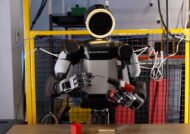
IRON has 76 degrees of freedom across the body and 21 in each hand
IRON, the product at the center of the spending plan, is developed end to end inside XPeng. The company says it built every core layer itself, from the physical architecture and actuation systems through to the AI and control stack. Chips, controllers, motion modules and dexterous hands are all in-house.
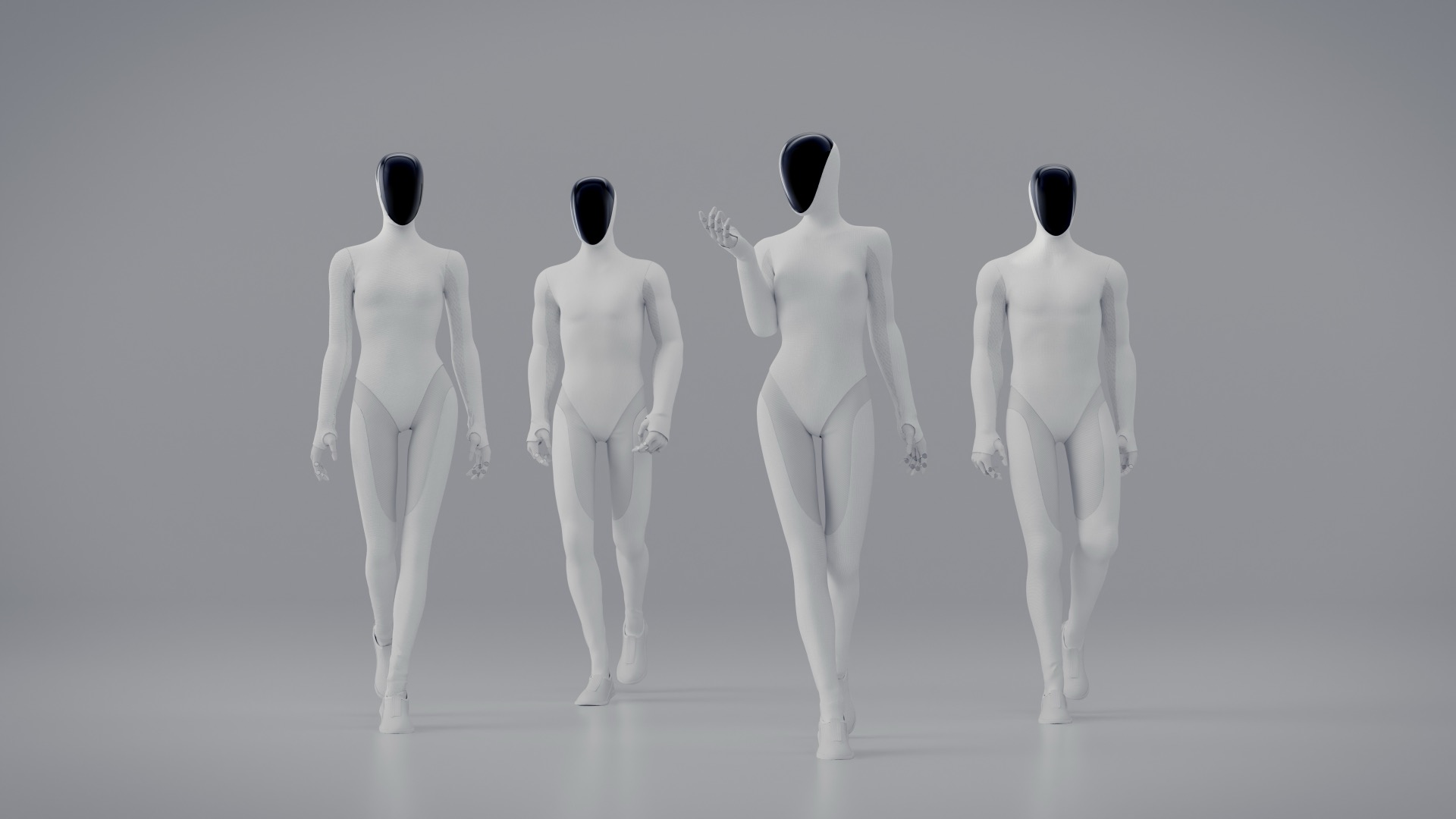
On mobility, IRON carries 76 degrees of freedom across the body and 21 in each hand. The exterior uses a fully enclosed flexible lattice structure meant to balance a human-like appearance against safety. That is a very different direction from the exposed frames common in humanoid demos.
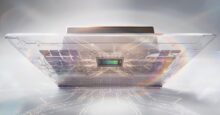
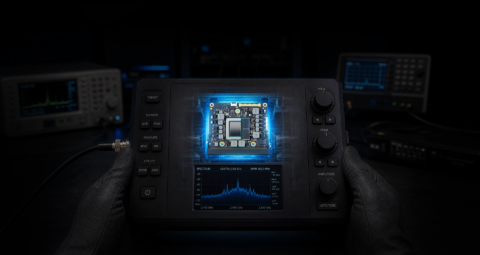
For intelligence, IRON runs three of XPeng's own Turing AI chips, delivering up to 2,250 TOPS of effective compute. That budget lets the company run its Physical AI foundation model directly on the robot, so IRON can perform complex tasks without remote operation. Two side benefits follow: lower inference latency, and data that never leaves the machine.
Humanoid demonstrations are often teleoperated by someone standing off-camera. XPeng is clearly emphasising on-device autonomy to separate itself from that practice. How autonomous IRON really is will only become clear once units are in customers' hands.
Mass production in 2026, starting inside XPeng's own stores
The capital goes toward software and hardware R&D, training and iterating the Physical AI models, generating high-quality data, building end-to-end mass production facilities, and expanding commercially beyond China.
On timing, IRON is expected to enter mass production by the end of 2026. The first commercial deployments will be at XPeng's own stores and campuses, with an official launch and deliveries in China and overseas markets following in 2027. Starting inside its own facilities limits the damage from unexpected behaviour and produces real operational data quickly.
XPeng expects that once IRON reaches mass production and real-world deployment, a data-model-application flywheel starts turning, and the robot's rate of learning accelerates with it.
Manufacturing muscle built on EVs, redirected at robots
The core of XPeng's pitch is that the design, supply chain and volume manufacturing capability it built for smart EVs transfers directly to humanoid robots. Very few companies in this field can bring automotive-grade quality standards and automotive-scale production and delivery to a robot programme.
The scale is real. XPeng delivered 103,295 vehicles in the second quarter of 2026, including 40,126 in June alone. A company building physical hardware at tens of thousands of units a month is now pointing that equipment and supplier network at an adjacent business.
Chairman and CEO He Xiaopeng said XPeng has spent 12 years committed to full-stack in-house R&D, building a foundation across its physical world foundation model, Turing AI chips and AI infrastructure. His stated ambition is for IRON to become a trusted partner for people.
The counterweight is that the humanoid robot supply chain is still immature, and volume production here is far harder than it is for cars. With roughly four months left before the end-of-2026 deadline, whether the schedule holds is genuinely hard to call.
Summary
The 900 million USD raised by XPeng's robotics business is without precedent in China's embodied AI sector. Investors are backing a specific combination: an IRON with 76 degrees of freedom, on-device autonomy from three in-house chips, and manufacturing capability carried over from EVs. The test is whether mass production starts within 2026 and deliveries follow in 2027 as planned. The humanoid robot race is shifting its centre of gravity from polished demos to shipped units.