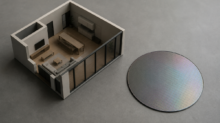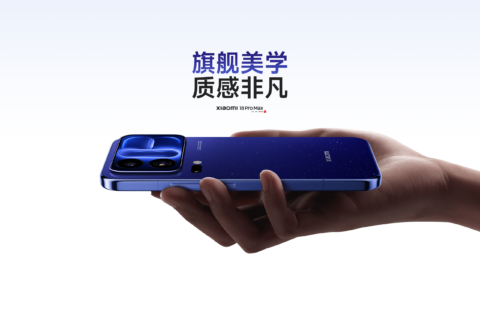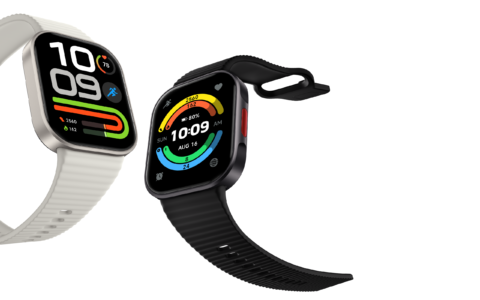

Xiaomi officially announced XRING O3, its in-house smartphone SoC, on August 24. The chip is built on TSMC's 3nm-class N3P process, packs 24 billion transistors, and measures 133 square millimeters. It scored 5.22 million points in AnTuTu and became the first smartphone processor to support LPDDR6 memory. The launch comes roughly a year after XRING O1, Xiaomi's first in-house chip.
Six of the Ten Cores Are Large Cores
XRING O3 uses a 10-core CPU. It combines two Arm C1-Ultra cores running at up to 4.35GHz, four C1-Premium cores at 3.68GHz, and four C1-Pro cores at 3.15GHz. In its launch materials, Xiaomi describes this as six large cores paired with four smaller ones. Efficiency cores are kept to a minimum while the upper tiers are stacked heavily.
Die area grew from 109 square millimeters on XRING O1 to 133 square millimeters. One reason for the increase is a 16MB SLC cache. Because the core lineup and the cache expanded at the same time, the chip ended up physically larger than its predecessor. Rather than chasing a smaller node, Xiaomi rebuilt what sits inside the same 3nm generation.
Early benchmark reports put the chip at 3,945 in Geekbench 6.5 single-core and 15,221 in multi-core. Those figures did not come from Xiaomi, and sustained thermal behavior still needs independent testing. A near all-big-core layout tends to post strong burst scores, but its real character shows up under prolonged load.
A 16-Core GPU with a 182 Percent Gain in Ray Tracing
On the graphics side, XRING O3 carries a 16-core GPU called G2-Ultra NX. According to Xiaomi, graphics performance improves by 85 percent over the previous generation, ray tracing performance improves by 182 percent, and power consumption drops by 64 percent. In terms of headline gains, the GPU changed more than the CPU this time around.
The GPU also embeds dedicated neural cores on the die. Frame generation and spatial upscaling are handled inside the GPU cache hierarchy instead of being routed through the NPU or system memory. Keeping latency-sensitive work such as in-game frame interpolation close to where it is consumed is the point of that arrangement. The NPU itself is rated at 200 TOPS.
Camera processing was updated as well. The fifth-generation imaging system supports 432-megapixel sensors with 24-bit color depth and adds hardware decoding for H.266. The emphasis reads like a fit for large-screen devices such as foldables and tablets.
The First Smartphone Chip to Support LPDDR6
Memory is where XRING O3 stands out most. It is the first smartphone SoC to support LPDDR6, running at 10,667Mbps across four 24-bit channels for 113.8GB/s of bandwidth, a 48 percent increase over XRING O1.
Bandwidth matters most when the GPU and the NPU compete for the same memory. When generative AI inference runs on the device, the speed at which model weights can be read translates directly into response time. If a chip is designed around high-fidelity game rendering and on-device AI running at once, memory bandwidth usually becomes the constraint before raw compute does. Being first to LPDDR6 is an easy point of differentiation in that context.
Debuting in a Foldable, Alongside Automotive and AI Chips
The first devices to carry XRING O3 are the Xiaomi 18 Fold, a foldable phone slated for a September release in China, and the Xiaomi Pad 9 Pro Max tablet. Several overseas reports say initial production shipments will start in the range of 200,000 to 300,000 units. Some expect O3 to reach beyond the largely China-focused footprint of XRING O1, though Xiaomi has not published regional launch plans.
Xiaomi unveiled chips outside the smartphone category at the same event. XRING O100 is a 6nm NPU built on a near-memory architecture and aimed at AI workloads spanning multiple devices. XRING D100 is a 3nm automotive chip designed for the autonomous driving systems in Xiaomi's electric vehicles, with commercial deployment expected in 2027. The picture is one of in-house silicon expanding in three directions at once: phones, AI, and cars.
Summary
XRING O3 stays on 3nm rather than moving to 2nm, but it rebuilds the CPU core structure, the GPU, and the memory standard together. The 5.22 million AnTuTu figure grabs attention, yet the 113.8GB/s of bandwidth unlocked by LPDDR6 and the neural cores placed inside the GPU may matter more in daily use. The Xiaomi 18 Fold in September will provide the first real check on how much of the launch-day numbers survive on shipping hardware.