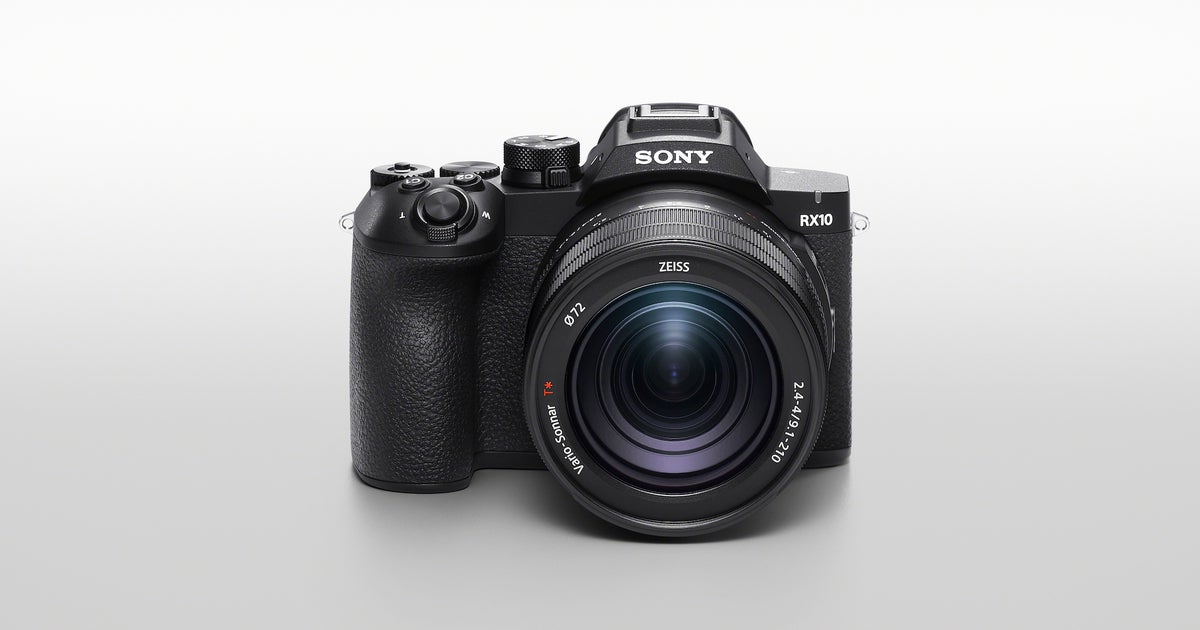
Sony has announced the RX10 V, a fixed-lens high-power zoom camera that covers everything from 24mm wide-angle to 600mm super-telephoto in a single body. While that all-in-one design carries over from earlier models, the update adds AI-driven subject-recognition autofocus and 4K video at up to 120p, borrowing features from Sony's higher-end Alpha (α) mirrorless line. The previous RX10 IV launched back in 2017, making this the first refresh of the series in roughly nine years. The suggested retail price is 2,299.99 USD in the United States, with availability planned for August 2026.
One Camera From 24mm to 600mm
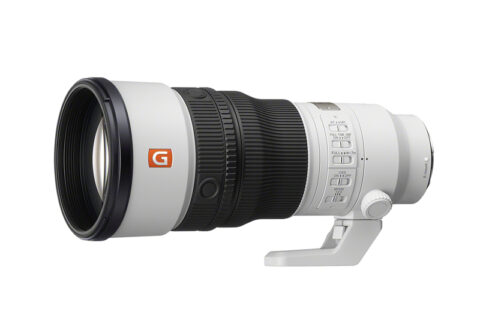
The defining trait of the RX10 V is that a single body handles wide-angle through super-telephoto without changing lenses. It uses a ZEISS Vario-Sonnar T* lens with a 35mm-equivalent focal range of 24mm to 600mm, equal to 25x optical zoom. The F2.4-4.0 maximum aperture is relatively bright for a lens that spans this much range on its own, and built-in optical stabilization helps tame the shake that tends to appear at the telephoto end.
The sensor is a 1.0-type stacked Exmor RS CMOS with roughly 20.1 effective megapixels. A 1.0-type sensor is larger than those in smartphones, making natural background blur easier to achieve. The camera pairs it with the same BIONZ XR processing engine found in Sony's higher-end models, keeping noise down at mid-to-high ISO while preserving detail and accurate color in skin tones, skies, and greenery. Macro focusing reaches about 3cm at the wide end, so close-ups of flowers or small objects are covered too.
AI Subject Recognition and High-Speed Bursts
The headline addition is Real-time Recognition AF, powered by an AI processing unit. It automatically distinguishes people, animals, birds, and insects, as well as cars, trains, and airplanes, and includes an auto mode that identifies the subject type for you. For people, pose estimation keeps tracking going even when the subject turns away or their face is hidden by a helmet or sunglasses.
Burst performance is stronger as well. Blackout-free continuous shooting keeps the display from going dark mid-sequence, running at up to 30 frames per second with autofocus and auto-exposure (AF/AE) tracking calculated up to 60 times per second. That makes it easier to hold focus on fast, unpredictable subjects such as wildlife and sports. A boost function can also raise the burst speed partway through a sequence.
4K 120p Video and Alpha-Derived Handling
Video records at up to 4K 120p, with slow motion up to 5x. Active Mode electronic stabilization steadies handheld footage, and an Auto Framing function keeps the subject centered during recording. For color, the camera supports S-Cinetone for cinematic tones straight out of camera and S-Log3 for grading in post, and it can load up to 16 user LUTs (color-setting files).
The controls inherit the grip and button layout of the Alpha series, along with an eight-direction multi-selector that is easy to operate even while looking through the viewfinder. That viewfinder is a 0.5-type OLED panel with about 3.68 million dots, and the rear monitor has been upgraded to about 1.62 million dots. Powered by the large NP-FZ100 battery, the camera manages about 630 stills per charge (using the rear monitor), roughly 50 percent more than the previous model. A dust- and moisture-resistant design, Wi-Fi (2.4GHz/5GHz), and a USB Type-C port for high-speed transfer are all included.
Price and Availability
The RX10 V carries a suggested retail price of 2,299.99 USD (about 370,000 yen) in the US and 2,899.99 CAD in Canada, with both scheduled to go on sale in August 2026. Pricing and timing for Japan had not been announced at the time of this reveal. *1 USD = 162 JPY
It is expensive for a compact camera, but the convenience of covering wide-angle to super-telephoto without swapping lenses, combined with AI recognition AF for tracking, helps justify the price. That said, the effective pixel count stays at about 20.1 megapixels, unchanged from the previous model, so this refresh is aimed more at the "don't miss the shot" side of things such as AF and video than at a jump in raw resolution.
Summary
The RX10 V keeps the hallmarks of the RX10 series, a 24-600mm all-in-one zoom and a 1.0-type sensor, while adding AI-driven Real-time Recognition AF, 4K 120p video, and Alpha-derived handling in a refresh that arrives after about nine years. The resolution is unchanged and the price is not cheap, but for anyone who wants to cover travel, birding, or sports in a single body without the hassle of changing lenses, it looks like a strong option.