
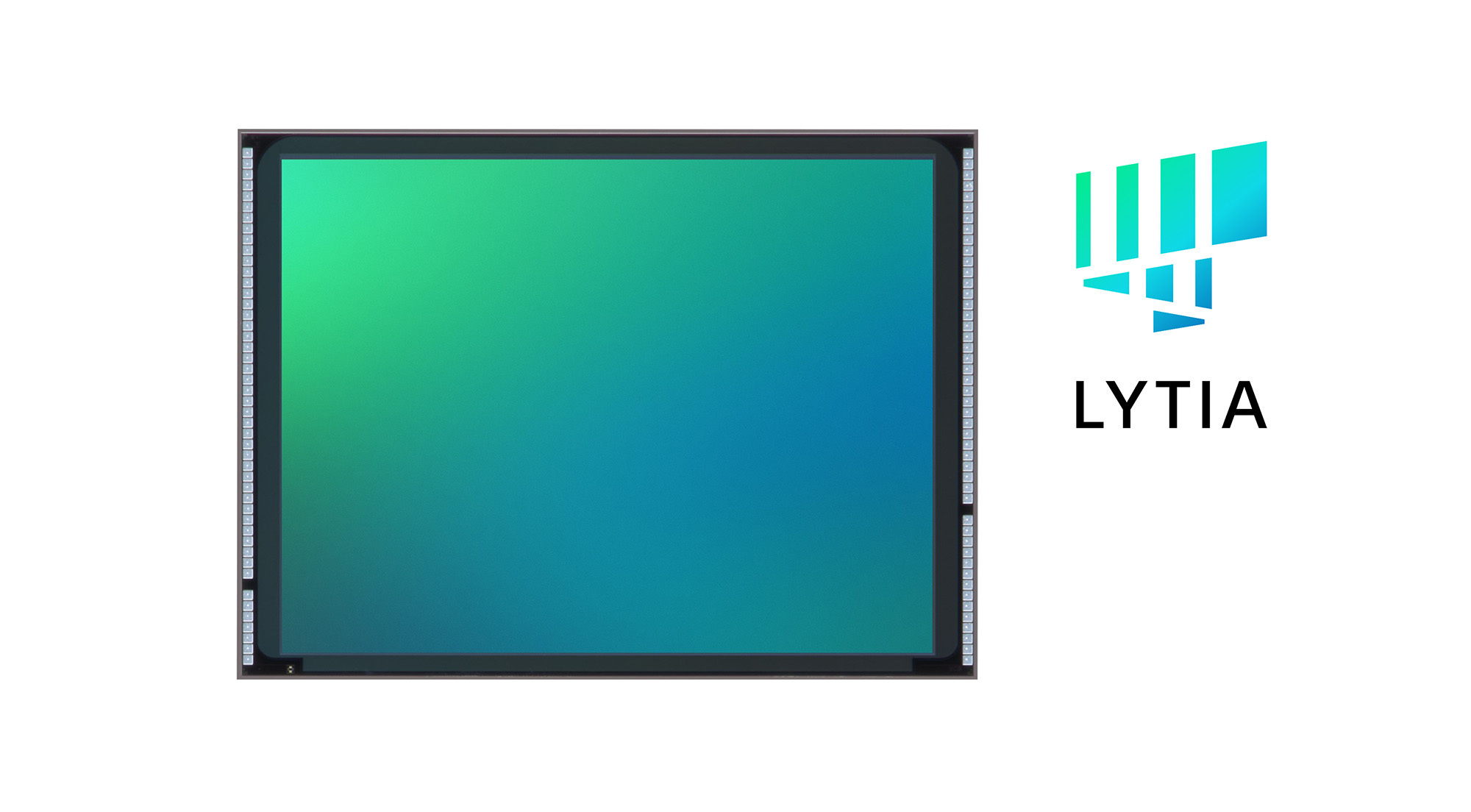
Sony Semiconductor Solutions has announced the LYTIA 610, a new image sensor for smartphones. It is a 1/2-type stacked CMOS sensor with approximately 64 megapixels, and its defining feature is the RB2×2 OCL pixel structure, the industry's first of its kind to reach mass production. The design lifts resolution and autofocus performance at the same time, aiming to strengthen the telephoto camera, which has long been a weak point on phones. Mass-production shipments are scheduled to begin at the end of June 2026.
A new pixel structure that targets the telephoto weak point
Multi-lens camera arrays are now standard on smartphones, yet the telephoto camera often trails the wide and ultra-wide cameras in pixel count and sensor size. The LYTIA 610 is built squarely around improving that telephoto camera.
The key is a newly developed pixel design called RB2×2 OCL (On Chip Lens). An OCL is a tiny lens placed over each individual pixel, and the LYTIA 610 combines two different lens types on a single sensor. Specifically, the green (G) pixels, which contribute most to image clarity, use a "1×1" lens that maximizes resolution, while the red (R) and blue (B) pixels use a "2×2" lens shared by four pixels. The former handles fine detail, and the latter serves as phase-detection autofocus (which measures distance differences to the subject to lock focus).
In addition to arranging lenses of different sizes and curvatures optimally on a single surface, Sony developed a dedicated remosaicing (array conversion) algorithm tuned to this layout. As a result, the sensor delivers more than a 20% improvement in spatial resolution (the ability to resolve fine detail) compared with the conventional LYTIA 601, which shares the same 0.7-micrometer pixel size.
4K 120fps video support, with readout roughly twice as fast
The LYTIA 610 also advances video, not just stills. By reworking its internal processing and data conversion, Sony roughly doubled the data readout speed compared with its previous 1/2-type sensor.
This speed-up enables 4K 120fps video recording, a first for a Sony 1/2-type sensor. It also supports 4K 60fps HDR recording, which is strong in high-contrast scenes. Faster readout helps when switching between cameras as well: it narrows the differences in image quality and appearance between the main and sub cameras, making transitions smoother while shooting video.
Potential to spread across many phone makers
The LYTIA 610 has a 1/2-type optical format and roughly 64 effective megapixels, and it uses the standard smartphone interfaces MIPI C-PHY and D-PHY for data transfer. Because it raises resolution without enlarging the sensor or lens, it can strengthen a telephoto camera without significantly increasing a device's thickness or cost.
Which handsets actually adopt it is up to each manufacturer, but Sony image sensors have a track record of being used not only in Sony's own Xperia phones but also in smartphones from major makers such as Google, Xiaomi, and Apple. A wide range of upcoming models could tap this sensor to upgrade their telephoto cameras.
Summary
The LYTIA 610 is a 1/2-type, roughly 64-megapixel smartphone image sensor built on the industry's first mass-produced RB2×2 OCL pixel structure. By assigning resolution-focused lenses to the green pixels and AF-focused lenses to the red and blue pixels, it raises spatial resolution by more than 20% over the previous generation. Readout speed is roughly doubled, enabling 4K 120fps video recording. The sensor is designed to shore up the telephoto camera and harmonize the look across a multi-camera system, with mass-production shipments slated for the end of June 2026.