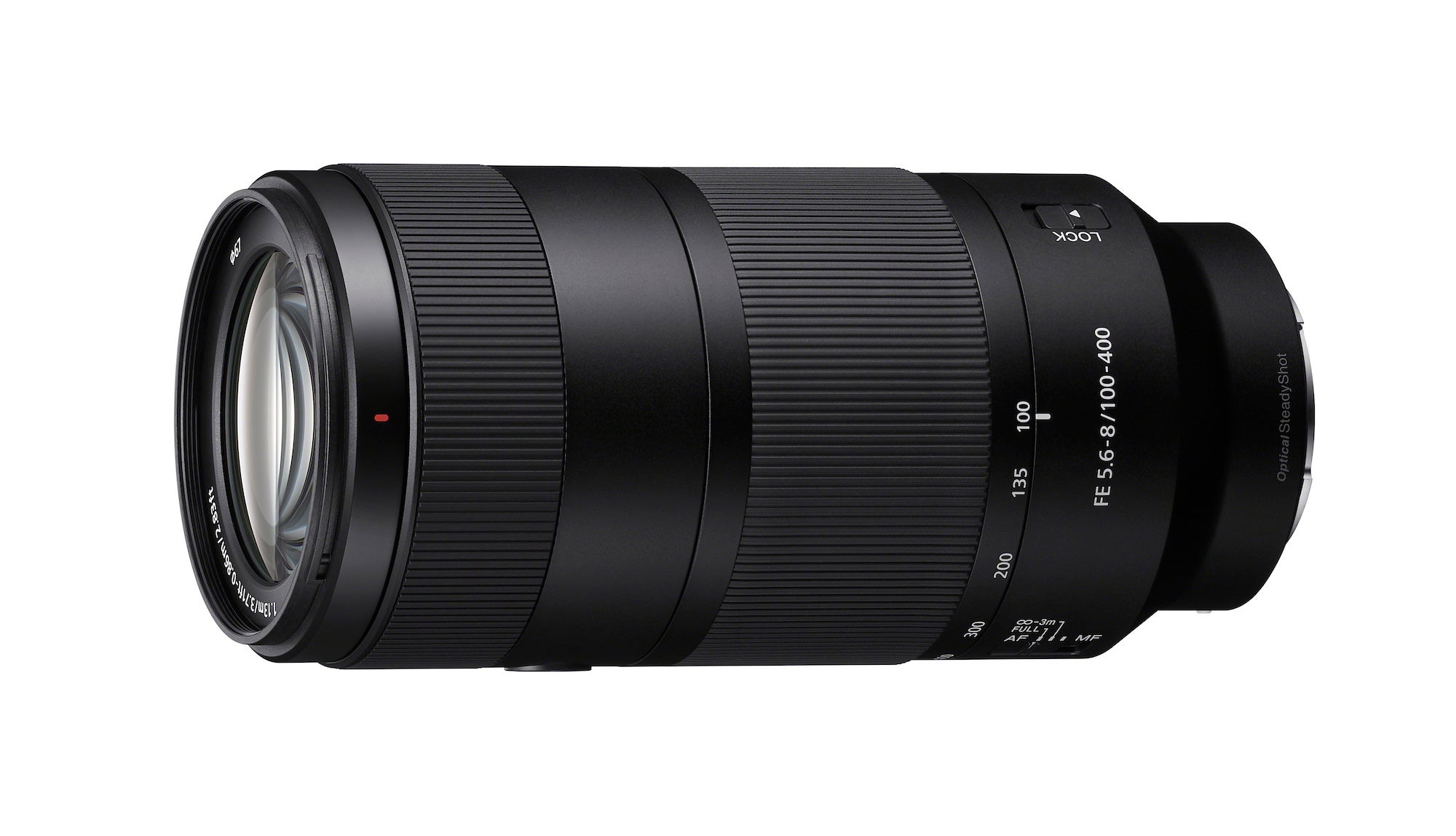
Sony is adding a third 100-400mm zoom to its full-frame E-mount lineup: the FE 100-400mm F5.6-8 OSS, model SEL100400. By accepting a maximum aperture of F5.6-8, the lens keeps its weight down to roughly 654 g, unusually light for a super-telephoto zoom. It goes on sale in Japan on September 4, 2026 at an open price, while North America gets a suggested retail price of 849.99 USD.
Trading aperture for a 654 g body
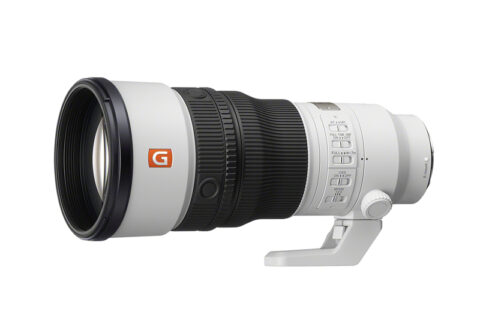
The character of this lens shows up in the first line of its spec sheet. The focal range is 100-400mm, the maximum aperture runs from F5.6 to F8, the barrel measures 78.2mm at its widest by 164.5mm long, and the whole thing weighs about 654 g. Set against the G Master 100-400mm, which sits well above the 1 kg mark, this new lens comes in at less than half the weight.
That weight advantage matters most when a tripod is not involved. Photographing birds, aircraft, or trains means spending far more time searching, panning, and tracking with the lens raised than actually pressing the shutter. A few hundred grams there translates directly into how long you can keep shooting. Sony frames the lens as an entry point for people who have not yet tried super-telephoto work.
The flip side is that F5.6-8 gets restrictive in low light. At the 400mm end you start at F8, so shooting in a dim forest at dusk or inside an arena means raising ISO from the outset. Modern full-frame bodies handle high ISO well, but this is a compromise the buyer has to accept.
Two ED elements, two aspherical elements, and 0.41x magnification
The optical formula uses 15 elements in 10 groups, including two ED (extra-low dispersion) glass elements and two aspherical elements. The goal is to suppress the chromatic aberration that tends to show up at the long end and hold clear rendering through the whole zoom range. A 9-blade circular aperture keeps the opening close to round from wide open through moderate stopping down.
Close-focus performance may prove more useful than expected. Minimum focusing distance is 1.13m at the wide end and 0.86m at the telephoto end, with maximum magnification reaching 0.41x. That figure sits close to half life-size, meaning the lens can turn from distant subjects to flowers and insects at your feet without a lens change. Covering super-telephoto and near-macro duties with a single barrel is a real advantage for anyone trying to carry less.
Filter diameter is 67mm and a lens hood is included. The design is also dust and moisture resistant, aimed at outdoor use where the weather can turn.
Dual linear motors and 120 fps burst support
Autofocus is driven by dual linear motors for fast, quiet operation. On the tracking side, the standout detail is support for continuous shooting with AF/AE tracking at up to roughly 120 frames per second on the Alpha 9 III. Few lenses can keep pace with that burst rate, and seeing a mainstream telephoto zoom on that list is unusual.
Optical image stabilization is built into the lens and works in coordination with compatible camera bodies. For video, the lens also supports breathing compensation, which corrects the shift in angle of view that occurs as focus position changes.
Controls include a customizable focus hold button, a focus mode switch with focus range limiter, and a zoom lock switch. That last item stops the barrel from extending under its own weight while the lens is slung over a shoulder, a common annoyance with long zooms.
800mm with a teleconverter, 1,200mm equivalent on APS-C
The lens accepts Sony's optional teleconverters, both the 1.4x SEL14TC and the 2x SEL20TC. Fitting the 2x SEL20TC pushes the long end to 800mm, and on an APS-C body or in crop mode that reaches up to 1,200mm equivalent in 35mm terms.
Of course, a teleconverter makes the maximum aperture darker still, so it works better as insurance for the moments when you fall just short than as an everyday attachment. Even so, the light body is exactly what makes room in the bag for that extra piece of glass.
Price and availability
The lens goes on sale in Japan on September 4, 2026 at an open price. In North America the suggested retail price is 849.99 USD (about 134,000 yen), with 1,079.99 CAD in Canada, and sales there also begin in September.
※1 USD = 158 JPY (as of August 4, 2026)
Summary
The FE 100-400mm F5.6-8 OSS gives up maximum aperture in exchange for a roughly 654 g body that is genuinely portable. Two ED elements and two aspherical elements, 0.41x close-focus capability, dual linear motor autofocus, and teleconverter support add up to a well-equipped package for the price. It cannot match the G Master when light is scarce, but as a way into super-telephoto shooting it looks easy to live with. Japanese availability starts September 4.