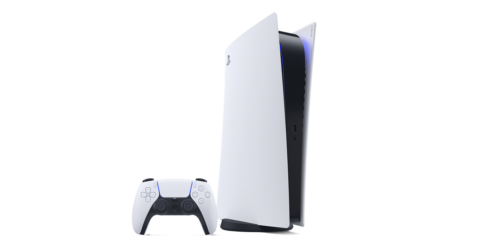
On July 1, Sony announced that it will stop producing disc versions of new games for PlayStation consoles in January 2028, moving entirely to digital distribution. The move accelerates an industry trend that has been building for years. Analysts also suggest that the next-generation PlayStation 6, which has not been officially announced, will likely ship without an optical drive in its standard model, reigniting the debate over the fate of physical media.
What Sony Announced
Sony revealed that it will halt disc production for new PlayStation titles as of January 2028. This covers not only its own first-party games but also third-party titles. New releases will still be sold both on the PlayStation Store and at retail stores, but only in digital form; buying a physical package in a store will mean getting a download code rather than a disc.
Sony explained the decision as a response to shifting consumer preferences, noting that demand for digital media now far outpaces physical discs. The company also announced that it will close the PlayStation Stores for the PlayStation 3 and PlayStation Vita, retiring older-generation storefronts at the same time it steps back from physical media.
Will the PS6 Have No Optical Drive?
The biggest question for many gamers is what this means for the PlayStation 6. Piers Harding-Rolls, an analyst at Ampere Analysis, said the decision to end disc production "pretty much guarantees" that the PS6 will not arrive until 2028 at the earliest, and predicted that the standard PS6 model will not include a drive for physical media. According to him, Ampere currently expects the console to launch at the end of 2028.
Cost reduction is the driving factor. Harding-Rolls said Sony is looking for every possible way to lower the cost of its next-generation console, and that dropping the drive is an easy win. He also noted that an add-on external drive might be offered so players can still enjoy their older PS4 and PS5 games. Even so, Sony has not officially announced the PS6, and its recent announcement made no official mention of the next console. These points remain analyst projections rather than confirmed facts.
The shift toward digital sales is nothing new. When the PS4 launched in 2013, the digital share was estimated at around 13 percent; by 2025 it had grown to 80 percent and continues to climb. Another analyst, Daniel Ahmad, described the decision as a platform-led move aimed at cutting costs, eliminating the resale and used-game market, and driving 100 percent of revenue through the PlayStation Store.
Xbox Explores Disc-to-Digital Conversion
Meanwhile, rival Microsoft is also making moves around physical media. According to multiple reports, Xbox is testing a feature with internal testers that converts Xbox Series and Xbox One discs into digital versions, reportedly under the codename "Disc2Digital."
The mechanism works like this: insert a compatible disc, install and play the game as usual, and you are granted a digital entitlement as if you had purchased it from the store. After that, you can remove the disc and play as you would a digital copy. The entitlement, however, is tied to each individual disc, so if you give the disc to a friend or trade it in, the entitlement moves between accounts along with it. The feature targets Xbox Series and Xbox One discs; Xbox 360 and original Xbox titles are not included. Some discs may not qualify depending on their manufacturing date, and Microsoft has reportedly warned internal testers that a disc "may not have the features we need for this program." If the digital version is available on Xbox Cloud Gaming, Game Pass subscribers can also stream it.
The retreat from discs is not limited to consoles. Rockstar Games and Take-Two have already stated that the highly anticipated Grand Theft Auto VI will not ship on a disc; buying a physical package in a store will get you a code in the box rather than a disc.
The Future of Physical Media and Lingering Concerns
Taken together, these announcements strongly signal the end of physical discs. Both Sony and Microsoft released driveless versions of their flagship consoles back in 2020, and the PlayStation 5 Pro already ships without a drive by default, offering one only as an add-on. Nintendo, too, adopted a "Game-Key Card" approach for some titles on the 2025 Nintendo Switch 2, placing only a download code in the box.
That said, support for physical media remains strong. Sony is not abandoning discs because they stopped selling. Roughly 70 million PlayStation discs were sold last year, so the demand clearly still exists. Even so, the downward trend in sales is clear, and Sony made the move citing cost and margin improvements. Harding-Rolls acknowledged that gamers will inevitably raise concerns about choice, the ability to play older physical games on new consoles, the value of collecting, and game preservation, but added that purchasing trends are clear and that this is a watershed moment for the industry. Anxiety over losing the reassurance of a disc on the shelf, and the freedom to sell games you no longer play, is likely to linger for some time.
Summary
Sony will end disc production for new PlayStation games in January 2028 and move fully to digital sales. Analysts expect the next-generation PS6 to ship without an optical drive, and Microsoft is reportedly testing a feature that converts Xbox discs into digital entitlements. As the push for cost cutting and digitization accelerates, concerns over game preservation and the used-game market remain unresolved.