On August 24 local time, IBM used the Hot Chips semiconductor conference to introduce what it calls the industry's first dual-architecture mainframe processor. The chip is destined for future IBM Z and LinuxONE systems, and it lets Arm-native Linux environments run alongside traditional z/OS and Linux on IBM Z workloads inside the same box. It is the first silicon-level result of the IBM and Arm collaboration announced in April 2026.
One core that speaks two instruction sets
The most unusual part of the design is what IBM did not do: there are no separate Arm cores and IBM Z cores sitting in different regions of the die. Putting heterogeneous cores on a single chip is common enough, but IBM went the other way. Every individual core can natively execute Arm and IBM Z instructions, or Arm and LinuxONE instructions, concurrently. All 11 physical cores speak both languages and switch depending on the work dispatched to them.
Because of that, Arm workloads are not confined to an isolated corner of the chip. They inherit the properties IBM Z has been sold on for decades: hardware-level fault detection with automated recovery, advanced cryptography, secure key management, and AI acceleration for transaction processing. IBM Z and LinuxONE scale to hundreds of cores and tens of terabytes of memory, so an entire Arm execution environment can ride along at that scale.
2nm, 11 cores, above 5.7 GHz
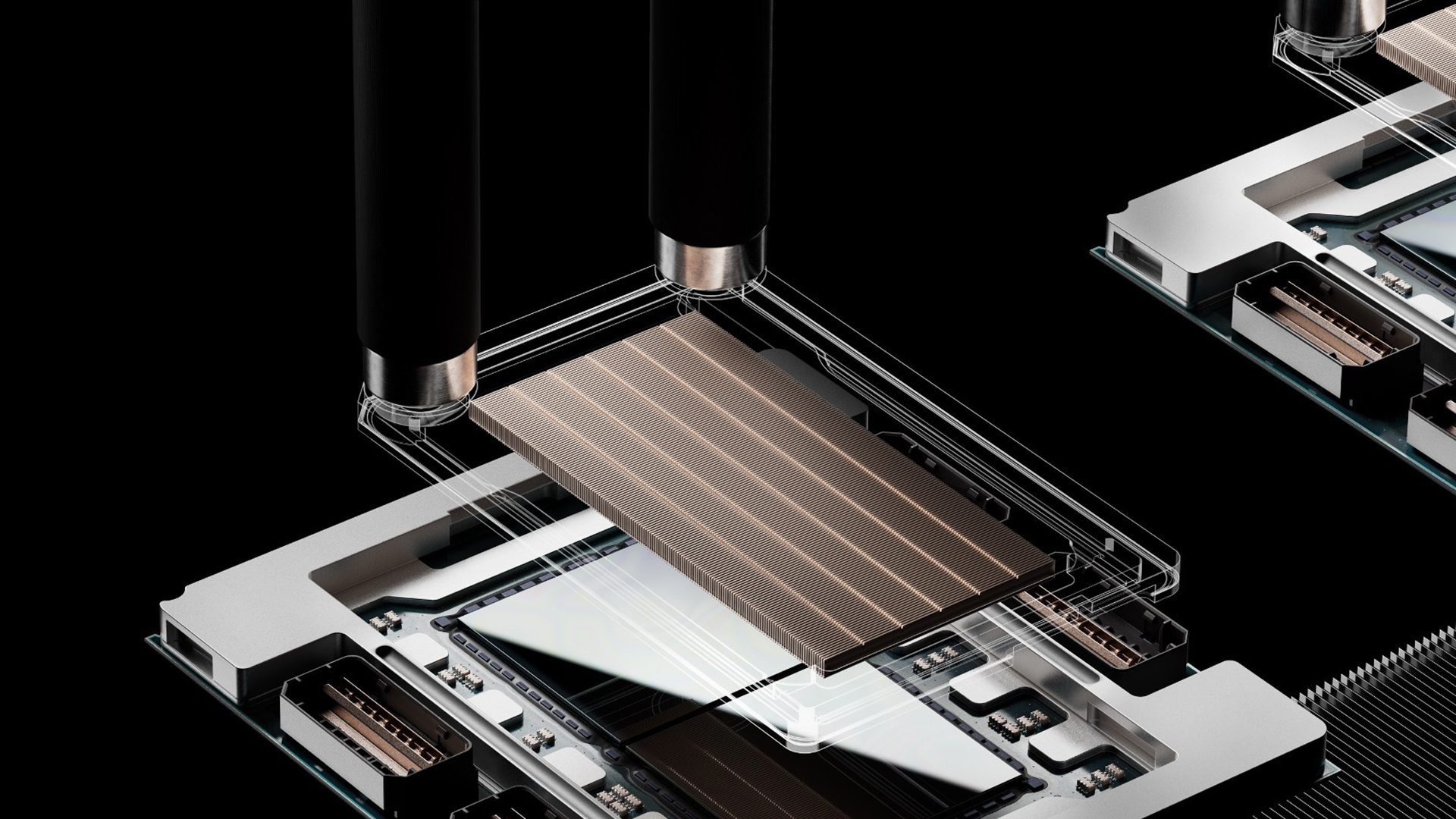
IBM also disclosed the silicon specifications. The processor is built on a 2 nanometer process node, carries 11 high-performance cores, and clocks above 5.7 GHz. While general-purpose server CPUs keep pushing core counts higher, this is a classic mainframe configuration that prioritizes per-core speed.
The rest of the die is just as purpose-built. IBM integrated AI inference accelerators aimed at running fraud detection during a transaction, a dedicated on-chip data processing unit that offloads I/O, and a large cache architecture for demanding enterprise workloads. That arrangement targets systems like banking and insurance back ends, where per-transaction response time and continuous availability are required at the same time.
Courting 22 million developers
IBM's reason for bringing Arm in sits on the software side. The Arm ecosystem spans more than 22 million developers worldwide, running applications from cloud to edge. Cloud-native middleware and AI toolchains have treated Arm support as table stakes for several years now, so running on Arm is increasingly the price of admission to current software.
Mainframes, meanwhile, still carry work that cannot easily be moved: bank transactions, insurance policy administration, government systems. Those two worlds have been operated separately for a long time. If Arm-derived software and existing core business applications can run side by side on the same cores, enterprises can modernize applications without abandoning the platform underneath. Lowering that switching cost is what IBM is aiming at.
What IBM and Arm say
Christian Jacobi, Chief Technology Officer and IBM Fellow at IBM Systems Development, said organizations modernizing their application portfolios while folding AI into core business operations need infrastructure that expands their options. Bringing Arm natively to the platform, he said, is a significant architectural advance for IBM Z and LinuxONE, pairing access to one of the industry's fastest-growing software ecosystems with the qualities that made IBM systems a foundation for how businesses run.
Mohamed Awad, Executive Vice President of Cloud AI at Arm, said that as AI scales, more of the computing landscape is converging on Arm. Bringing Arm compute and its software ecosystem to IBM Z and LinuxONE, which handle some of the most demanding workloads in heavily regulated industries, extends that momentum into mission-critical infrastructure and widens where AI can be deployed.
IBM has described a design direction rather than a shipping product. No system availability date or pricing was given, and the company notes that statements about its future direction represent goals and objectives that may change without notice.
Summary
Executing two different instruction sets concurrently on a single core is a bold move by mainframe standards. The center of gravity here is less the 2nm process, the 11 cores, or the 5.7 GHz figure, and more the intent to pull the Arm developer base inside the systems that run core business operations. When real hardware arrives, and in what configuration, remains to be announced. What is clear is that enterprises modernizing legacy systems now have one more path to consider.