
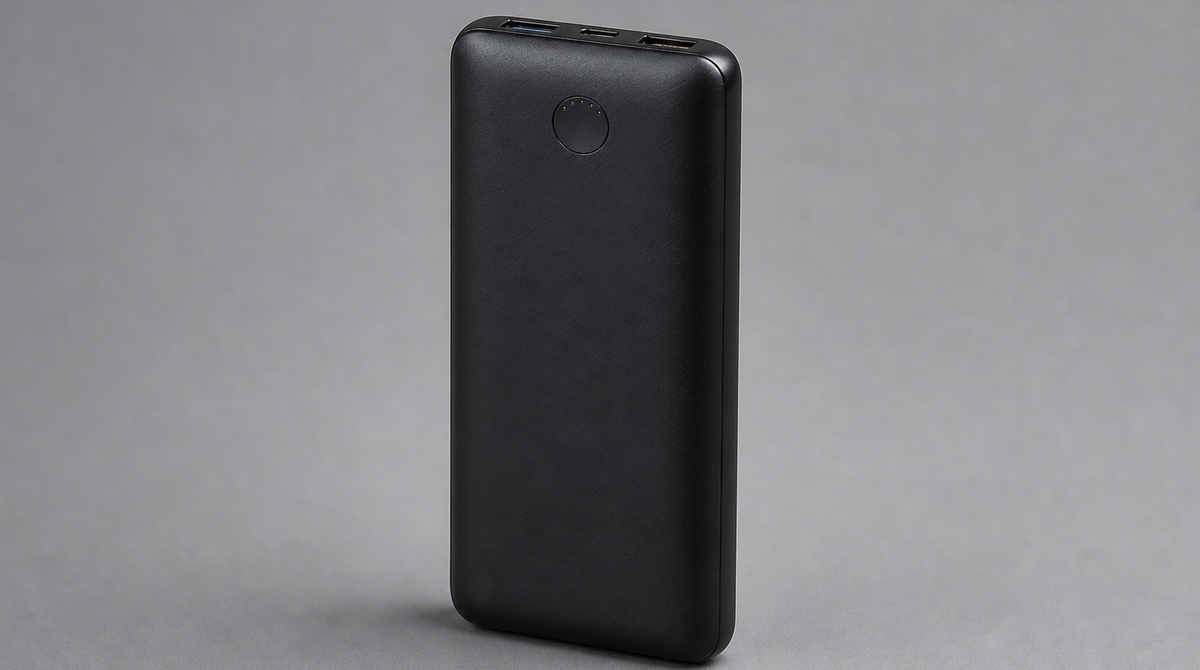
Anker Japan has announced that it will roll out power banks built to Anker's highest-ever safety standards starting around spring 2026[1]. The products combine battery cells that pass the "nail penetration test," which checks whether a cell catches fire when a steel needle is driven into it, with a management system that instantly detects abnormalities and an outer casing made of flame-resistant material, raising safety across the board. As power bank fires become a social concern, a leading brand is now putting safety front and center.
Battery Cells That Pass the Nail Penetration Test
The first thing worth noting about this announcement is the safety design of the battery cells themselves. Anker says it will adopt high-performance ternary lithium-ion cells that can pass the nail penetration test[1].
The nail penetration test drives a steel needle into a fully charged battery cell to verify that it does not catch fire or explode. Among the safety tests for lithium-ion batteries, it is considered one of the more demanding items that is generally difficult to clear[1].
It is worth understanding the design dilemma involved here. Normally, pursuing the level of safety needed to pass the nail penetration test requires lowering cell density, which makes the product larger and heavier. Anker says that by consolidating the technology and expertise it has built up over the years, it has kept a compact and lightweight design while still meeting this high safety standard[1]. Balancing safety with portability is an important point for a power bank.
Multiple Layers of Protection Through the Management System and Flame-Resistant Material
Anker is taking an approach that raises safety not only in the battery cells but across every component that makes up a power bank[1].
On the electrical control side, the products carry a battery management system (BMS) that monitors voltage on a per-second basis and records cell information. They also incorporate an intelligent regulation function that immediately senses abnormal conditions and shuts down the power, a design that nips trouble in the bud at an early stage[1].
Measures extend to the outer casing as well. Anker says it will use industry-leading flame-resistant material so that the casing resists spreading flames even if an internal short circuit or abnormal heat generation occurs[1]. The aim is to keep damage to a minimum even if a problem arises in a single cell.
Anker says it has long worked on product safety and reassurance, including managing supplier systems, and what stands out this time is that it strengthens three elements together: cells, the management system, and materials. Specific product names and specifications are scheduled to be announced around spring 2026[1].
The Backdrop: Tighter Rules on Carrying Power Banks Onto Aircraft
Behind Anker's decision to put safety front and center are changes in the environment surrounding power banks.
Japan's Ministry of Land, Infrastructure, Transport and Tourism applied new rules on carrying power banks onto aircraft starting April 24, 2026. The rules cover all flights departing from or arriving in Japan: passengers may carry no more than 2 power banks each (160Wh or less), and charging power banks in the cabin, or supplying power from a power bank to electronic devices, is prohibited[2].
The revision responds to a worldwide increase in smoke and fire incidents caused by lithium batteries aboard aircraft, and aligns with the tightening of international standards by the International Civil Aviation Organization (ICAO)[2]. Precisely because these are products people carry every day, interest in safety has never been higher. Against this backdrop, Anker's effort this time, reaching from cell-level testing all the way to casing materials, has the potential to spark a rise in standards across the industry.
Summary
The power banks Anker will roll out around spring 2026 combine cells that pass the nail penetration test, a BMS that monitors on a per-second basis, and a flame-resistant outer casing, layering up safety on multiple fronts. With rules on carrying power banks onto aircraft tightening and concern over fire incidents spreading, choosing products with safety as the key criterion is set to matter more than ever. The announcement of detailed specifications is now awaited.
出典:https://prtimes.jp/main/html/rd/p/000000633.000016775.html
出典:https://www.mlit.go.jp/report/press/kouku10_hh_000310.html