
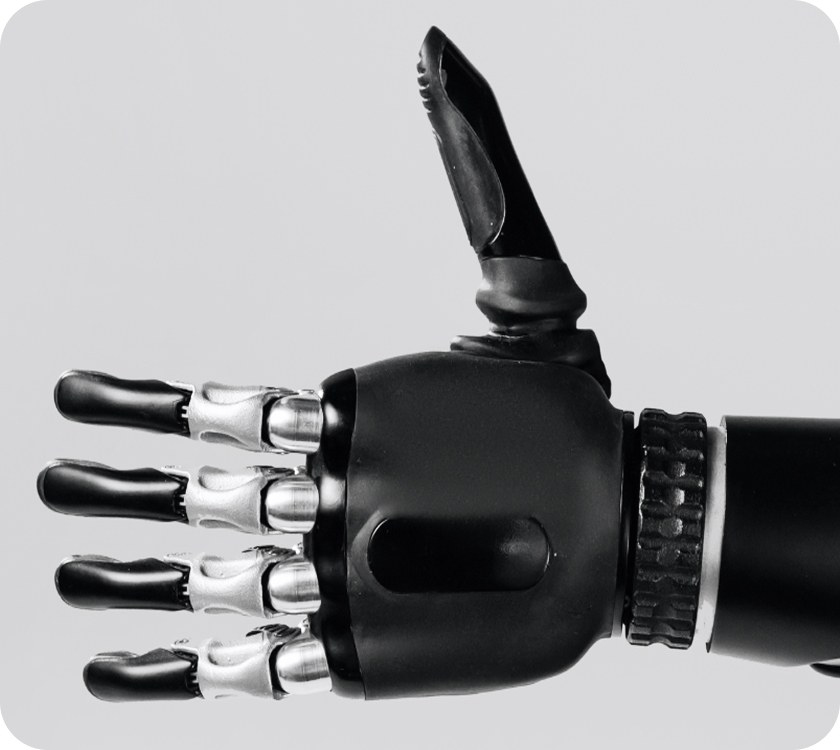
Algomatic Dynamics, a Japanese company focused on robotics and physical AI, announced on September 9 that it has raised 5 billion yen from DMM.com and formally begun operations. It is the company's first round since founding, and the money is earmarked for hardware investment in research and development and for securing compute resources. The company plans to release its AI multi-fingered hand platform in Japan by the end of 2026.
A Hardware-Oriented Spinout from the DMM Group
Algomatic Dynamics is a young company, founded on April 27, 2026. It was created as Algomatic, the AI business of the DMM Group, moved to a new structure. Where Algomatic works mainly in software, this company takes on the physical side of robots. The CEO is Yuki Nanri, who joined a startup that went on to raise more than 15 billion yen during its earliest days, served as CTO at several companies, and later joined Algomatic as CTO.
Its stated mission is to bring smoothness to every robot. The goal is a technology foundation that is not tied to any particular machine or use case, so that robots blend naturally into society. The positioning is deliberate: this is not a company that builds and sells a single robot.
Behind it sits a broader shift. Generative AI is spreading beyond digital space, and Japan faces a persistent labor shortage across manufacturing, logistics, healthcare, nursing care and food service. Expectations for robots keep rising, yet the range of tasks and environments they can actually handle remains narrow. Algomatic Dynamics aims to close that gap with core technology developed on the assumption that it will be deployed in real workplaces.
The Money Goes to Hardware and Compute
The 5 billion yen is directed primarily at hardware investment for research and development and at securing compute resources. Physical AI requires more than GPUs for training models. It also demands real machines, sensors, and a workshop environment capable of iterating on prototypes, which makes the cost structure very different from that of a software-first AI company. Raising 5 billion yen barely four months after incorporation reflects that reality.
Turning Tacit Knowledge on the Factory Floor into Motion
The company highlights three technical strengths.
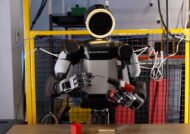
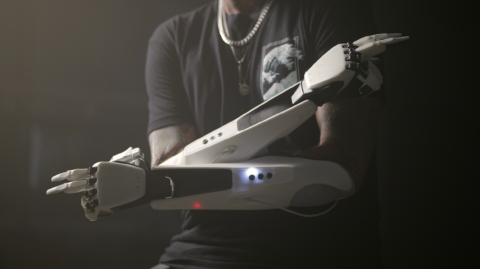
The first is a contact-rich multi-fingered hand together with an end-to-end learning platform behind it. The fingers sense multiple contact points at once and switch grasping strategies according to the shape and material of the object. The key is handling not only rigid parts but also items such as unevenly shaped ingredients, where neither the center of gravity nor the softness stays constant. Beyond the hand itself, the company offers data collection tuned to each task, additional training on foundation models, and deployment to real machines within a single platform.
The second is stable bipedal locomotion. The aim is to keep walking without collapsing on uneven ground, steps and slopes, using a combination of model-based control and reinforcement learning. Learning human movement from motion capture and video extends the range beyond walking to expressive behavior such as dance and soccer.
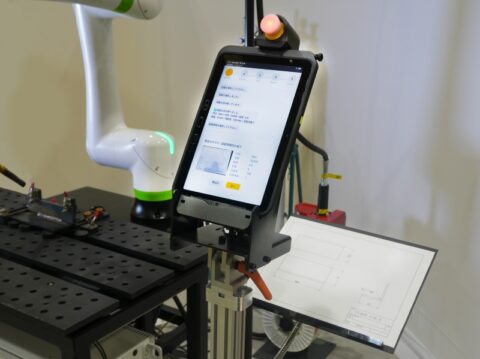
The third is structuring tacit knowledge through video analysis. Footage of a skilled worker's hands is used to automatically extract technical judgment that has never been put into words: the timing of a movement, how much force is applied, where the eyes are looking. The idea is to convert what even the worker cannot explain into data, which places the work squarely in the context of passing down craft skills.
Three Businesses: Data, Hands, and Toys
The business has three pillars.
Motion data collection and training converts everything from close-up video analysis of an expert's hands to full-body motion such as dance and soccer into training data. It supports cross-embodiment, meaning data can be reused across machines with different body structures, and the company also rents out robots and dispatches them with operators.
Sales and maintenance of AI hands covers multi-fingered AI hands delivered as an integrated hardware and software package. Rather than ending at the sale, the company handles task-specific tuning and ongoing readjustment as the product mix or the site itself changes.
The third pillar is entertainment AI toys, covering planning, development and maintenance of bipedal character robots. The company describes it as giving characters a body using techniques built up in animatronics, which secures an outlet distinct from industrial use from the start. Its track record includes formalizing tacit knowledge in manufacturing, along with an Awa Odori dancing robot, robot soccer, and next-generation animatronics.
A DMM Chairman Returns to a Business He Left 11 Years Ago
Keiji Kameyama, chairman of DMM.com, recalled the bitter experience of a robotics business he started 11 years ago and withdrew from after roughly six years, then noted how remarkable technical progress has been in recent years. Business can be too early or too late, he said, and meeting Nanri convinced him that now was the time to try again.
An investor who once stepped away from this field is returning to it a decade later. What has changed since then is less the maturity of the hardware itself than the fact that the technology for teaching movement has moved close to practical use.
Summary
What stands out about the Algomatic Dynamics round is less the size of the figure than the clarity of where the money is going. Hardware and compute are exactly the costs physical AI cannot avoid. The nearer-term milestone is the domestic release of the AI multi-fingered hand platform, targeted for sometime in 2026. The company also plans to pursue partnerships and field trials with corporations and research institutions, and how much of the tacit knowledge sitting on factory floors it can move into a robot's hand looks like the measure by which it will be judged.