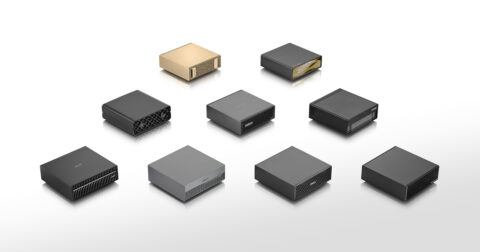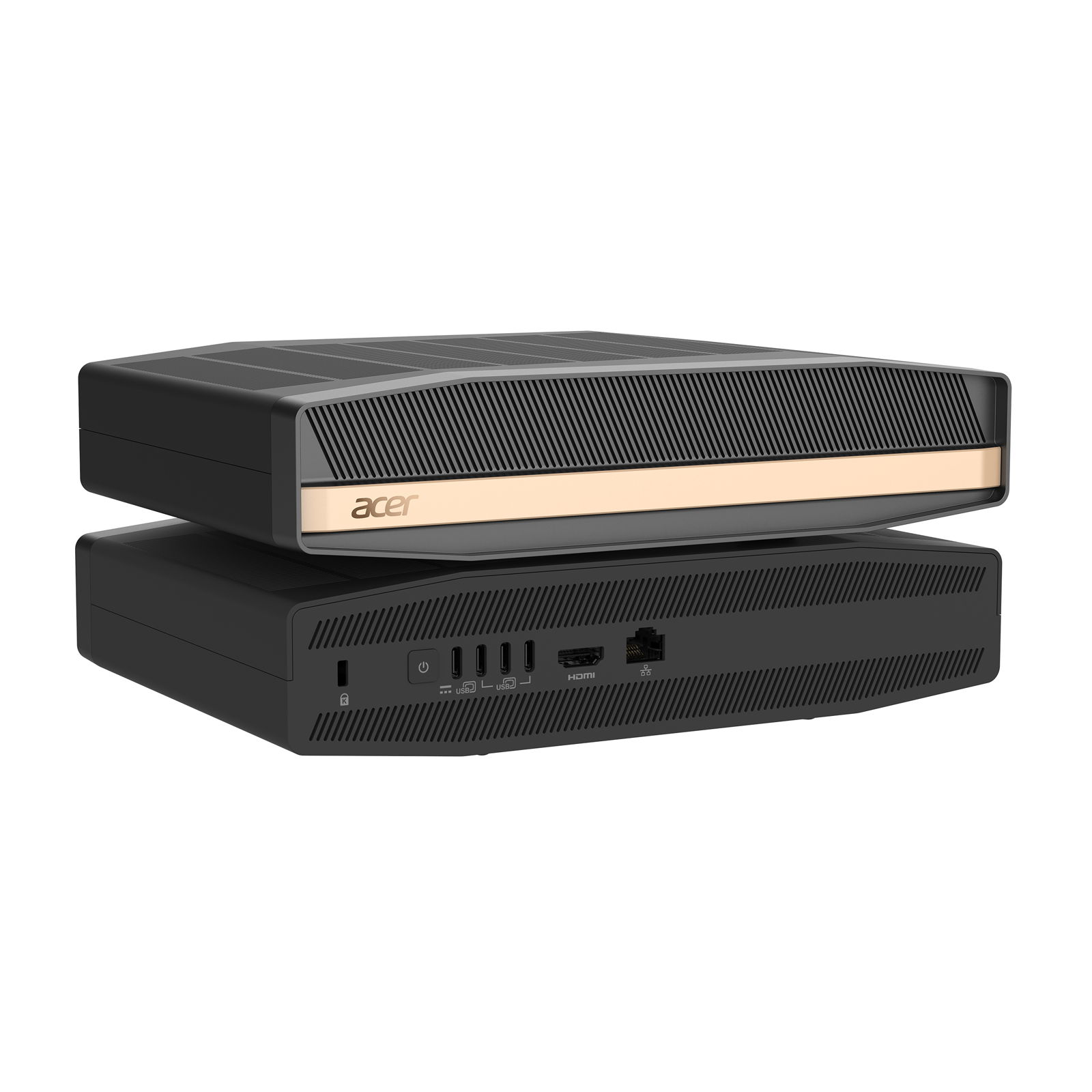
Acer has revealed the Acer SFF RTX Spark, a compact desktop design built around NVIDIA's RTX Spark superchip. It packs up to 128 GB of unified memory and up to 1 petaflop of AI compute into a chassis small enough to sit on a desk. The reveal came on September 2 at Acer's own press conference held during IFA 2026 in Berlin[1].
A Machine for Work That Cannot Leave the Building
Anyone who starts using generative AI at work eventually runs into the same question: is this data allowed to go outside? Confidential design files, freshly shot video footage, logs containing customer records. Sending them to a cloud API is fast, but in plenty of situations the sending itself is what is prohibited.
That gap is exactly what the Acer SFF RTX Spark targets. If inference runs entirely on a box under your desk, the data never physically leaves the premises. At the same time, 128 GB of memory shared between GPU and CPU means models that used to demand workstation-class hardware can now be loaded locally. The pitch is compute capability and data handling in the same package.
Acer names three groups of users it has in mind: creators, AI developers and PC gamers. The company describes the design as purpose-built for an era in which AI agents run on personal machines.
Grace CPU and Blackwell GPU, Joined at the Hip
Here is what is inside. The GPU side uses a Blackwell-generation RTX GPU with up to 6,144 cores; the CPU side uses an NVIDIA Grace CPU with up to 20 cores. The two are linked directly by the NVLink-C2C chip-to-chip interconnect and share up to 128 GB of high-speed unified memory.
Having CPU and GPU share memory brings a practical benefit. On a conventional PC, working with a large model means shuttling data between system memory and VRAM, and that shuttling is where things bog down. Unified memory removes the transfer entirely, so the VRAM capacity ceiling stops being the first wall you hit.
On the compute side, fifth-generation Tensor Cores support FP4 precision, which is a large part of how the platform reaches up to 1 petaflop of AI performance. For inference that can run at low precision, the amount of work done per watt changes substantially. Given that all of this has to fit into a small chassis, that power efficiency matters a great deal.
RTX Spark as a New Category
Viewed alone, this looks like a story about Acer building a small AI PC. In practice it is one piece of a wider move. Alongside IFA 2026, NVIDIA confirmed that RTX Spark Windows PCs will span both compact desktops and thin-and-light laptops, and that the first wave ships in October 2026[2]. Six OEMs are already lined up for that October wave, and IFA added new designs on top: Lenovo announced its Yoga Pro 9n and Yoga 9n 2-in-1, and Acer's compact desktop belongs to the same wave.
In other words, RTX Spark is emerging not as a single product name but as a new platform tier for PCs, pairing Grace with Blackwell. Because the underlying assumptions differ from an x86 CPU plus a discrete GPU, two machines that both read as compact AI PCs can be built on very different logic. The fact that so many vendors are arriving at once reflects NVIDIA's interest in establishing the category itself.
Shipping Date and Price Are Still Blank
Several key details are missing from Acer's announcement. While the platform as a whole starts shipping in October, Acer says availability of its own RTX Spark devices will be announced later, and no pricing has been given[1]. What Acer showed was a design, not a product launch.
There is likewise no word on Japanese availability, so when and at what price the machine can be bought there remains undecided. How it behaves as a Windows PC, particularly how much existing CUDA software and how many games run unmodified, cannot be judged until units are in circulation. Running Windows on an Arm-based Grace CPU makes compatibility testing unavoidable.
The promising parts and the unverifiable parts are cleanly separated at this stage.
Summary
The Acer SFF RTX Spark is a desktop design that fits up to 1 petaflop of AI performance and 128 GB of unified memory into a small chassis, aiming to keep AI processing entirely local. It belongs to the RTX Spark platform, which links a Grace CPU and a Blackwell GPU over NVLink-C2C, and it shares that platform with machines from Lenovo and other vendors. Acer's own availability and pricing remain unannounced, and real software compatibility is still unknown. October 2026, when the platform's first wave ships, will be the first point at which it can be judged properly.