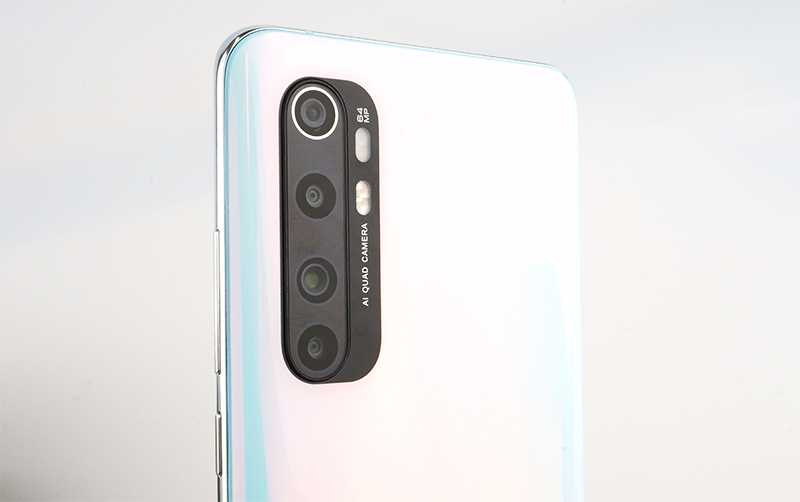
Last year, the Chinese manufacturer "Xiaomi" officially entered the Japanese market, and I picked up one of their handsets — the "Xiaomi Mi Note 10 Lite" (Japanese version) — so here are my impressions on using it. The model I bought is available on Amazon.
The Mi Note 10 series comes in three variants — Pro, standard, and Lite — and roughly speaking, the cameras and memory capacity differ between each.
| Pro | Standard | Lite | |
|---|---|---|---|
| Display | 6.47" 2340 x 1080 FHD+ 398 PPI 3D curved AMOLED | 6.47" 2340 x 1080 FHD+ 398 PPI 3D curved AMOLED | 6.47" 2340 x 1080 FHD+ 398 PPI 3D curved AMOLED |
| Memory | 8GB | 6GB | 6GB |
| Storage | 256GB | 128GB | 64GB |
| SoC | Qualcomm Snapdragon 730G | Qualcomm Snapdragon 730G | Qualcomm Snapdragon 730G |
| SIM slots | Dual NanoSIM | Dual NanoSIM | Dual NanoSIM |
| Size | 157.8 x 74.2 x 9.67 mm, approx. 208g | 157.8 x 74.2 x 9.67 mm, approx. 208g | 157.8 x 74.2 x 9.67 mm, approx. 204g |
| Battery | 5260mAh | 5260mAh | 5260mAh |
| Main camera | 108MP (8-element lens) penta-camera | 108MP (7-element lens) penta-camera | 64MP quad-camera |
Across all models, FeliCa (Osaifu-Keitai) is not supported, and there's no waterproofing either. Apart from the camera, all three pack a Snapdragon 730G, putting them in mid-range territory performance-wise. The OS is Xiaomi's own "MIUI," based on Android. It feels like more of a phone for gadget lovers than for the mainstream, I think.
Unboxing time. Not a cheap-feeling finish
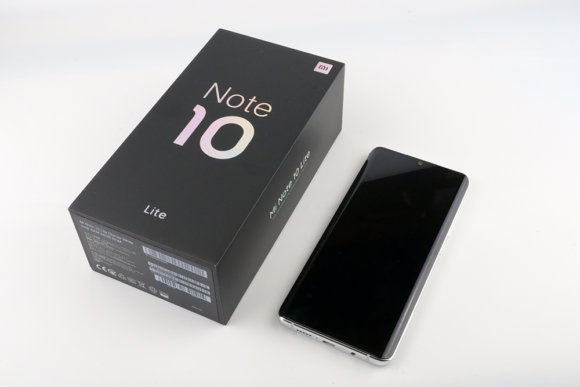
Pulling the body out of the box, here's what it looks like. For a phone in the 30,000 yen range, it doesn't look or feel cheap at first glance. The unit I got is white (Glacier White), but the back isn't pure white — there's a faint blue-to-purple gradient running across it.
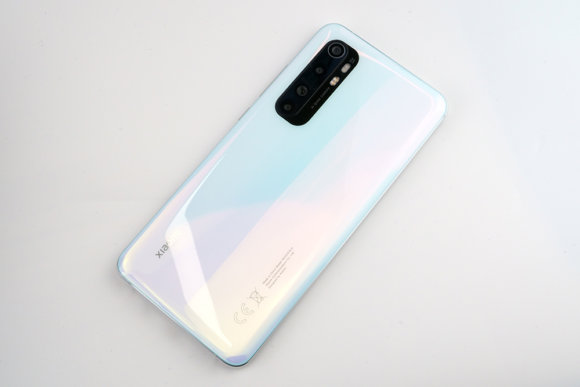
It has a glossy finish, and the reflected color shifts a bit depending on the angle. It's a form factor you see fairly often on overseas Android phones. Personally, I think the CE and copyright markings are a bit too prominent. Even on iPhones, some overseas models have CE and other regulatory markings printed in big letters, but the domestic Japanese models don't. I guess this is just unavoidable for cost-cutting reasons. Here's a close-up of the quad-camera setup.
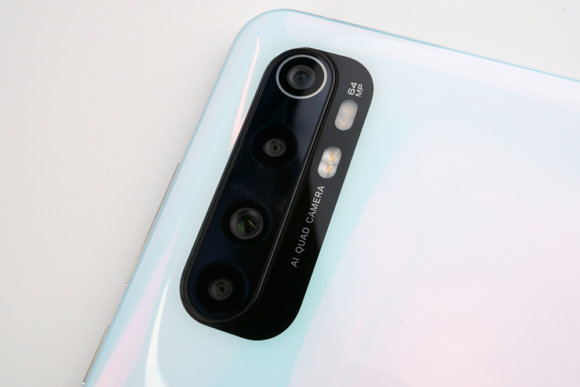
The number of cameras isn't what makes a phone good, but if you're recording memories, being able to take a variety of shots is nice. It supports up to 64MP high-resolution shooting. The four cameras are as follows:
- 64MP high-resolution camera — f/1.89, 1.6μm 4-in-1 pixels
- 8MP wide-angle camera — FOV 120°, f/2.2
- 5MP depth sensor — f/2.4
- 2MP macro camera — f/2.4, AF distance (2cm-10cm)
It also has a Night Mode for shooting in low light. As for accessories, in addition to the AC adapter and USB cable, a dedicated phone case is included.
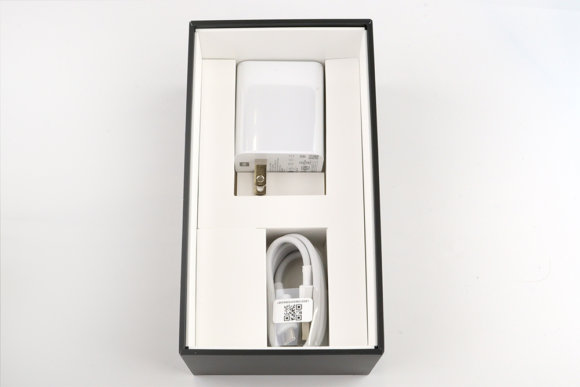
The PSE marking on the AC adapter is also fine — no problems there.
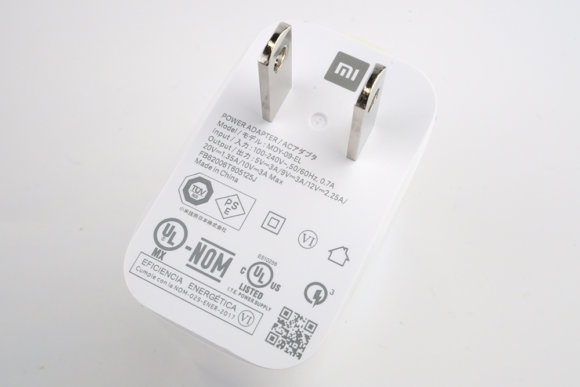
The model number is MDY-09-EL. Here's the unit with the included case attached.

It's transparent, so the original design isn't hidden away. The texture is the kind you'd find on any clear case. Even without the case, the body felt a bit heavy. Compared to the "Galaxy Note 8," there's a noticeable heft to it. It's not "too painful to use" or anything, but people sensitive to weight may notice.
Checking that camera quality
Compared to the Pro and Standard (108MP), the Lite (64MP) has fewer pixels, but I tried out how the photos turn out.
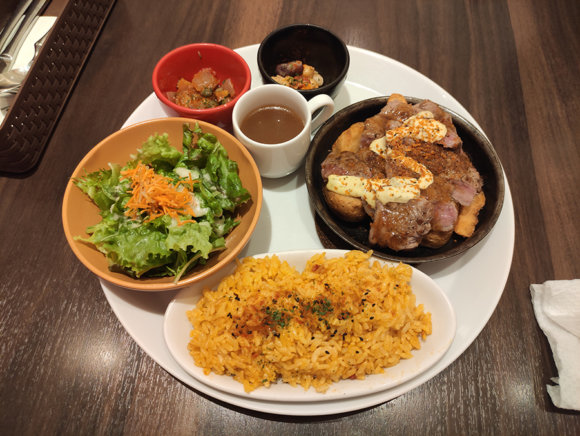
Original file is here (heavy file). If you zoom in, you can really feel the size. It captures fine details quite well. The resolution is 9,248 × 6,944, which is pretty huge. File sizes can hit over 20MB per shot for the larger ones, so while the phone itself can handle it, if you have your cloud set to upload with limited storage, it'll fill up in no time.

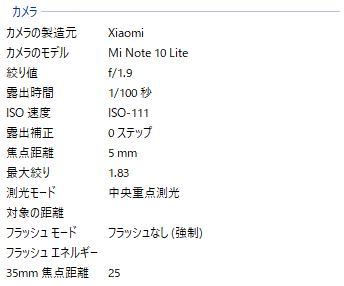
Original file is here (heavy file). It also looks like you can crop and use just part of the photo. Looking at the EXIF, aperture is f/1.9, focal length 5mm, ISO 111.
Shot with the ultra-wide-angle lens, it looks like this.
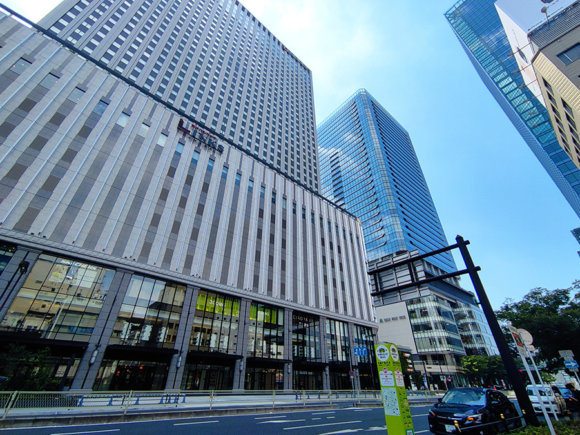
Original file is here. The image quality of the ultra-wide camera doesn't seem all that great. This one might just be a bonus...
Things to watch out for when using the 64MP camera
Here's a 64MP photo cropped at full resolution.
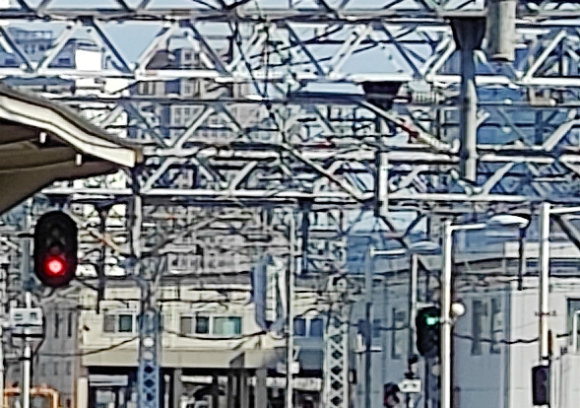
The distant areas have turned painterly. As expected, cropping out distant scenery at full resolution is a stretch.
Also, depending on the shooting scene, the photo seems to be captured a moment after you press the shutter, so sometimes I'd press while pointing at the sky and end up with a saved photo of the ground.
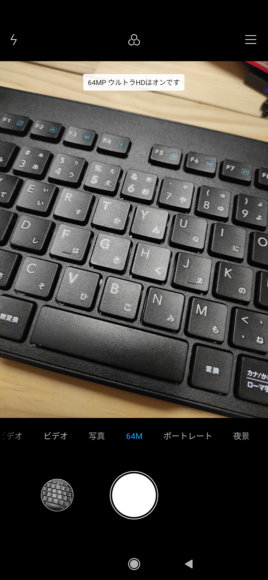
After hitting the shutter, it might be best to wait a moment to make sure the shot is saved. A bit annoying. It's also pretty prone to blur, so when shooting you really need to stop walking and hold the body steady.
Battery life is a monster
The battery life on this thing is really, really good. Even after using it during the commute and at work, by the evening it's still hovering around 80%. I went on a 2-night, 3-day trip without charging it once, so calling the battery life "monstrous" might not be an exaggeration. *Battery saver enabled.
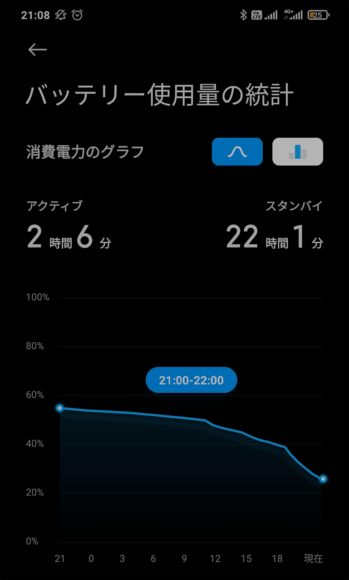
I took photos on the flights out and back, played YouTube, hammered GPS via Google Maps, did web searches — all sorts of things — and in the end I got around 4 days of use without a single charge. I hadn't packed a charger because I figured I'd just buy one if I needed to, but I never expected I wouldn't actually need one. I got curious about how far it could go, so the day after I got back, in the afternoon, I uploaded over 100 photos to the cloud over Wi-Fi just to drain it — and even after the upload finished, there was still 6% left.

At that moment, the "Battery and performance" screen showed 4 hours and 12 minutes remaining, so it looked like there was still some juice. With "Ultra Battery Saver" turned on, it apparently lasts another roughly 25 hours… (though that'd shrink if you watched videos, of course)
How does MIUI feel to use?
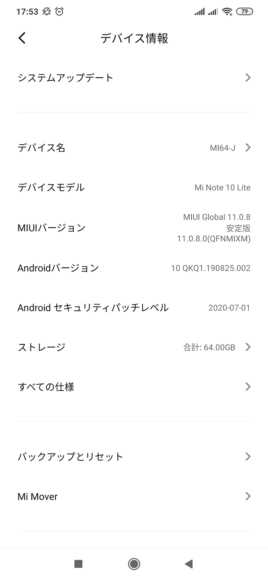
The way you operate it is almost identical to Android. There are some differences in the finer settings, so you might be a bit confused at first, but if you've been using Android up to now, it shouldn't be much of a problem. That said, when it comes to UI polish and the breadth of available settings, SAMSUNG's Galaxy wins out. You can't change as many settings as you'd think you could, and in my testing the auto-brightness setting wouldn't drop to the lowest brightness even in pitch-black darkness at midnight. (It can go dimmer, but it stays a touch too bright and is glaring…)
And of course the all-important Giteki certification is fine
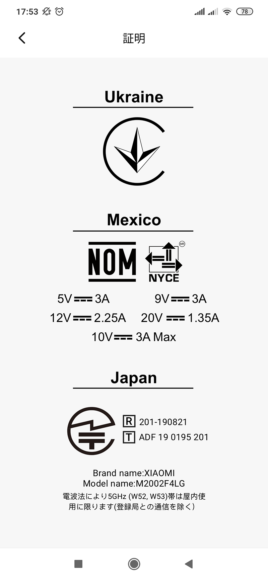
When you buy an overseas smartphone, "Giteki" (Japan's radio law certification) is something you worry about. Without it, you basically can't use the radio frequencies in Japan. Since the model I got is the Japanese version, of course it has the Giteki marking. You can connect to Wi-Fi or 4G to your heart's content with peace of mind.
A piece I can recommend to gadget lovers
There's no FeliCa, no waterproofing, and it's heavy for its size, but considering the price, this is undeniably an interesting gadget. Precisely because it's the cheapest Lite version, you could call it a great handset for casually getting your hands on a 64MP camera. It doesn't reach 108MP, of course, but there's a charm to enjoying photography "lightly," in the literal sense. If you've grown tired of the apple or the cosmic honor student, why not try giving this phone a shot?