
Anyone who plays piano has probably run into the same wall: the sheet music for the song you want simply is not on sale. The beta version of Piano Sheet Converter, released by Yamaha on September 11, 2026, is a Windows and macOS app that builds a piano score automatically from an audio file you already own. A standard track takes about 3 minutes, and during the beta period through the end of October 2026, even the features of the 1,980 yen per month paid plan are unlocked at no cost.
Drop in an Audio File, Then Pick One of 4 Difficulty Levels
The workflow is remarkably simple. Install the app, launch it, choose an audio file from your library, and the app transcribes the rest on its own. Yamaha says a standard track is finished in roughly 3 minutes, and the tagline on the official site sums up the goal neatly: 3 hours of transcription reduced to 3 minutes.
Scores can be generated at 4 levels: introductory, beginner, intermediate and advanced. Because the same audio can be rendered at whichever level matches your ability, you avoid the usual balancing act between an arrangement too hard to play and one so simplified that it feels hollow. Finished scores can be edited inside the app, and a play button lets you hear the result on the spot. Export options cover PDF, MIDI and MusicXML, so you can carry the file into whichever notation software you already use for final polishing.
It is not a magic wand, though. Yamaha states that accuracy is highest on pop songs with vocals, and that noisy recordings or tracks with sharp tempo changes tend to produce weaker results. This is still a beta, and expectations should be set accordingly.
The Advanced Plan Unlocks Automatically During the Beta
There are 2 plans. The Free plan costs 0 yen per month and allows 5 conversions per month, storage for 5 files, and playback only. Score editing and PDF, MIDI or MusicXML export are not included. The Advanced plan costs 1,980 yen per month and lifts the conversion limit entirely, raises storage to 100 files, and enables editing plus every export format.
The notable part is that simply using the app during the beta period unlocks the Advanced features automatically. The beta is scheduled to run through the end of October 2026, which effectively means full functionality for free during that window. The Free plan needs no registration and works immediately after download, so the barrier to trying it is very low.
One caveat: neither plan permits commercial use, and usage is limited to private purposes. Plan changes take effect immediately, but no prorated refunds are issued for downgrades or cancellations. Availability is also restricted, and the app currently cannot be used in the European Economic Area (EEA) or other regions where GDPR applies.
Modest System Requirements, Final Version Due Around Autumn 2026
The hardware bar is low. The Windows build supports Windows 10 (64-bit) and Windows 11 (64-bit), with a dual-core x64 CPU at roughly 2.0 GHz as the floor and 4 or more physical cores, such as an Intel Core i5 or i7 or an AMD Ryzen 5 or 7, as the recommendation. Memory starts at 4 GB with 8 GB to 16 GB recommended, free storage needs to be 2 GB or more, and integrated graphics are supported. The installer is about 120 MB, meaning a laptop from a few years back is enough to give it a try.
Yamaha has also laid out a roadmap. The final Windows and macOS versions are planned for around autumn 2026, with iOS and Android versions following around spring 2027. The company is developing the app as a new business venture and says it has repeatedly run monitor tests and interviews with piano instructors and music enthusiasts in Japan and overseas. Feedback gathered during the beta will feed into further refinement ahead of the official release.
What Gets Cut Is Labor Time, Not Playing Time
Transcribing by ear is a slow accumulation of unglamorous work, picking apart chords and writing down note values, and a single song can take anywhere from several hours to several days. Yamaha says its aim with this app is to compress that stage so the recovered time can go into performance and composition instead. Transcription skill does not become obsolete, but the division of labor, with a machine producing the draft and a human finishing it, is already becoming routine in other creative fields.
The open question is where the copyright line falls. Banning commercial use and restricting the app to private purposes is close to unavoidable given a feature that automatically notates existing songs. How that framing is settled in the final release will matter to anyone weighing whether to keep paying for the Advanced plan.
Summary
On September 11, 2026, Yamaha released the beta version of Piano Sheet Converter, a Windows and macOS app that generates piano scores automatically from audio files. A standard track becomes a score in about 3 minutes, with 4 difficulty levels from introductory to advanced. During the beta period through the end of October 2026, the 1,980 yen per month Advanced plan is unlocked for free, including PDF, MIDI and MusicXML export. The final version is planned for around autumn 2026, with iOS and Android versions around spring 2027.
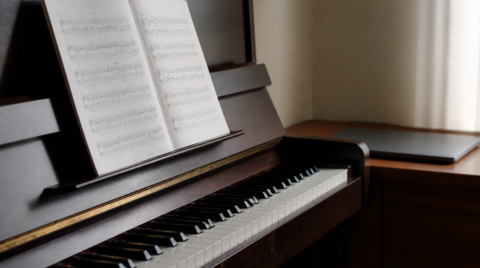
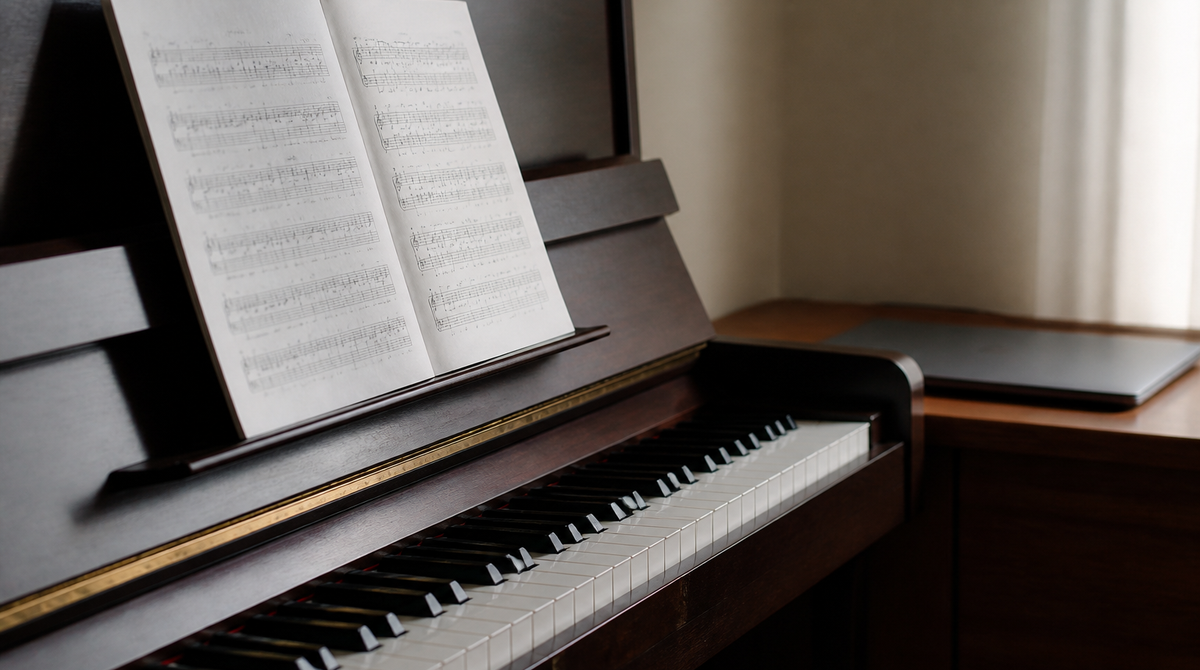
※The thumbnail image is an AI-generated illustration.