
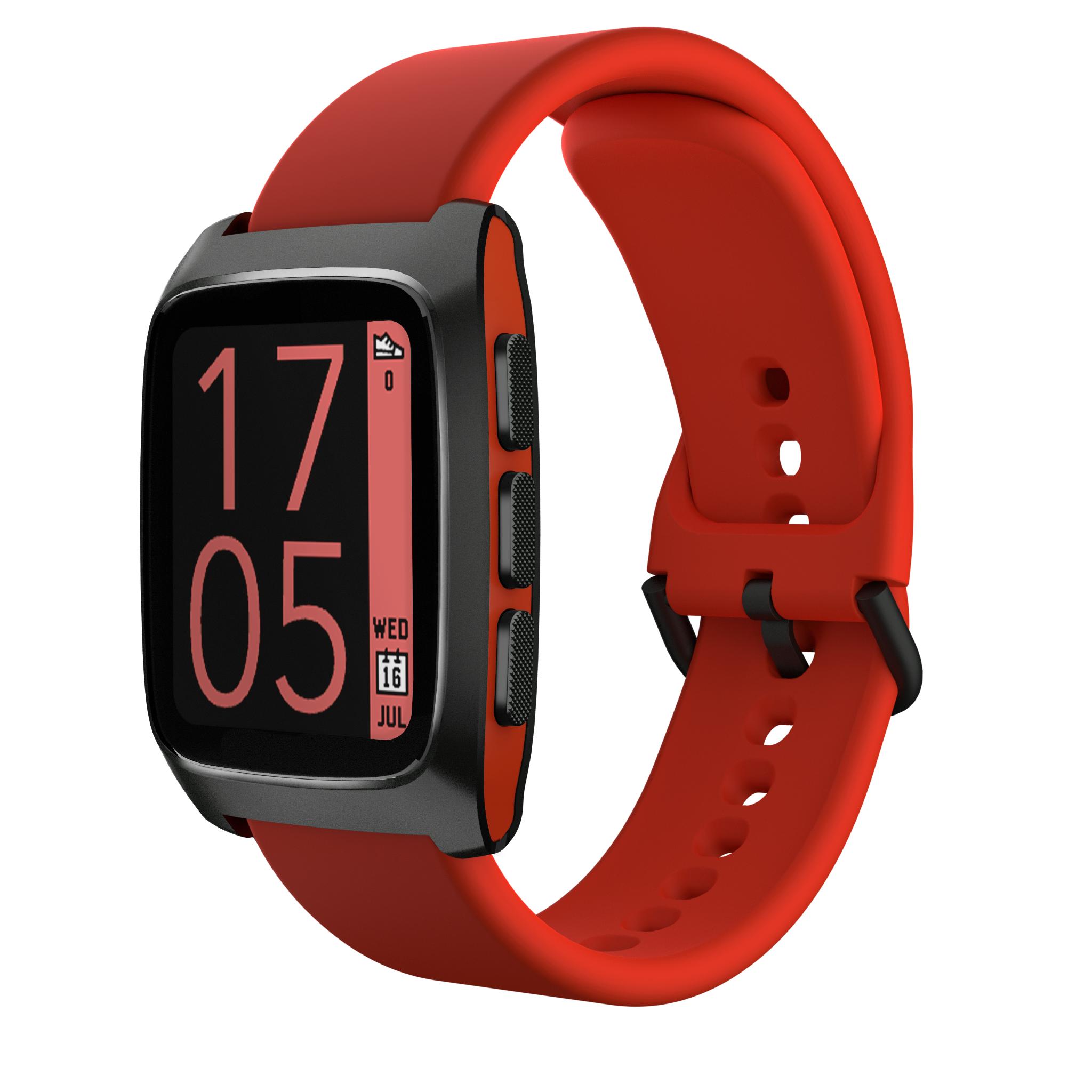
The Pebble Time 2, a direct descendant of the smartwatch that started life on Kickstarter in 2012, has shifted from a pre-order product to regular in-stock sales. The official store now lists it as in stock, with orders shipping within 48 hours. The price is 225 USD (about 36,000 yen). A 1.5-inch 64-color e-paper display, an estimated 30 days of battery life, and four physical buttons make it an unusual proposition in today's smartwatch market.
※1 USD = 159 JPY (as of August 22, 2026)
No Longer a Waiting Game
Until now, ordering a Pebble Time 2 meant waiting for a shipping slot. The official store has flipped to in stock, and orders now leave the warehouse within 48 hours. In terms of the mental hurdle of actually buying one, that may be the biggest change here.
The company behind it is Core Devices LLC, founded by Eric Migicovsky, who created the original Pebble. That first Pebble passed through Fitbit to Google and eventually disappeared from the market. PebbleOS, the software that ran those watches, was later released as open source, which opened the door to rebuilding hardware around the same ideas.
Shipping goes out from a warehouse in Asia via international courier, using DDP terms so that taxes and duties are prepaid by the sender. US buyers face a tariff of roughly 10 USD (about 1,600 yen) per watch, while shipments outside the US are not subject to US tariffs. Local taxes and duties in the destination country still apply.
A 1.5-Inch 64-Color E-Paper Screen and 30 Days of Battery
The Pebble Time 2 uses a 1.5-inch 64-color e-paper panel at 200x228 pixels and 202 dpi. It supports touch input while keeping four physical buttons, and an RGB LED backlight lights up the always-on e-paper screen in the dark.
Battery life is estimated at 30 days. That is the decisive gap between this watch and a typical OLED smartwatch: it trades color depth and brightness for a routine of charging roughly once a month. The charger uses the same connector as previous Pebble models.
The body measures 43.00 x 36.04 x 10.90 mm with a 41.40 mm lug-to-lug distance, and weighs 33 g without a strap. The frame combines stainless steel and polycarbonate, and the strap width is 22 mm. Sensors include a 6-axis IMU, a heart rate monitor, and a compass, plus both a microphone and a speaker. Water resistance is rated at 30 m.
Four body colors are available. The sibling model, the Pebble Round 2, has a 1.3-inch screen at 260x260 pixels and 200 dpi, weighs 26.8 g, runs 10 to 14 days on a charge, costs 199 USD (about 32,000 yen), and is scheduled to ship in September. A third model, the Pebble 2 Duo, used a 1.2-inch black-and-white e-paper screen at 149 USD (about 24,000 yen) but is currently listed as sold out.
The Software Is Entirely Open
The software side is where Pebble's character shows most clearly. Both PebbleOS on the watch and the companion app on the phone are published as open source. The company states plainly that it does not plan to change the hardware specifications, and that anyone who wants an extra feature is free to modify the OS and run it on their own watch. It even notes that you are welcome to build your own watch and run PebbleOS on it.
More than 10,000 apps and watch faces are listed in the official store. Step and sleep tracking and notification mirroring are built in, so the watch works as a watch without installing anything extra.
What to Check Before Buying
It is unusual for a manufacturer to publish a list of people who should not buy its product, but that is exactly what the official site does. Anyone who needs a perfectly polished device, anyone looking for a sports watch for running or triathlons, and anyone comparing this against an Apple Watch is told to look elsewhere.
On iPhone in particular, iOS restricts what third-party watches can do, so actions such as replying to notifications are not possible. That limitation is outside the manufacturer's control. The warranty covers manufacturing defects for 30 days from receipt; send the defective watch back and a replacement is shipped free of charge.
Summary
The Pebble Time 2 is a deliberately narrow proposition: 30 days of battery, an always-on screen, physical buttons, and fully published software. With a price of 225 USD (about 36,000 yen) and stock now shipping within 48 hours, this is an easier moment to commit for anyone who has been watching from the sidelines. The less you want from a watch, the more this direction is likely to land.