
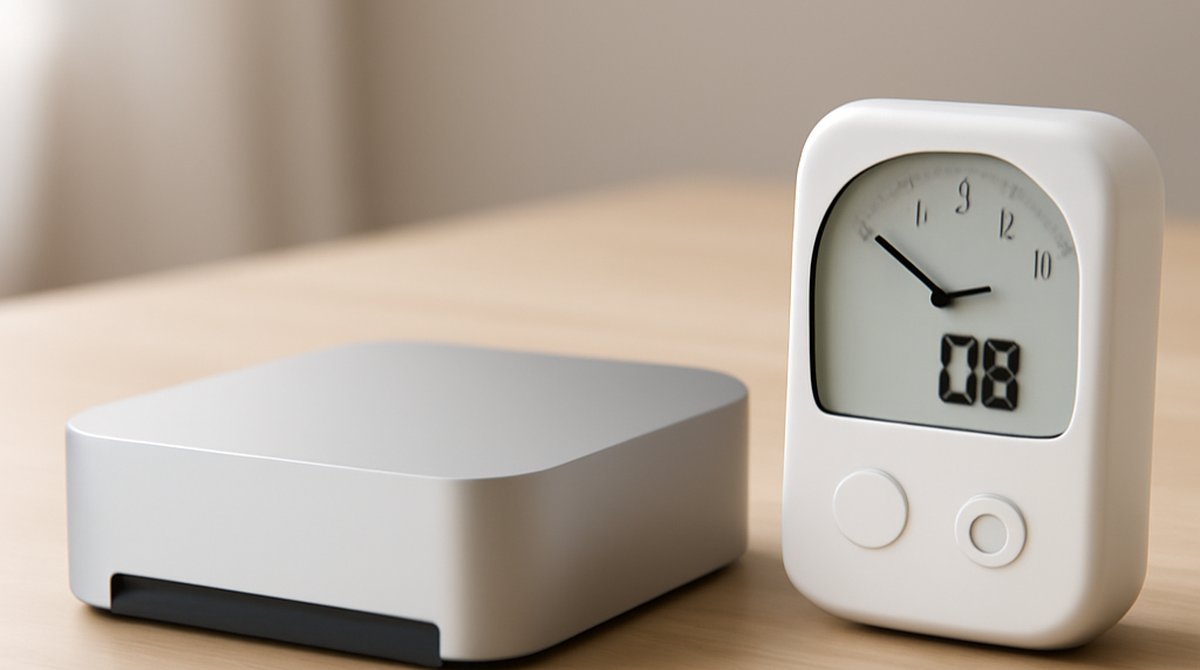
When you plan to use a computer for years, power consumption is worth a closer look. Apple publishes the "idle" and "maximum" power consumption of each Mac on its support pages, so the differences between models are easy to confirm. This article sorts out which current Mac or MacBook draws the least power, based on official data as of May 2026. The short answer: among desktops, the Mac mini stands clearly ahead.
Among desktop Macs, the Mac mini draws the least
Apple publishes wall-measured power consumption for its desktop-class machines — the Mac mini, iMac, Mac Studio, and Mac Pro [1][2][3][4]. "Idle" is the standby state with only the Finder open, while "Max" is the figure recorded when processing performance is pushed to its limit [1].
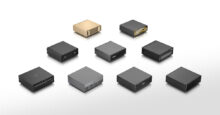
Lining up the current models, the Mac mini (2024) with the M4 chip is the lowest at 4W idle and 65W maximum [1]. The same Mac mini with the M4 Pro chip comes in at 5W idle and 140W maximum [1]. The Mac Studio (2025) is 6W idle and 145W maximum in the M4 Max model, and 9W idle and 270W maximum in the M3 Ultra model [3].
The iMac (24-inch, 2024) is a step higher at 43–46W idle and 100–105W maximum [2], but that is because it has a 23.5-inch display built into the body, so it cannot be compared directly with the displayless Mac mini. The Mac Pro (2023) with the M2 Ultra chip measured 47–49W idle and 300–330W maximum [4].
Idle or maximum — which figure should you watch
When comparing power consumption, the practical approach is to change which figure you look at depending on how you use the machine. In many homes and offices, a Mac spends long stretches in standby. For an always-on server role or a work setup left running, the idle figure translates directly into the electricity bill.
Consider what the Mac mini M4's 4W idle figure means as an electricity cost. Using the benchmark unit rate of 31 yen/kWh [5] that appliance catalogs rely on, even if you ran the machine in idle around the clock for a full year, the electricity cost would come to roughly 1,090 yen. In practice it sleeps or is powered off part of the time, so the real figure is lower.
On the other hand, when you run heavy tasks such as video exports for long periods, the maximum figure starts to matter. The Mac mini M4 tops out at 65W, which keeps the ceiling itself low compared with the Mac Studio's M3 Ultra (270W) or the Mac Pro [1][3][4]. Power-hungry work raises consumption, but a low peak also means less heat and quieter operation.
A MacBook's "power consumption" calls for a different metric
It is worth noting that Apple publishes idle and maximum power consumption only for its desktop-class Macs. For notebook models such as the MacBook Air and MacBook Pro, figures in the same format are not published. Because notebooks run on a battery, the axis of evaluation shifts to "battery life" and "power adapter output."
Take the current MacBook Air (13-inch, M5) as an example: with a 53.8Wh battery it can run up to 18 hours of video streaming and up to 15 hours of wireless web, and the bundled power adapter is rated at 40W (60W max) [6]. The M5 chip is built from 4 super cores and 6 efficiency cores, and the body has a fanless, silent design [6]. Because a notebook can only draw power within the limits of its battery capacity, notebooks inherently consume little power, and the fanless MacBook Air in particular reflects a design that prioritizes energy efficiency.
That said, battery life and low heat output are a separate matter from the desktop idle/maximum power consumption tables. The models that can be compared on Apple's own consistent standard for "the Mac with the lowest power consumption" are limited to the desktop class, and within that class the Mac mini M4 is the lowest.
Summary
Based on Apple's official data as of May 2026, the current Mac or MacBook with the lowest idle power consumption is the Mac mini (2024) with the M4 chip, at just 4W [1]. Its maximum is also low at 65W, so even running around the clock the electricity burden stays very small. Notebooks have no officially published figure in the same format, but the fanless MacBook Air embodies energy efficiency through battery operation and a silent design. If energy efficiency is your top priority, the first fork in the road is whether a desktop will cover your needs.
Source: https://support.apple.com/en-us/103253
Source: https://support.apple.com/en-us/109513
Source: https://support.apple.com/en-us/102027
Source: https://support.apple.com/en-us/102839