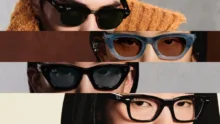


Apple's smart glasses are reportedly running late, and the reason is not purely technical. The company is said to be weighing how to reconcile public unease about wearable cameras with a brand it has spent more than a decade building around privacy.
A reveal expected at WWDC in June 2027
According to Mark Gurman in Bloomberg's Power On newsletter, Apple plans to show the glasses at WWDC in June 2027, with retail availability arriving later that year[1]. The device had originally been lined up for a late-2026 unveiling and an early-2027 launch, which puts the slip at roughly six months to a year.
Apple has also reportedly shelved a lighter, cheaper Vision Pro and redirected its augmented reality effort toward the glasses. That makes this product the intended follow-up act to Vision Pro, and raises the cost of getting the launch wrong.
Privacy is the development team's stated top priority
Gurman reports that the teams working on the glasses, including Apple's Vision hardware division, treat privacy as priority number one. They are said to be building hardware and software protections that do not exist on any current Apple product[2].
The pressure comes from distrust of the category itself. If the person across the table at work or in a restaurant is wearing camera-equipped glasses, you have no way of knowing whether you are being recorded. Those fears are usually unfounded, but years of headlines and viral social posts have left many people wary of always-available cameras.
The awkward part for Apple is that this distrust was largely shaped by other companies' products, and it will be applied to Apple all the same. Apple has spent over a decade cultivating a privacy-first reputation, so it stands to lose more than its rivals. Meta's smart glasses, which reached the market first, became the subject of a privacy class action in the United States in March 2026[4].
Tamper detection on the recording light, and processing that stays on the device
One concrete measure concerns the indicator light that signals recording. Samsung and Google have included such a light on the glasses they are developing, but Apple is reportedly going further: if the system suspects the light has been tampered with, recording shuts off entirely[3]. The idea is to rule out tricks such as covering the light with tape.
Apple is also said to have a position on where processing happens. Rather than sending captured video to a data center, the company intends to keep as much work as possible on the device itself. Facial recognition and continuous ambient monitoring features are expected to be left out. Apple reportedly will not have outside contractors review footage, and will not use recorded video to train AI models.
Much of this reads as a direct inversion of the practices that drew criticism elsewhere. It is easy to explain as a differentiator, but it is also a heavy engineering commitment, and falling short would be conspicuous.
Even a camera-free design is on the table
The boldest option Gurman raises is a pair of smart glasses with no camera at all. That would strip out much of what makes the category interesting, but the device would still work as a hands-free tool for calls, music playback and AI assistant queries.
A middle path is also described: include the camera hardware, but build fixed limits into what it can do. The wearer could not take photos or video on demand. The camera would serve only as an input that tells the AI assistant about the surroundings, and the imagery itself would not be stored. You get the sensing, without the record.
The unresolved question of consent for bystanders
No single company can settle this on its own. Responding to Gurman's report, analyst Max Weinbach floated the idea of a privacy beacon: a Bluetooth signal broadcast from an AirTag or similar device that tells nearby smart glasses whether the person consents to being recorded. If consent is withheld, glasses in the vicinity would apply a full-body blur to that person in whatever they capture[3].
It is an appealing concept, but it would require multiple companies and probably regulators to agree on a shared standard. That is not a near-term prospect. Still, the fact that such proposals are surfacing shows the problem extends well beyond the design of any one headset.
Summary
Apple's smart glasses are reported to debut at WWDC in June 2027 and go on sale later that year. Privacy work is said to be part of the reason for the delay, with measures under consideration including a tamper-detecting recording light, on-device processing, no facial recognition, and a refusal to have contractors review footage or use it for AI training. A camera-free configuration, or a camera that never stores what it sees, remains on the table. None of this has been confirmed by Apple, so both the specifications and the timing could still move.