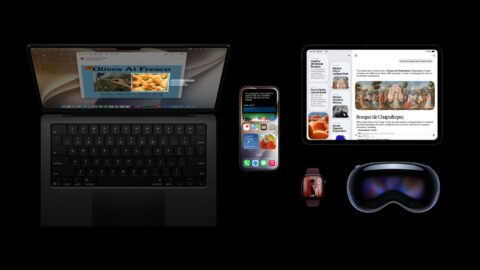
At WWDC26, Apple announced new intelligence frameworks for embedding AI into apps, along with Xcode 27, which significantly expands agentic coding[1]. Developers can now bring the latest models from Anthropic, Google, and OpenAI directly into their workflow, and they can also tap a next-generation Apple Foundation Model built in collaboration with Google Gemini. Developer betas began rolling out the same day.
Intelligence Frameworks: Bringing AI into Apps
The centerpiece is a new intelligence framework that makes it easier for developers to add AI to their apps[1]. Built on last year's Foundation Model framework, it works as a single native Swift API and supports image input, server models, and the creation of custom skills. Updates to the App Intent framework also let developers connect their apps to Siri AI capabilities such as personal context understanding and onscreen awareness.
The next-generation Apple Foundation Model available through this API was uniquely built in collaboration with Google and its Gemini models[1]. Notably, developers enrolled in the App Store Small Business Program with fewer than 2 million cumulative first-time downloads can access this model, which runs on Private Cloud Compute, with no cloud API costs. That makes it far easier for individual and small developers to experiment with AI features. Developers can also choose and integrate models from other providers such as Claude and Gemini, matching the model to the task at hand.
For developers who want to run their own custom models inside an app, the new Core AI framework is designed as the best way to run models on device[1]. Optimized for Apple silicon's unified memory and Neural Engine, it lets developers deploy full-scale large language models (LLMs) locally.
Xcode 27 and Agentic Coding
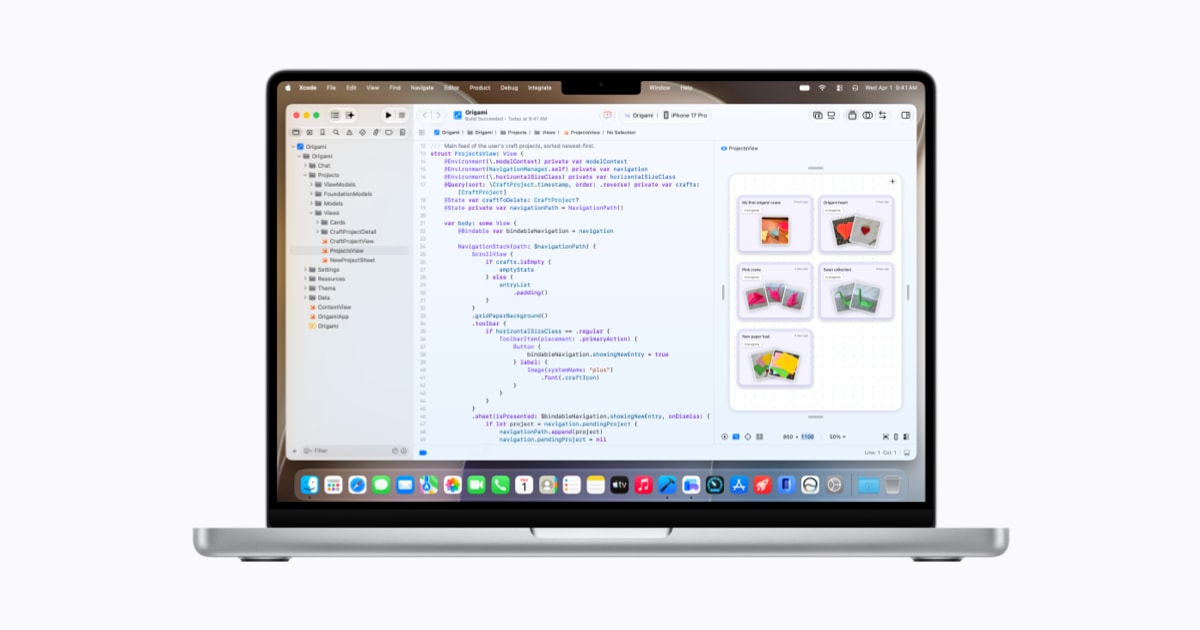
Apple's development environment, Xcode, also takes a big step forward with agentic coding[1]. Xcode 27 brings the full power of today's best models and agents from Anthropic, Google, and OpenAI directly into the developer workflow. Interaction with the coding agent includes interactive planning, multi-turn Q&A, and a canvas that displays code changes and previews side by side.
A distinctive feature is the way coding agents validate their own work[1]. By writing and running tests, experimenting in isolation with playgrounds, confirming visual changes through previews, and interacting with simulators in the new Device Hub, agents can run autonomously for longer stretches. Xcode 27 also supports plugins, letting developers bring in everyday tools through the Model Context Protocol or connect any agent that supports the Agent Client Protocol. GitHub and Figma are the first platforms to offer seamless integration with Xcode.
Xcode 27 itself has been overhauled as well[1]. It is now Apple silicon only, 30 percent smaller in size, and faster to launch and set up. The toolbar is fully customizable, and a new theme system lets developers change the color scheme. Xcode Cloud is up to 2 times faster and now supports building apps that use Metal as well as visionOS builds.
From Swift and Design to Games, Built Around Apple Silicon
The advances in development languages and design are equally significant[1]. Liquid Glass, the unified visual design, improves readability and customization, and a new transparency slider in Settings lets users tune the appearance. SwiftUI streamlines state initialization and layout rendering so apps become more responsive without changing any code. Swift, which powers full-stack development, advances to version 6.4, making everyday tasks smoother through warning suppression and improved compiler diagnostics.
Tools for game developers have been expanded too[1]. Managed Background Asset reduces install size by downloading only the assets needed for a player's language, while the Steam Asset Converter adapts PC games to Apple's platforms. Game Porting Toolkit 4, which speeds up porting Mac games, introduces open-source skills for agents, and an official Unity plugin lets developers implement in-app purchases natively. Reality Composer Pro 3, for building spatial experiences, offers Live Preview so edits can be checked on the spot.
Summary
What Apple showed developers at WWDC26 rests on two pillars: new frameworks for embedding AI, and Xcode 27 with agentic coding built in[1]. Free cloud access for small developers and a design that lets them use leading models from Anthropic, Google, and OpenAI directly all point to an effort to lower the barrier to app development. Developer betas of iOS 27, Xcode 27, and more are already available at developer.apple.com/jp.