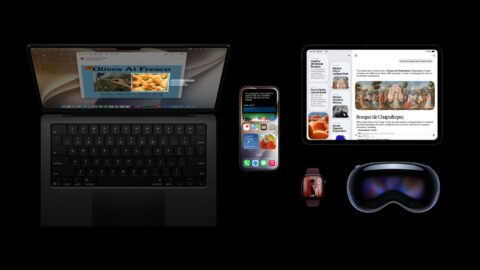
On May 19, 2026, Apple previewed a major update to its accessibility features. The company is bringing Apple Intelligence to established tools such as VoiceOver, Magnifier, and Voice Control, enabling richer descriptions and control through natural language. Apple also announced automatic subtitle generation for uncaptioned video and a new feature that lets Apple Vision Pro users operate a powered wheelchair with eye tracking. All of these will arrive later this year[1].
VoiceOver and Magnifier Evolve with Apple Intelligence
At the heart of this update is the enhancement of VoiceOver and Magnifier, the tools that blind and low-vision users rely on every day[1].
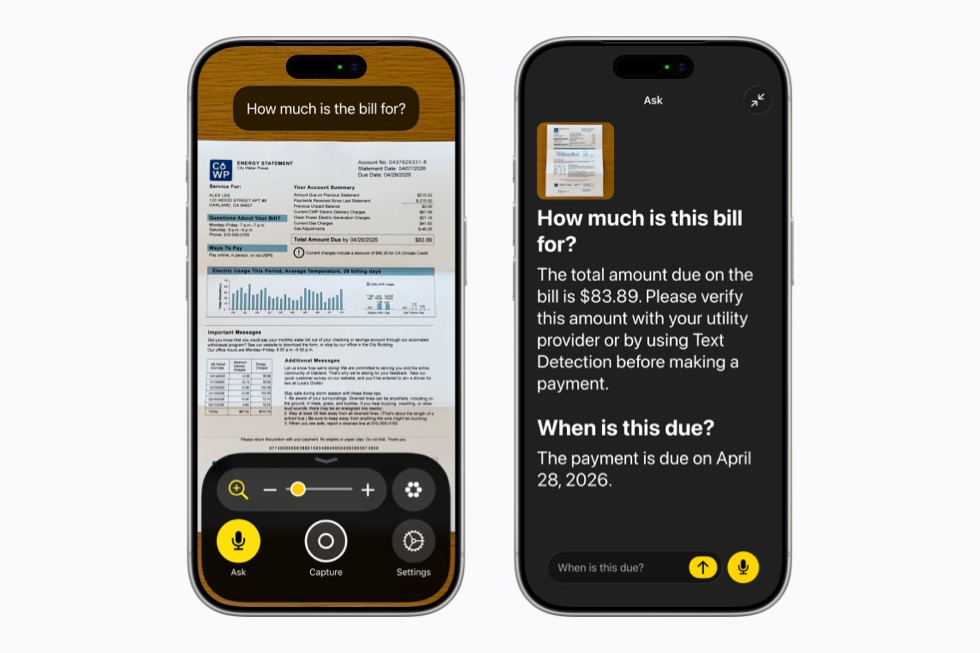
VoiceOver's Image Explorer uses Apple Intelligence to give more detailed descriptions of visual content across the system, including photographs, scanned bills, and personal records[1]. With an update to Live Recognition, users can press the Action button on iPhone to ask questions about what the camera viewfinder sees, and follow up with additional questions in their own words[1].
Magnifier, designed for low-vision users, also gains Apple Intelligence-powered visual descriptions. Its high-contrast interface remains, and users can now ask questions via the Action button or control the app with spoken commands such as "zoom in" or "turn on flashlight"[1]. In effect, the AI reads the contents of a scanned document and answers questions about it.
Voice Control That Understands Natural Language
Voice Control, which lets users with physical and motor disabilities operate a device by voice alone, also becomes more intuitive thanks to Apple Intelligence[1].
Previously, operating onscreen buttons required remembering exact label names or numbers. The new Voice Control lets users describe what they see, with commands like "tap the guide about best restaurants" or "tap the purple folder"[1]. This makes it easier to get past barriers in apps with visual layouts, such as Apple Maps and the Files app, even when elements are not properly labeled for accessibility[1].
Voice Control with Apple Intelligence will initially be available in English in the United States, Canada, the United Kingdom, and Australia[1].
Automatic Subtitles for Video and an Expanded Accessibility Reader
For users who are deaf or hard of hearing, Apple is adding automatic subtitle generation. Even video with no captions — clips recorded on iPhone, videos sent by family, or video played online — can now show an automatic transcription of the spoken conversation[1]. Because speech recognition is processed on device, subtitles can be displayed while protecting privacy on iPhone, iPad, Mac, Apple TV, and Apple Vision Pro[1].
Accessibility Reader, the customized reading experience, also broadens its scope. It can now handle complex document layouts such as scientific articles with multiple columns, images, and tables, and adds an on-demand summary so users can grasp an overview before reading in detail[1]. A new translation feature lets users read text in their native language while keeping their preferred fonts, colors, and formatting[1].
Operating a Powered Wheelchair by Eye with Apple Vision Pro
A standout feature that works with hardware is powered wheelchair control using the eye tracking of Apple Vision Pro[1]. It serves as an alternative control method for users who find joystick operation difficult, requires no frequent recalibration, and works in a variety of lighting conditions[1]. In the United States it launches as an alternative driving system for Tolt Technologies and LUCI, supporting both Bluetooth and wired connections[1].
Other additions include Vehicle Motion Cues for visionOS to reduce motion sickness in a moving vehicle, Name Recognition that alerts deaf and hard-of-hearing users when someone says their name in more than 50 languages worldwide, and support for connecting Sony's Access controller to iPhone and Mac for users who find conventional controllers difficult to use[1].
Summary
What distinguishes this update is that it positions Apple Intelligence not just as a convenient generative AI, but as a foundation that supports accessibility. All of the announced features are scheduled to arrive later this year, and details of the next operating systems are expected at the Worldwide Developers Conference in June[2][3]. For users who depend on assistive features daily, the question becomes how much AI can ease the burden of operation and information access.
Source: https://www.macrumors.com/2026/05/19/new-accessibility-features-with-apple-intelligence/