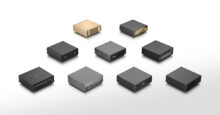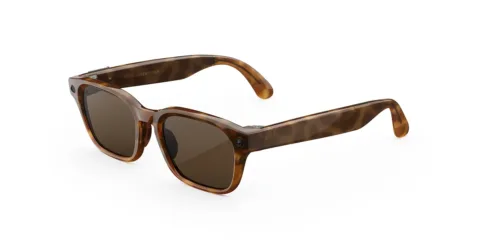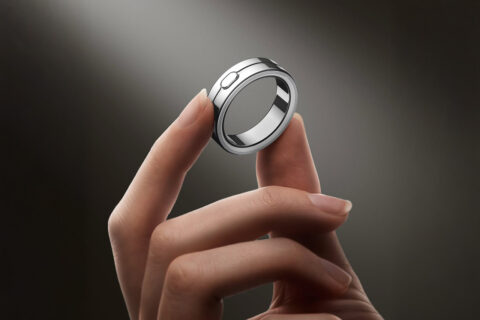

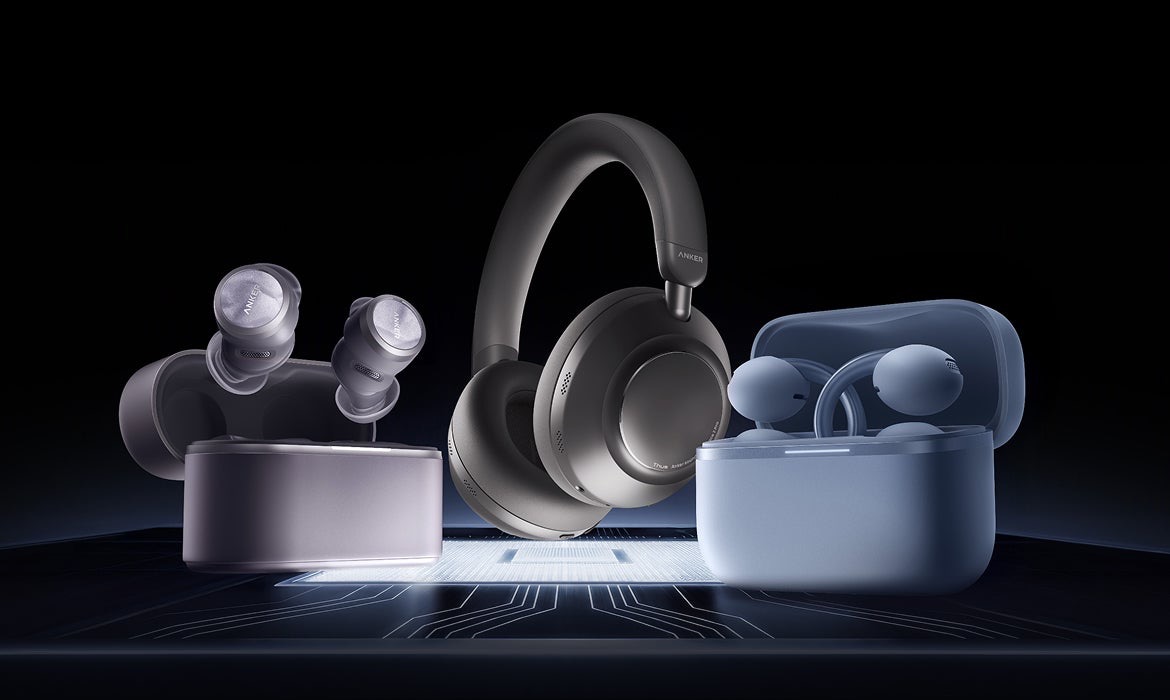
Anker's audio brand soundcore announced nine new products on September 3, 2026, timed to IFA 2026 in Berlin. The lineup rests on two pillars. The first is the expansion of the company's in-house THUS AI audio chip to four new models spanning open-ear, over-ear and in-ear designs. The second is a larger sleep portfolio with two new sleep earbuds and, for the first time, two bedside speakers. Anker also disclosed plans to launch THUS-powered OTC (over-the-counter) hearing aids later this year. US sales begin in stages from September 22, and no Japanese release has been announced so far.
From the Liberty 5 Pro in May to Four Form Factors in Six Months
THUS is the AI chip for earbuds that Anker unveiled at a launch event in New York in May 2026. It uses a compute-in-memory (CIM) architecture, running calculations inside the memory itself and avoiding the power cost of shuttling data back and forth between memory and processor. The pitch was high on-device AI performance from a small battery. The first products to carry it were the in-ear Liberty 5 Pro and Liberty 5 Pro Max.
With this announcement, THUS spreads to four models of different shapes: the clip-on AeroClip 2 Pro and AeroClip 2, the Space 2 Pro headphones, and the in-ear Liberty Buds 2. What they share is that the chip handles isolating the wearer's voice from surrounding noise during calls and adapting noise control to the environment. Anker is separating the models by use case while lining them up on the same playing field of call quality.
AeroClip 2 Pro: Clip-On Earbuds That Take Meeting Minutes
The most distinctive of the four is the AeroClip 2 Pro. It is the first open-ear clip-on earbud with a built-in conversation recording feature. A single tap starts recording, capturing audio from in-person meetings as well as online ones. On phone calls, it records both your voice and the other party's.
Recordings are transferred to a phone or tablet through the soundcore app, then handed to an LLM (large language model) to produce a summary. Several summary templates are available, and users can search past meetings to pull out specific items whether it is the next day or six months later. The earbuds themselves do not transcribe; the division of labor is recording on the earbuds and organizing in the app and AI.
Call performance is handled by THUS, as on the Liberty 5 Pro. The sensor array totals six units: four high-SNR microphones plus two bone-conduction sensors, designed to pick out only the voice in noisy places. On the audio side, it uses an 11mm dual-diaphragm driver and supports the Hi-Res LDAC codec. Since the design leaves the ear open, it is meant to be worn all day while hearing your surroundings.
Battery life is 10 hours on the earbuds at 50 percent volume and 30 hours total with the case. Ten minutes in the case adds up to three hours of playback. Multiple colors are planned for the US, UK and EU, but launch timing and pricing will be announced later.
AeroClip 2: Second-Gen Clip-On with Translation, on Sale the Week of September 22
The second-generation AeroClip 2, announced at the same time, drops the recording feature but keeps THUS-based voice isolation on calls and adds real-time AI translation. The translation feature is Apple MFi certified and can be launched with one tap on iOS.
For fit, Anker says it validated the clip's tension and shape against ear-shape data from 2,000 people. The driver is a 12mm dynamic unit with LDAC support, and playback runs 8 hours on the earbuds and 32 hours with the case.
Launch colors are Midnight Black, Red, Cloud White and Mist Blue, with more to be announced. Pricing is 169.99 USD (about 26,500 yen) in the US, 159.99 GBP (about 33,800 yen) in the UK, and 179.99 EUR (about 32,600 yen) in Germany and the rest of the EU. Sales start the week of September 22 on Amazon.com and soundcore.com.
Space 2 Pro: Eight-Mic ANC and a 35mm Driver for 199.99 USD
The Space 2 Pro headphones succeed the existing Space One Pro. Combining THUS with six microphones, they are claimed to isolate the wearer's voice in noise of up to 100 dB. Anker's examples include walking past a jackhammer at a construction site, car horns, emergency vehicle sirens, and busy bars or offices.
Noise cancelling is an adaptive eight-microphone system processing at 384 kHz, targeting office chatter, keyboard clatter and air-conditioning hum. The driver is a 35mm rigid-flex dual-material diaphragm, with support for HearID 5.0 hearing-based personalization and LDAC.
Playback is 60 hours with ANC off and 30 hours with ANC on, both at 50 percent volume. The ear cushions use memory foam, and the headphones support Bluetooth 6.1, two-device multipoint and spatial audio. Colors are Midnight Grey, Linen White and Jet Black. US availability starts September 22 at 199.99 USD (about 31,200 yen); UK and EU pricing and timing will follow.
Liberty Buds 2: Double the ANC of the Previous Model, from 129.99 USD
The in-ear Liberty Buds 2 pair THUS with an eight-sensor setup that includes two voice-processing units, aiming to deliver clear voice to the other party in any environment. Noise cancelling uses six microphones and is claimed to double the reduction of the previous model. A Comfort ANC mode is included to ease the ear pressure that ANC can cause. The design and comfort have been certified by TÜV, the German third-party testing body.
Colors are Misty Purple, Glossy Black and Silver White. Pricing is 129.99 USD (about 20,300 yen) in the US, 129.99 GBP (about 27,400 yen) in the UK, and 149.99 EUR (about 27,100 yen) in Germany and the EU, on sale from September 22 at Amazon.com and soundcore.com.
Entering OTC Hearing Aids This Year, Two Hours from a Five-Minute Charge
Anker also revealed plans to release THUS-powered OTC hearing aids within 2026. OTC hearing aids are a category established in the US in 2022 that can be bought in stores or online without a prescription. The problem Anker wants to solve is the common complaint from hearing aid users that they cannot make out the voice they want to hear in crowded restaurants or family gatherings.
Where conventional hearing aids tend to amplify everything around the wearer, this product uses THUS running 7.2 billion operations per second together with four beamforming microphones to focus on the target voice and push background noise back. Drawing on its background as a charging company, Anker expects 12 hours on the device and 36 hours with the case, plus fast charging that adds two hours from a five-minute top-up. Pricing and launch timing will be announced within the coming months.
Sleep Lineup Grows to Four: Heart-Rate-Sensing Earbuds and a Radar Speaker
The second pillar, sleep products, consists of two earbuds and two speakers.
The higher-end Sleep Earbuds 4 Pro perform high-frequency PPG (photoplethysmography) measurement in the ear, tracking heart rate and heart rate variability (HRV) to follow relaxation and sleep stages through the night. Whereas many sleep trackers show results only in the morning, these use nighttime data to adjust soothing audio on the fly through a feature called BioSync. The charging case supports wireless charging and has a built-in AMOLED display for changing audio and sleep settings, setting alarms and checking a sleep report each morning. Sleep-tuned noise reduction and masking that adapts to snoring sounds are included. Colors are Lunar White and Mist Blue, with a US launch in November at 349 USD (about 54,400 yen). UK and EU details will follow.
The standard Sleep Earbuds 4 succeed the existing Sleep A30. They add AI-generated masking audio that shifts with real snoring patterns, and the body is 20 percent slimmer than the A30, based on ear data from more than 10,000 people, to reduce pressure for side sleepers. Launch colors are Moonlit White and Haze Blue, with Bare Pink to follow. Pricing is 229 USD (about 35,700 yen) in the US, 229 GBP (about 48,300 yen) in the UK, and 229 EUR (about 41,400 yen) in Germany and the EU, on sale in October through Amazon and soundcore's site.
The SleepLab Pro speaker is built on the idea of measuring sleep without wearing anything. It uses 60 GHz mmWave radar to sense sleep cycles without body contact, and encourages sleep with a personalized "sleep soundtrack" and changing light. It offers guided breathing, acoustic beats and a daily sleep report, plus spatial audio from two drivers, multi-color ambient lighting for the bedroom, and a sunrise simulation for gradual waking.
The lower-end SleepLab omits measurement and plays music and podcasts as well as more than 180 white-noise and breathing sounds with one tap, no phone required. It has two speakers for spatial sound, warm multi-color lighting that syncs to the audio, a sunrise simulation with a crescendo alarm, and battery backup for power outages. Launch timing and pricing for both models will be announced later.
Summary
Anker's soundcore has taken the THUS AI chip that debuted in May and, in under six months, extended it across four models in clip-on, headphone and in-ear formats, while signaling a move into OTC hearing aids with the same chip. A notable thread this time is how the AeroClip 2 Pro stretches the role of earbuds beyond call quality into recording and summarizing meetings. In sleep, the brand now fields four products across earbuds and speakers, with a radar-equipped speaker for people who do not want to wear anything. In the US, the Space 2 Pro, Liberty Buds 2 and AeroClip 2 lead off on September 22. A Japanese release has not been announced, so further news is awaited.
※Exchange rates (as of September 5, 2026): 1 USD = 156 JPY, 1 EUR = 181 JPY, 1 GBP = 211 JPY